

Foreclosure vs. Bankruptcy: What's the Difference and Which Is Worse in California
Facing serious financial trouble can make you fear losing your home or drowning in debt you cannot repay. Foreclosure vs. bankruptcy is a challenge many California homeowners face, and both can damage your credit report for years. 3 This article explains the key differences between these two options and helps you decide which may better fit your situation in California. 1
Key Takeaways
- Foreclosure is when the lender takes your home after missed mortgage payments. It stays on your credit report for 7 years and can drop your score by 85 to 160 points. California is a non-recourse state for purchase-money loans, meaning most lenders cannot pursue a deficiency judgment after a foreclosure sale on your primary residence.
- Bankruptcy lets you erase or reorganize debts under federal law. Chapter 7 clears unsecured debts in about three to six months but can hurt your credit score by up to 240 points and stays on record for up to ten years. Chapter 13 sets a repayment plan over three to five years and may allow faster FHA loan approval — just one year into repayment.
- Both options damage your credit differently and carry extra costs. Foreclosure has no filing fee, while bankruptcy costs $313–$338 plus attorney fees between $1,000–$2,000. Bankruptcy's automatic stay can temporarily stop foreclosure.
- Choose based on your debt type and income. Bankruptcy helps if most debt is unsecured (medical bills, credit cards) or if you want to keep the house with steady income via Chapter 13. Foreclosure may make sense if payments are unaffordable or your home is deeply "underwater."
- Alternatives like loan modification, short sale, deed-in-lieu, or a cash home sale may help you avoid both. Contacting your lender early opens more options; consulting a California-licensed attorney or HUD-approved housing counselor can help protect your assets.
Defining Foreclosure
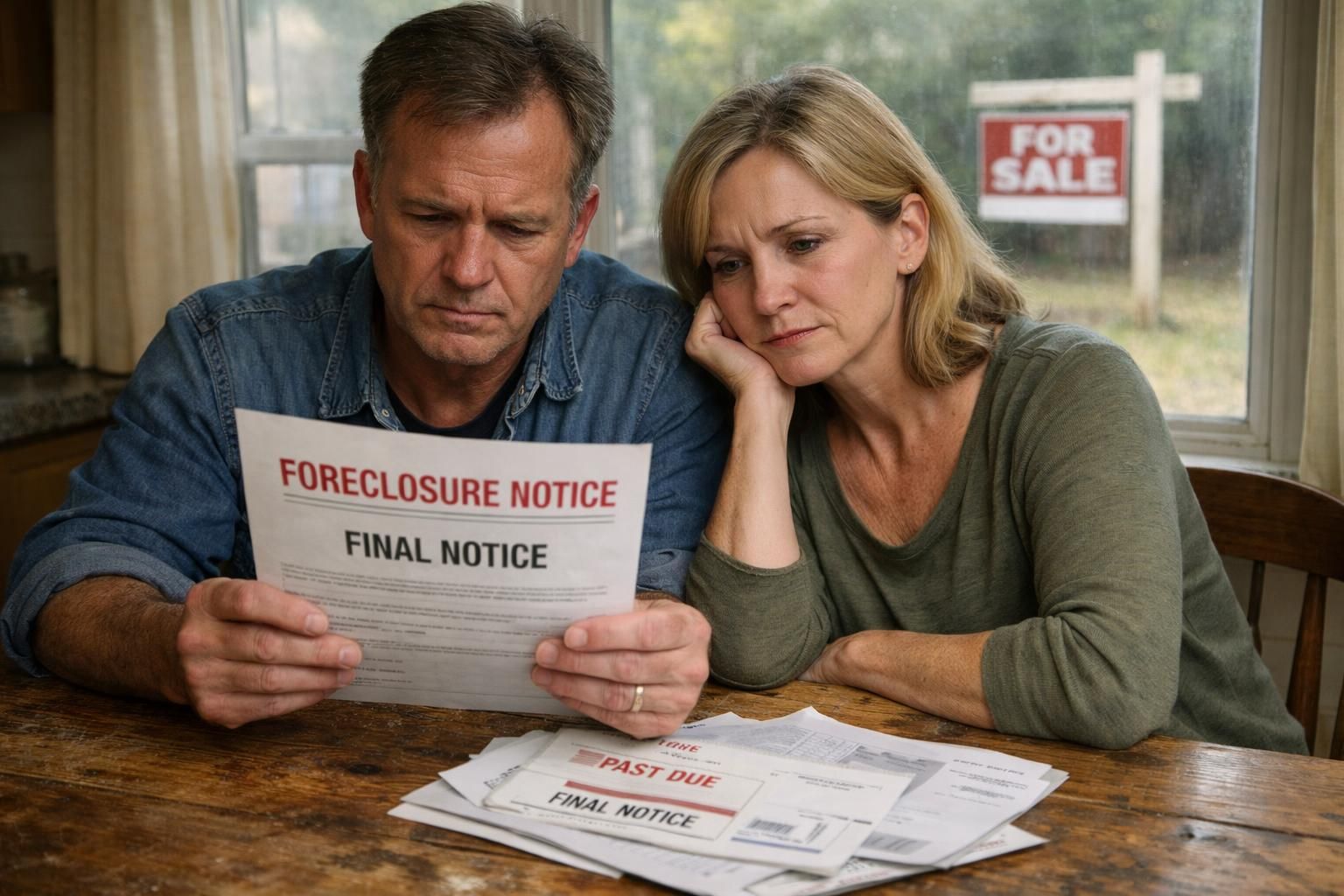
Foreclosure is a legal action where a mortgage lender repossesses your home after you miss several payments. In California, this process is primarily non-judicial, meaning lenders can proceed without going to court, making it one of the faster foreclosure timelines in the country.
Legal process where a lender takes possession of a home due to missed mortgage payments
If you fall behind on your mortgage, your lender may begin foreclosure proceedings under California's non-judicial foreclosure process. The lender records a Notice of Default (NOD) after you are at least 90 days past due. You then have a 90-day reinstatement period. If the loan is not brought current, the lender records a Notice of Trustee's Sale, and the home can be auctioned 21 days later.
From the first missed payment to auction, the California process typically takes a minimum of about four months, though in practice it often takes longer. California law generally prohibits deficiency judgments on purchase-money loans secured by owner-occupied property of one to four units, which offers meaningful protection compared to many other states. However, if you have a home equity loan or refinanced mortgage, different rules may apply, and you could potentially owe a deficiency.
A foreclosure remains on your credit report for seven years from the first missed payment and can lower your score by 85 to 160 points. Lenders must follow California's Homeowner Bill of Rights (HBOR), which provides additional protections including a single point of contact and restrictions on dual tracking — the practice of pursuing foreclosure while reviewing a loan modification application.
Defining Bankruptcy

Bankruptcy is a federal legal process that lets you erase or reorganize debts when they become unmanageable. California filers have specific exemption options that affect how much property you can protect.
Legal proceeding to eliminate or restructure debts when unable to pay
You can file for personal bankruptcy in California's federal bankruptcy courts — located in districts covering Los Angeles, San Diego, San Francisco, Sacramento, and other regions — to seek debt relief under Chapter 7 or Chapter 13.
Chapter 7 can wipe out most unsecured debts like credit cards and medical bills in three to six months. The filing fee is $338, plus typical attorney fees of $1,000 to $2,000. California does not allow filers to use federal bankruptcy exemptions; instead, you choose between two sets of state exemptions (System 1 or System 2). The homestead exemption under System 2 can protect a significant amount of home equity — California raised this exemption substantially in recent years, and it now adjusts based on median home prices in your county, potentially shielding hundreds of thousands of dollars in equity for qualifying homeowners.
Chapter 13 sets up a three-to-five-year repayment plan for filers with steady income who want to catch up on mortgage arrears or manage secured debt. Filing immediately triggers an automatic stay that halts foreclosure proceedings and collection calls. After discharge, both Chapter 7 and Chapter 13 appear on your credit report for seven to ten years.
Foreclosure vs. Bankruptcy: A Side-by-Side Comparison
Understanding how foreclosure and bankruptcy differ helps you protect your home equity and credit score. Each process affects your mortgage, secured debt, and overall financial health in distinct ways — especially under California law.
Timeline, credit impact, initiation, addressed issues, and cost
California's non-judicial foreclosure process can move in as little as four months from the Notice of Default, though most cases take longer. Bankruptcy begins when you file a petition in federal court; the automatic stay stops foreclosure and collection actions immediately.
Credit reports show a foreclosure for seven years, dropping your score roughly 85 to 160 points. Chapter 7 bankruptcy stays on your record for ten years with potential drops of 130 to 240 points; Chapter 13 remains for seven years with drops of about 130 to 200 points.
Foreclosure carries no filing fee. Bankruptcy costs $313 (Chapter 13) or $338 (Chapter 7) in filing fees, plus attorney costs. Foreclosure in California primarily resolves secured mortgage debt. Bankruptcy can address unsecured debt like credit cards and medical bills, and through Chapter 13, can also help catch up on mortgage arrears.
In foreclosure, the lender initiates the process. Only you can choose to file for bankruptcy protection.
Which Is Worse for Your Credit?
Both foreclosure and bankruptcy lower your credit score, but they affect your record in different ways. Lenders reviewing future loan applications in California will examine both types of defaults.
Initial impact vs. long-term recovery
A bankruptcy can drop your credit score by 220 to 240 points if you start with a high score around 780. 1 Starting closer to 680, the drop ranges from 130 to 150 points. Foreclosure-related events like short sales or deed-in-lieu transfers typically cause drops of 105 to 200 points.
Long-term recovery depends on how consistently you manage debts after these events. Bankruptcy lets you discharge unsecured debt through Chapter 7 or create a Chapter 13 repayment plan for mortgage arrears, giving some homeowners a path to rebuilding. Steady on-time payments after either event can meaningfully improve your credit record over several years.
Can You Stop Foreclosure with Bankruptcy?
You can use bankruptcy to pause California foreclosure proceedings, but each chapter offers different levels of home protection. Timing is critical given California's relatively fast non-judicial process.
Automatic stay, Chapter 13 payment plans, and Chapter 7 limitations
Filing for bankruptcy immediately triggers an automatic stay under federal law. This court order stops the foreclosure sale, creditor calls, and collection actions right away — even if a California trustee's sale is scheduled.
Chapter 13 lets you enter a three-to-five-year repayment plan to catch up on mortgage arrears while keeping your home. Lenders must accept structured payments as long as you follow the plan and continue making current mortgage payments.
Chapter 7 also triggers the automatic stay, but protection is short-term. It does not eliminate secured mortgage debt, so lenders can petition the court for relief from the stay. After a Chapter 7 discharge, FHA loan eligibility requires a three-year wait. With a successful Chapter 13 plan, you may qualify for an FHA loan after just one year of on-time payments — a meaningful advantage for California homeowners looking to stay in the housing market.
Scenarios Where Bankruptcy Makes Sense
California homeowners dealing with crushing unsecured debt or who have steady income and want to save their home may find bankruptcy the better path forward.
Overwhelming unsecured debt, income for Chapter 13, or keeping the home
If most of what you owe is unsecured — credit card balances, medical bills, personal loans — Chapter 7 may discharge these debts and give you a fresh start. This path works best when collateral-free debt is dominating your monthly budget.
If you have regular income and want to keep your Los Angeles, Sacramento, or San Diego area home, Chapter 13 offers a structured way to catch up on arrears and avoid the foreclosure auction. California's strong homestead exemptions also mean you may be able to protect significant equity during the process. Homeowners often find Chapter 13 less damaging to future loan eligibility than losing a home through foreclosure.
Scenarios Where Foreclosure Makes Sense
Foreclosure can sometimes be the practical path when payments are simply unaffordable or a home has lost significant value. California's non-recourse protections on purchase-money loans reduce — but do not eliminate — the financial risks of walking away.
Underwater home, unaffordable payments, or wanting a fresh start
If your mortgage balance far exceeds your home's current market value, continuing payments may not make financial sense. In areas that experienced price corrections, some homeowners choose strategic default when no workable modification or refinance is available.
California law generally prohibits lenders from pursuing deficiency judgments after a non-judicial foreclosure sale on a single-family owner-occupied home used for a purchase-money loan. However, if you refinanced or took out a second mortgage or HELOC, that protection may not fully apply — consult a California real estate attorney to understand your exposure.
Be aware that forgiven debt may trigger a 1099-C from your lender, which could create taxable income. California has conformed to certain federal mortgage forgiveness relief rules in the past, but you should verify current state tax treatment with a CPA. Getting advice from a California-licensed real estate attorney and exploring alternatives like a short sale or deed-in-lieu can ease the burden considerably.
Alternatives to Both
California homeowners have several alternatives that can avoid the worst impacts of both foreclosure and bankruptcy. Acting early is key to keeping these options available.
Loan modification, short sale, deed in lieu, and cash home sales
Loan modification lets you work directly with your servicer to adjust loan terms — interest rate, principal, or repayment period — to make payments manageable. California's Homeowner Bill of Rights requires servicers to review any complete loan modification application before proceeding with foreclosure, giving you a meaningful opportunity to negotiate.
A short sale lets you sell your home for less than what you owe, with lender approval. In California, a short sale on a purchase-money loan generally protects you from a deficiency judgment. Short sales typically cause less long-term credit damage than a full foreclosure.
Deed-in-lieu of foreclosure lets you voluntarily transfer the property back to the lender, avoiding the public auction. Some lenders offer relocation assistance or a short-term rent-back arrangement. Acceptance is not guaranteed, and lenders may require you to attempt a short sale first.
A cash home sale can resolve your situation quickly — no bank approval delays, no lengthy legal proceedings, and no foreclosure auction on your record. This option can stop creditor contact fast and prevent derogatory marks that linger on your credit report for seven years or more. 2
Foreclosure Avoidance Strategies in California
Contact your servicer as soon as you struggle with payments. California's HBOR requires lenders to assign you a single point of contact — use that. Request a loan modification, forbearance, or reinstatement plan early. You have a right to reinstate the loan up to five business days before the trustee's sale by paying all past-due amounts, fees, and costs.
If you need more time and have income to support a repayment plan, file for Chapter 13 bankruptcy. The automatic stay immediately stops a pending California foreclosure sale. Explore HUD-approved housing counseling agencies in California — many offer free assistance and can help you navigate your servicer's loss mitigation process.
Consider a short sale, deed-in-lieu, or cash home sale if keeping the home is no longer realistic. Acting early — before the Notice of Trustee's Sale is recorded — preserves the most options and reduces emotional and financial stress.
Conclusion and Guidance
Consult professionals, evaluate your situation, and consider a cash home sale for faster resolution
Meet with a California-licensed bankruptcy attorney or real estate attorney to discuss your specific situation. Many offer free initial consultations. They can explain how Chapter 7, Chapter 13, short sales, or a deed-in-lieu might apply to your circumstances and clarify which debts can be discharged under the bankruptcy code.
Carefully review your financial picture: mortgage arrears, current home equity, income stability, and long-term goals. A cash home sale may resolve your mortgage situation quickly, with less credit damage than a prolonged foreclosure proceeding.
A fast cash sale stops creditor contact, avoids a lengthy legal process, and keeps damaging public records off your credit report. 3 If you're a California homeowner weighing your options, KDS Homebuyers can provide a free, no-obligation cash offer. Visit kdshomebuyers.net to learn how a direct cash sale could help you move forward — quickly and with peace of mind. 4
FAQs
1. What is the main difference between foreclosure and bankruptcy in California?
Foreclosure is a legal process — primarily non-judicial in California — where a lender reclaims your home after missed payments. Bankruptcy, under Chapter 7 or Chapter 13, is a federal process that helps you discharge or reorganize both secured and unsecured debts.
2. How do Chapter 7 and Chapter 13 bankruptcy affect my credit report compared to foreclosure?
Chapter 7 stays on your credit report for about ten years; Chapter 13 for seven years. A California foreclosure also impacts your credit for up to seven years but may lower your score more quickly in the near term.
3. Can I keep my home if I file for bankruptcy instead of facing California foreclosure?
Chapter 13 may allow you to catch up on mortgage arrears through a court-approved repayment plan and keep your home. California's enhanced homestead exemption also helps protect significant home equity. Chapter 7 generally does not stop foreclosure long-term but may discharge other debts freeing up cash flow.
4. Does filing for bankruptcy stop foreclosure in California immediately?
Yes. The automatic stay halts all collection actions, including a scheduled California trustee's sale, the moment you file. However, lenders can petition the court to lift the stay, particularly in Chapter 7 cases.
5. Which option gives me a broader fresh start — bankruptcy or foreclosure?
Bankruptcy can discharge many types of unsecured debt through Chapter 7 or restructure debts through Chapter 13, providing broader relief than simply losing your home in foreclosure. However, the right choice depends on your income, debt mix, and whether you want to keep the property.
6. Are student loans covered by either bankruptcy or foreclosure?
Federal student loans are generally not dischargeable in bankruptcy unless you can demonstrate undue hardship — a high standard in California courts. Neither bankruptcy nor foreclosure is designed to address student loan debt specifically.
References
- ^ https://www.nolo.com/legal-encyclopedia/which-is-worse-for-my-credit-score-bankruptcy-or-a-deed-in-lieu-of-foreclosure.html
- ^ https://www.bankruptcy-law-seattle.com/Articles/short-sale-vs-foreclosure-vs-deed-in-lieu/ (2024-07-25)
- ^ https://www.sawinlaw.com/blog/bankruptcy-versus-foreclosure/ (2023-11-29)
- ^ https://www.nbcnews.com/id/wbna21478416 (2007-10-28)
