

Foreclosure vs. Bankruptcy: What's the Difference and Which Is Worse in Indiana
Facing serious financial trouble can leave Indiana homeowners wondering whether foreclosure or bankruptcy is the worse outcome — and which path offers any real protection. Both can damage your credit report for years and create lasting consequences. This article breaks down the key differences and helps you decide which option fits your situation.
Key Takeaways
- Foreclosure is when your lender takes your home after missed mortgage payments. It stays on your credit report for 7 years and can drop your score by 85 to 160 points. Indiana allows deficiency judgments, meaning you could still owe money if the sale doesn't cover your full mortgage balance.
- Bankruptcy lets you erase or reorganize debts under federal law. Chapter 7 clears unsecured debts in about three to six months but can hurt your credit score by up to 240 points and stays on record for ten years. Chapter 13 sets up a three-to-five-year repayment plan and may allow FHA loan approval after just one year of on-time payments.
- Both options carry different costs and credit consequences. Foreclosure has no filing fee, while bankruptcy costs $313–$338 plus attorney fees of $1,000–$2,000. Filing bankruptcy triggers an automatic stay that can temporarily halt Indiana foreclosure proceedings.
- Your best choice depends on your debt type and income. Bankruptcy helps if most debt is unsecured or if you want to keep your home through Chapter 13. Foreclosure may make sense when payments are unaffordable or your home is deeply underwater.
- Alternatives like loan modification, short sale, deed-in-lieu, and cash home sales can help you avoid both. Acting early and consulting an Indiana foreclosure or bankruptcy attorney gives you the most options.
Defining Foreclosure
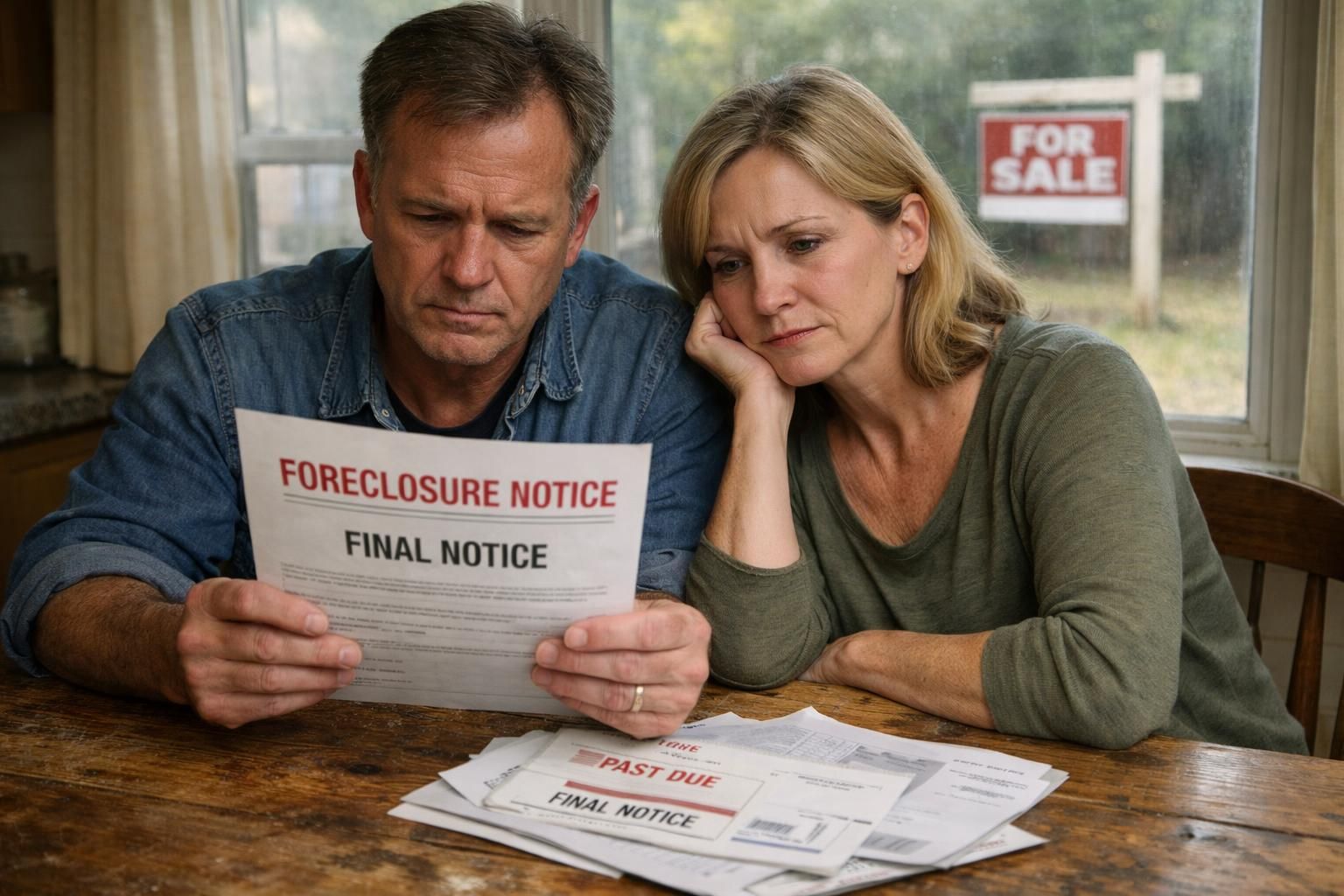
Foreclosure is a legal action where a mortgage lender repossesses your home after you miss several payments. In Indiana, this process moves through the court system and can affect your credit, your finances, and your ability to stay in the home.
Indiana's Judicial Foreclosure Process
Indiana is a judicial foreclosure state, meaning lenders must file a lawsuit in court before they can take your home. Once you fall behind on payments, the lender files a complaint in your county's circuit or superior court. You have the right to respond, but if you do not, the court typically issues a default judgment in favor of the lender.
After judgment, the property is scheduled for a sheriff's sale — a public auction typically held at the county courthouse. Indiana law gives homeowners limited redemption rights after the sale, so once the sheriff's sale occurs, your options narrow significantly.
Indiana allows deficiency judgments. If your Indianapolis-area home sells for $250,000 at auction but you owe $350,000, the lender can pursue you for the $100,000 difference. The foreclosure remains on your credit report for seven years from your first missed payment, and your score can drop 85 to 160 points.
Defining Bankruptcy

Bankruptcy is a federal legal process that lets you eliminate or restructure debts when you can no longer keep up with payments. Filing in Indiana's U.S. Bankruptcy Court — with divisions in Indianapolis, Hammond, and South Bend — can offer debt relief and an immediate pause on collection actions.
Chapter 7 and Chapter 13 in Indiana
Chapter 7 bankruptcy can discharge most unsecured debts — credit cards, medical bills, personal loans — in three to six months. The filing fee is $338, plus attorney fees typically ranging from $1,000 to $2,000. Indiana has its own bankruptcy exemptions that determine which property you can keep, including a homestead exemption that protects a portion of your home equity.
Chapter 13 sets up a court-approved repayment plan lasting three to five years. It's designed for homeowners with steady income who want to catch up on mortgage arrears and keep their property. Filing either chapter triggers an automatic stay, which immediately stops Indiana foreclosure proceedings and creditor collection calls.
Chapter 7 stays on your credit report for ten years; Chapter 13 for seven years. Both will affect your credit score, but they also give you a structured path toward financial recovery.
Foreclosure vs. Bankruptcy: A Side-by-Side Comparison
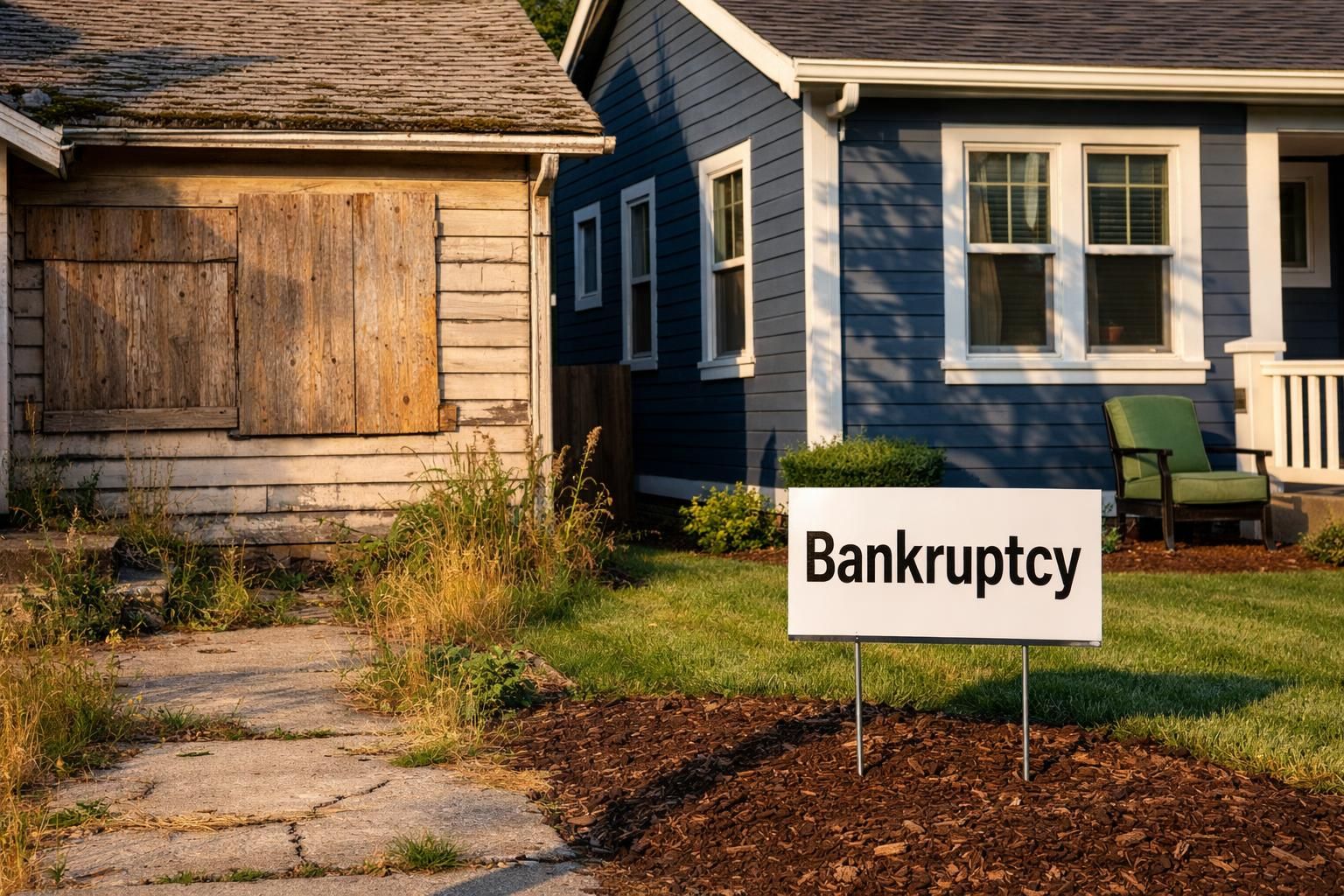
Timeline, Credit Impact, Costs, and Scope
Indiana judicial foreclosures typically take six months to over a year from first missed payment to sheriff's sale, depending on the county and court caseload. Bankruptcy under Chapter 7 resolves in three to six months; Chapter 13 runs three to five years.
Credit score drops: foreclosure reduces scores by 85 to 160 points and stays on record for seven years. Chapter 7 bankruptcy can drop scores 130 to 240 points and remains for ten years. Chapter 13 stays for seven years with drops of 130 to 200 points.
Foreclosure has no filing fee but may result in a deficiency judgment in Indiana. Bankruptcy costs $313–$338 in filing fees plus legal costs. Foreclosure addresses only your secured mortgage debt; bankruptcy can cover unsecured debts like credit cards, medical bills, and sometimes mortgage arrears through Chapter 13.
A key distinction: your lender initiates foreclosure. Only you can choose to file for bankruptcy protection.
Which Is Worse for Your Credit?
Initial Impact vs. Long-Term Recovery
If you start with a credit score around 780, bankruptcy can cause a drop of 220 to 240 points. Starting from around 680, the decline is typically 130 to 150 points. Foreclosure-related events — including short sales and deed-in-lieu transfers — can drop scores 105 to 200 points. 1
Long-term recovery depends on how consistently you manage bills after either event. Chapter 13 bankruptcy can actually allow faster access to FHA-backed mortgages — sometimes after just one year of on-time plan payments — compared to the three-year wait typically required after a completed foreclosure in Indiana. Steady payment habits after either event are what lenders in Carmel, Fishers, and across the state will look at most closely when you apply for future credit.
Can You Stop Foreclosure with Bankruptcy?
Automatic Stay, Chapter 13 Plans, and Chapter 7 Limitations
Filing for bankruptcy in Indiana's federal bankruptcy court triggers an automatic stay — a court order that immediately halts foreclosure proceedings, including any pending sheriff's sale. This gives you breathing room to assess your options.
Chapter 13 is the stronger tool for saving your home. You can roll past-due mortgage payments into a structured three-to-five-year repayment plan while continuing current mortgage payments. As long as you follow the plan, lenders must accept these terms.
Chapter 7 also triggers the automatic stay but offers only temporary protection. It can discharge unsecured debts, freeing up cash flow, but does not eliminate your mortgage obligation. If you cannot bring the loan current quickly, Indiana foreclosure proceedings can resume after the stay lifts. After a Chapter 7 discharge, FHA loan eligibility typically requires a three-year waiting period.
Scenarios Where Bankruptcy Makes Sense
Overwhelming Unsecured Debt, Steady Income, or Wanting to Keep Your Home
If most of your debt is unsecured — medical bills, credit cards, personal loans — Chapter 7 bankruptcy can eliminate those obligations and give you a genuine fresh start. This works best when your income is below Indiana's median household income threshold, which determines Chapter 7 eligibility through the means test.
If you earn steady income and want to keep your Noblesville or Indianapolis home, Chapter 13 is often the better path. You can catch up on mortgage arrears over three to five years, protect personal property, and avoid the deficiency judgment risk that comes with Indiana foreclosure proceedings. Homeowners generally find Chapter 13 less damaging to future loan eligibility than losing a home through foreclosure.
Scenarios Where Foreclosure Makes Sense
Underwater Home, Unaffordable Payments, or Seeking a Clean Break
When your mortgage balance far exceeds your home's current market value, continuing payments may not make financial sense. Indiana law does permit deficiency judgments after foreclosure, so you should understand that walking away may not eliminate all financial liability — consulting an attorney before stopping payments is critical.
If monthly payments have become truly unaffordable, personal savings are depleting, and neither loan modification nor bankruptcy is viable, foreclosure may be the most realistic path to relief. Some homeowners in this situation also explore strategic default, though the risk of a deficiency judgment in Indiana makes this a decision that requires careful legal guidance.
Be aware that forgiven mortgage debt may trigger a tax consequence — lenders may issue a 1099-C for cancellation of debt income, which could affect your Indiana state and federal tax returns. Consulting a tax professional alongside a real estate attorney is advisable.
Alternatives to Both
Loan Modification, Short Sale, Deed-in-Lieu, and Cash Home Sales
Loan modification allows you to renegotiate your mortgage terms directly with your lender — adjusting the interest rate, extending the term, or reducing monthly payments to avoid Indiana foreclosure proceedings.
A short sale means selling your home for less than you owe with lender approval. Indiana lenders can still pursue a deficiency judgment after a short sale unless they expressly waive that right in writing, so make sure any short sale agreement addresses this clearly.
Deed-in-lieu of foreclosure lets you voluntarily transfer your property back to the lender, bypassing the sheriff's sale process. Some lenders offer relocation assistance or temporary occupancy arrangements. Acceptance is not guaranteed, and lenders may require the property to be listed first.
A cash home sale can be the fastest way to resolve mortgage debt, avoid foreclosure, and protect your credit — often closing in days rather than months. This option sidesteps both bankruptcy proceedings and the Indiana judicial foreclosure process entirely. 2
Foreclosure Avoidance Strategies for Indiana Homeowners
Contact your mortgage servicer as soon as you miss or anticipate missing a payment. Indiana's judicial foreclosure process takes time, but that window closes. Request forbearance, loan modification, or a repayment agreement before the lender files its complaint in court.
If you need more time and have income to support a plan, filing Chapter 13 in Indiana's bankruptcy court can halt foreclosure immediately through the automatic stay and give you three to five years to catch up on arrears.
Indiana limits post-sale redemption rights, so waiting too long — especially past the sheriff's sale — removes most of your options. Acting early, whether through your lender, an attorney, or a direct cash sale, preserves the most choices and reduces both financial and emotional stress.
Conclusion and Guidance
Consult Professionals, Evaluate Your Situation, and Consider a Cash Home Sale for Faster Resolution
Meet with an Indiana bankruptcy or foreclosure attorney to discuss your specific situation. Many offer free initial consultations and can explain how Chapter 7, Chapter 13, short sales, or deed-in-lieu transfers apply to your circumstances under Indiana law. They can also help you understand which debts can be discharged and what secured obligations remain.
Review your full financial picture — mortgage arrears, home equity, income, and long-term goals — before deciding. For many Indiana homeowners, a cash home sale offers the quickest resolution: it avoids lengthy court processes, stops creditor calls, and limits credit damage compared to a completed foreclosure. 3
If you're weighing your options and want to avoid foreclosure or bankruptcy, KDS Homebuyers purchases homes directly from Indiana homeowners for cash — no repairs, no commissions, no waiting. Visit kdshomebuyers.net to request a free, no-obligation cash offer and find out how quickly you could move forward. 4
FAQs
1. What is the main difference between foreclosure and bankruptcy in Indiana?
Indiana foreclosure is a judicial process where your lender sues to take back your home through the county court system, ending in a sheriff's sale. Bankruptcy is a federal process — filed in U.S. Bankruptcy Court — that can eliminate or restructure debts, including the mortgage arrears that triggered the foreclosure.
2. How does Indiana's judicial foreclosure process differ from other states?
Indiana requires lenders to file a lawsuit and obtain a court judgment before selling your home at a sheriff's sale. This makes the process longer than non-judicial states but also gives homeowners more time and opportunity to respond, negotiate, or file for bankruptcy protection.
3. Can I keep my home if I file for bankruptcy in Indiana?
Chapter 13 bankruptcy allows you to catch up on mortgage arrears through a court-approved repayment plan while keeping your home. Chapter 7 can temporarily halt foreclosure but does not eliminate your mortgage obligation. Indiana's homestead exemption protects a portion of your home equity in bankruptcy proceedings.
4. Does Indiana allow deficiency judgments after foreclosure?
Yes. If your home sells at sheriff's sale for less than your mortgage balance, Indiana lenders can seek a deficiency judgment for the difference. This is an important reason to consult an attorney before deciding to let a home go through foreclosure.
5. Which is worse for my credit — Indiana foreclosure or bankruptcy?
Both cause significant credit damage. Chapter 7 bankruptcy can drop your score by up to 240 points and stays on record for ten years. Foreclosure drops scores 85 to 160 points and stays for seven years. The better long-term path depends on your overall debt load, income, and whether you want to keep the property.
6. What are my fastest options to avoid both foreclosure and bankruptcy in Indiana?
A cash home sale is often the fastest resolution — closing in days and avoiding both the Indiana judicial foreclosure process and lengthy bankruptcy proceedings. Loan modification, short sale, and deed-in-lieu of foreclosure are also worth exploring, ideally with legal guidance.
References
- ^ https://www.nolo.com/legal-encyclopedia/which-is-worse-for-my-credit-score-bankruptcy-or-a-deed-in-lieu-of-foreclosure.html
- ^ https://www.bankruptcy-law-seattle.com/Articles/short-sale-vs-foreclosure-vs-deed-in-lieu/ (2024-07-25)
- ^ https://www.sawinlaw.com/blog/bankruptcy-versus-foreclosure/ (2023-11-29)
- ^ https://www.nbcnews.com/id/wbna21478416 (2007-10-28)
