

Home Staging Tips for Winter: 7 Ideas to Sell Your House Faster in Cold Months

Table of Contents
- Understanding Winter Home Staging
- 1. Create Warmth and Coziness from the Inside Out
- 2. Handle Seasonal Décor with Restraint
- 3. Master Winter Curb Appeal
- 4. Choose the Right Colors and Furniture Arrangement
- 5. Optimize Photography and Marketing for Winter Light
- 6. Budget Realistically for Winter Staging
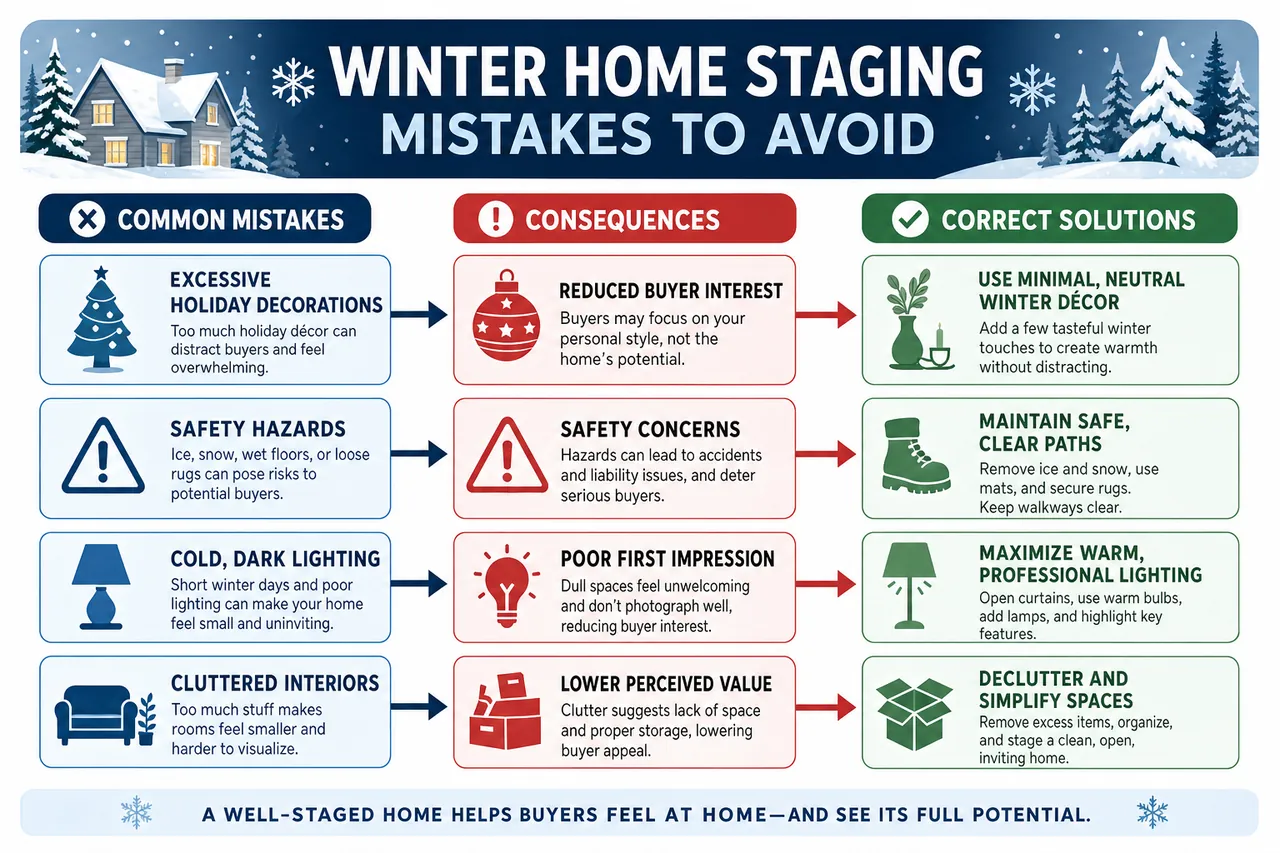
- 7. Avoid the Most Common Winter Staging Mistakes
- Conclusion: Winter Selling Is a Marathon, Not a Sprint — But Staging Helps
- Frequently Asked Questions
Winter home sales are tough. Shorter days, cold temperatures, bare trees, mud tracking everywhere — it's a lot. But here's what most sellers don't realize: motivated buyers still shop in winter, and they're often serious about making a move. With the right home staging tips for winter sales, your property can stand out when competitors have basically given up trying. According to NAR's 2025 Profile of Home Staging, 83% of buyers' agents say staging helps buyers visualize a home as their own. That statistic matters even more in winter when gray skies and cold make it harder for buyers to feel that emotional connection walking through your door. Want a stronger foundation before diving into winter-specific tactics? Our guide to home staging tips that help sell your house faster covers the essentials year-round.
Understanding Winter Home Staging
Home staging means preparing and presenting your property in the most appealing way possible to potential buyers. But winter staging? That's different. You're not just making rooms look attractive — you're creating a feeling. Warmth. Safety. That "I could live here" sense the moment they step off the icy sidewalk.
Winter sells slower. Here's the proof. According to RE/MAX's National Housing Report for February 2026, homes sat on the market for 63 days in January 2026 and 57 days in February 2026 — that's well above the national median of 50 days reported by Redfin in August 2026. Offerpad's 2026 analysis of seasonal patterns backs this up too. Winter buyers are scarce, and your home competes in a slower market.
But here's what changes things: strategic staging actually works. The NAR 2025 report found that 49% of sellers' agents saw staging reduce time on market, and 29% saw sale prices jump by 1%–10%. When your home's already fighting an uphill battle in winter, those numbers are worth taking seriously.
Back to top1. Create Warmth and Coziness from the Inside Out

Make buyers feel warm the moment they step inside. That's the single most powerful thing you can do for winter staging. It starts before they even open the door, and it doesn't stop until they've seen every room.
Layer Textures for Comfort and Visual Appeal
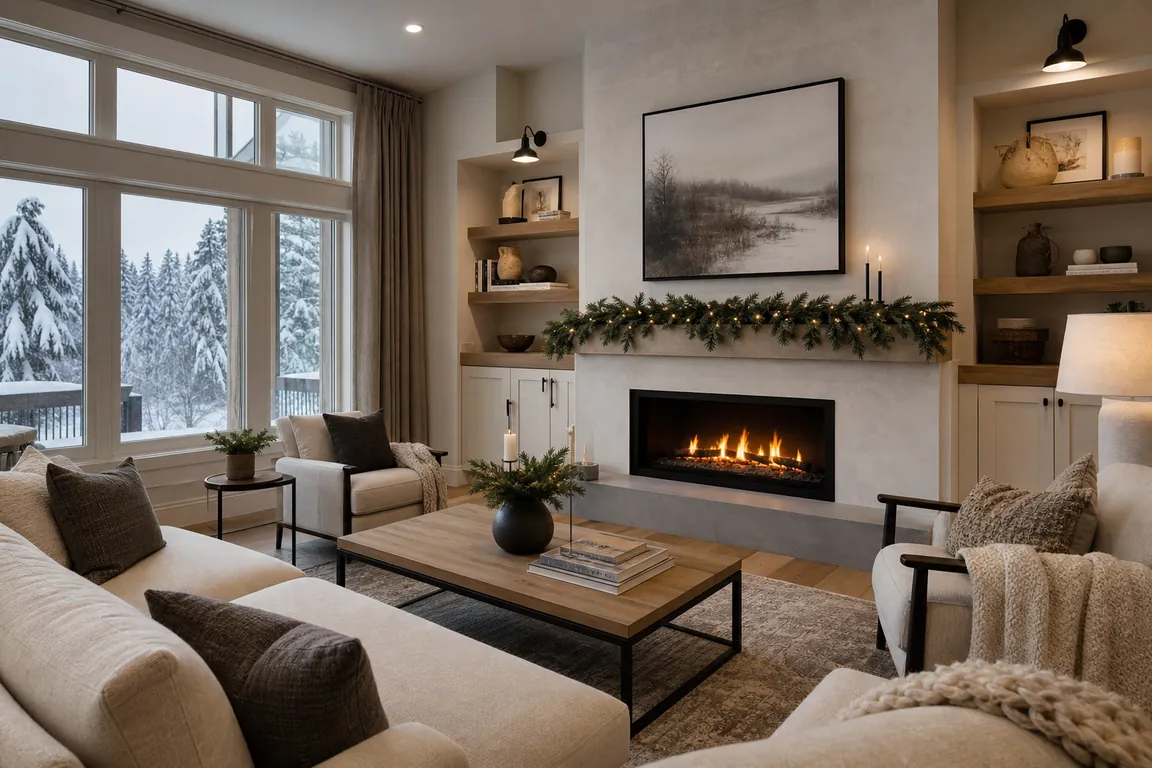
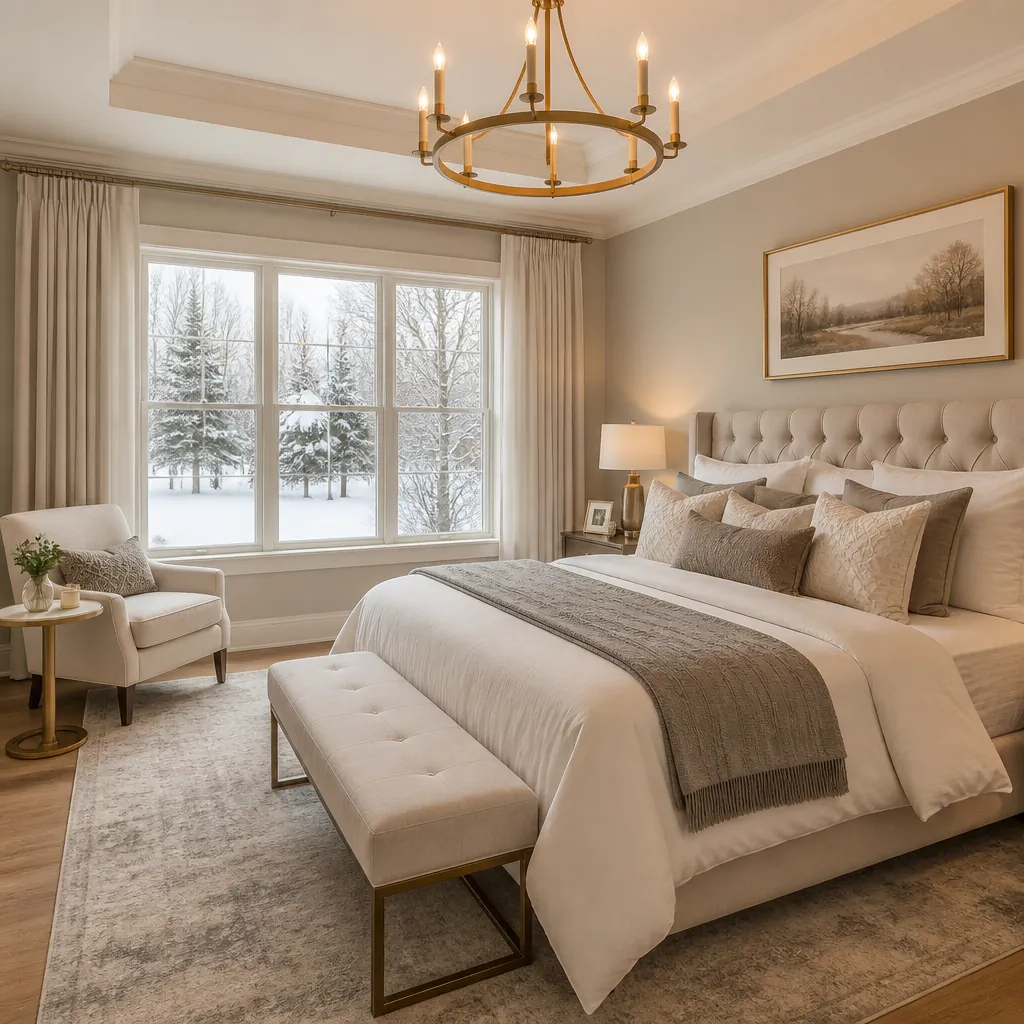
Drape a chunky knit throw over your sofa's arm. Add a plush area rug to hardwood floors. Stack two or three decorative pillows in warm tones on your beds and chairs — think burgundy, deep gold, or forest green. These small touches say "cozy home," not "vacant property."
The living room matters most. According to the NAR 2025 staging report, 91% of sellers' agents stage the living room first, followed by the primary bedroom (83%), dining room (69%), and kitchen (68%). That tells you where to invest your energy.
Strategic Lighting to Brighten Dark Winter Days
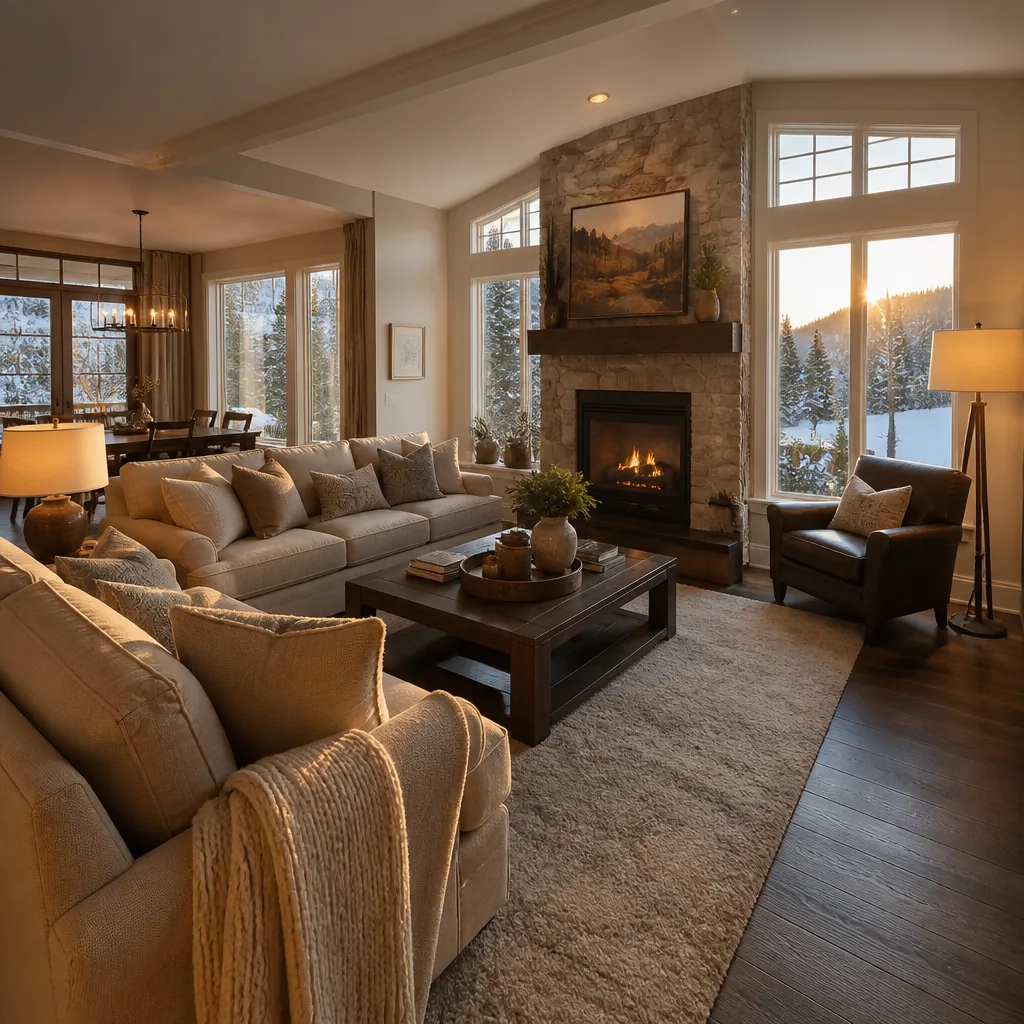
Winter light is flat and scarce — you can't change that. But you can control what happens inside. Open every curtain and blind before a showing. Add floor lamps in dark corners. Swap out any dim bulbs for warm-white LEDs (2700K–3000K color temperature). Consider placing a lamp on a timer so the home's already glowing when buyers arrive at dusk.
Well-lit rooms photograph better too, which matters enormously for online listings.
Temperature Control and Fireplace Staging
Set your thermostat to 68–70°F before every showing. A cold home the moment buyers walk in creates an immediate negative impression that's nearly impossible to reverse. And if you've got a fireplace? This is your winter superpower.
Light it before showings. Turn on a gas insert if that's easier. Position two armchairs at an angle toward the hearth to create an inviting conversation area. Even a well-maintained fireplace with fresh logs stacked neatly beside it reads as warm and welcoming.
Back to top2. Handle Seasonal Décor with Restraint
Holiday decorations during winter staging? They're tricky. A few thoughtful touches make your home feel warm and inviting. But go overboard, and suddenly it looks cluttered and too personal — which is exactly what sends buyers running.
The Ground Rules for Holiday Decorating
- Keep it minimal. Think one wreath on the front door. A simple centerpiece on the dining table. Maybe some candles on the mantel. That's it.
- Avoid religious or highly personal décor. You want broad appeal here. Winter themes work — pinecones, greenery, white lights. But skip the explicitly religious symbols. Not every buyer shares your faith, and that's okay.
- Use a neutral color palette. Deep greens, warm whites, soft golds, and natural wood tones feel wintery without being polarizing or risky.
- Stick to a removal timeline. Remove all holiday decorations by January 2nd. Seriously. A home still dressed in Christmas décor in mid-January? That reads as neglect, not festivity.
And here's the bigger picture: your décor should make your home's architecture shine, not fight for attention. When you're unsure, take it down.
Back to top3. Master Winter Curb Appeal

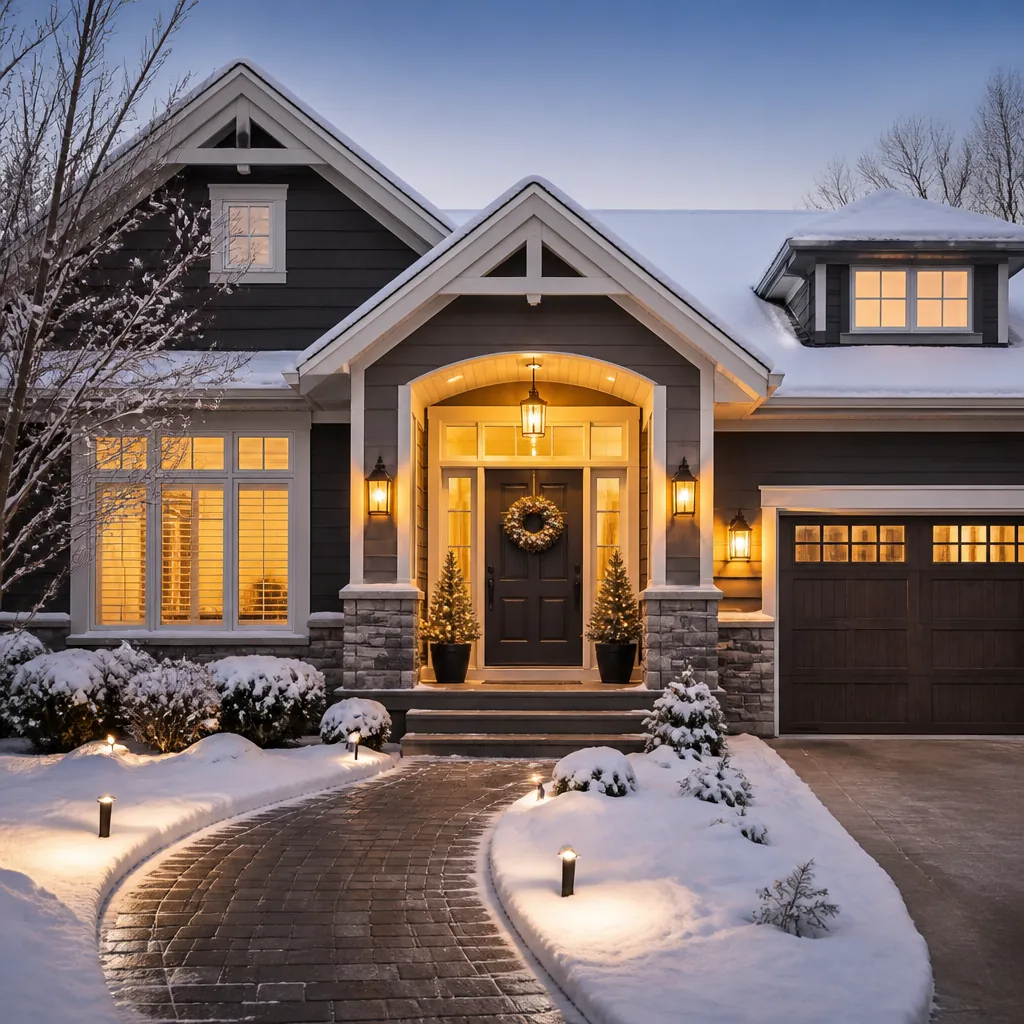
Your home makes its first impression at the curb. Winter doesn't make this easy. Bare trees, gray skies, and the constant threat of ice or snow mean you've got to work harder. Want the full strategy? Check out our complete guide to curb appeal ideas that help houses sell faster.
Snow, Ice, and Safety Management
This isn't optional. Clear every walkway, driveway, and step before each showing — no exceptions. And don't skimp on ice melt. A buyer who slips on your front path doesn't just create a liability problem; they're gone, and so's the sale. Keep a container of salt or sand visible by your front door. It sends a message: you care about safety here.
Create an Inviting Entry Experience
Start with a large, high-quality doormat at your entry. Then think about winter living—set up a small bench just inside, add a boot tray, hang some hooks for coats. Buyers notice this stuff. It shows you've actually lived through winters in this house, and it keeps snow and mud from destroying your freshly staged interior.
Outdoor Lighting and Pathway Visibility
Showings happen after dark, especially in winter. That's why pathway lighting matters so much.
Solar stake lights, motion-sensor porch fixtures, uplighting on key architectural details—they all work together to make your home feel safe and look inviting. Make sure your house numbers are big, bright, and easy to spot. A buyer driving by at 5 p.m. needs to find you without squinting.
Climate matters here. Colorado sellers face mountains of snow. Indiana's ice is relentless. Milder regions have entirely different challenges. That's why we've put together state-specific advice for curb appeal in Colorado and curb appeal in Indiana.
Back to top4. Choose the Right Colors and Furniture Arrangement
Winter's flat, cool light can make rooms feel smaller and colder than they actually are. But your color choices and furniture arrangement can fight back against that perception effectively.
Warm Color Palettes for Winter Staging
Warm whites, creamy beiges, soft taupes, and earthy terracottas all read beautifully under winter light. Then accent with deep jewel tones — navy, hunter green, or rust — in pillows, throws, and small décor pieces. Skip the stark cool whites, bright blues, or very pale grays. They'll feel clinical and cold when natural light is limited.
Furniture Arrangement for Flow and Comfort
Here's the thing: arrange seating to create conversation areas rather than theater-style rows facing a TV. Pull furniture slightly away from walls. It's counterintuitive, but it actually makes rooms feel larger. Empty homes need furniture. Consider renting or borrowing key pieces — a furnished room almost always photographs better and helps buyers understand scale. According to the HomeAdvisor 2025 staging cost data, vacant home staging runs $2,000 or more, while staging an occupied home averages around $800. That's a meaningful distinction if you're budgeting carefully.
Sensory Staging: Scent and Atmosphere
Scent is powerful. Most people overlook it entirely. Before a showing, simmer water with cinnamon sticks and orange peel on the stove, or bake a simple batch of cookies. You want subtle vanilla or cedar scents from a reed diffuser rather than an overpowering candle. Positive emotional responses matter. Avoid anything too strong or synthetic — that signals you're covering up an odor problem. Add soft background music at low volume (acoustic or classical) to complete the atmosphere. It shouldn't be intrusive.

5. Optimize Photography and Marketing for Winter Light
Your listing photos are doing the heavy lifting. Most buyers find their next home online before they ever step foot in a showing, so you need those images to work hard for you. Winter lighting? It takes extra care to get right.
Professional Photography Strategies
Don't use smartphone photos. Hire a real estate photographer with interior lighting experience — this matters more than you'd think. Schedule your exterior shots for midday when the winter sun sits highest in the sky. Inside, turn on every lamp and open those curtains all the way.
What if your yard looks dead and brown? You've got options. Use a summer photo for the exterior if you've got one archived somewhere. Or skip the wide-angle shot of lifeless landscaping entirely and make your hero image an attractive front-door detail instead.
Virtual Staging and Online Listings
Virtual staging software lets photographers or editors digitally furnish empty rooms. The cost? A fraction of what physical furniture rental would run you. For sellers working with tight budgets, this is increasingly practical.
And here's the payoff: a compelling online listing with warm, well-lit photography dramatically increases your showings. More showings means fewer days on market. Want the bigger picture? Our guide on how to sell your house faster through marketing, pricing, and timing digs into the full strategy.
Back to top6. Budget Realistically for Winter Staging
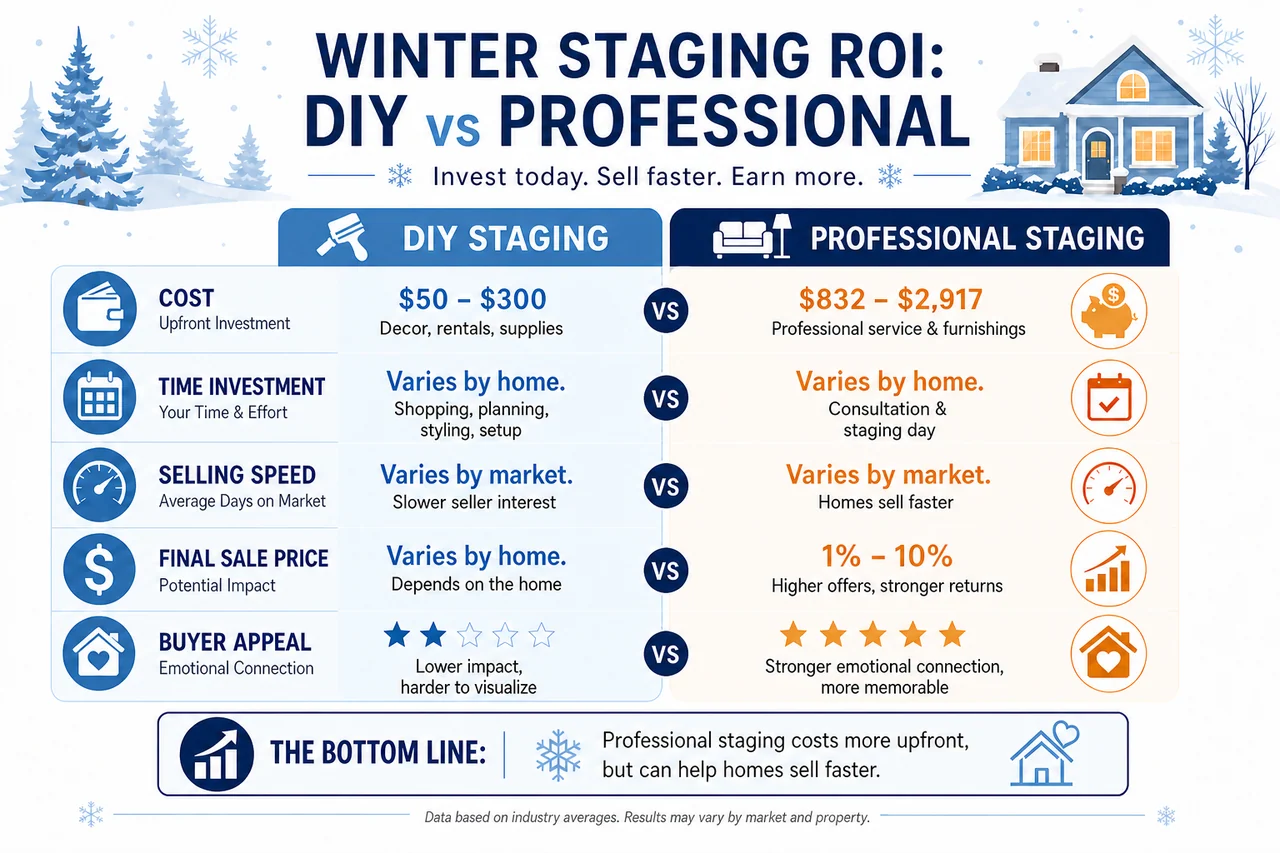
Here's what sellers want to know: how much does staging actually cost? And is it worth spending that money? The honest answer depends on your situation, but the numbers say yes.
Professional staging runs between $832 to $2,917 nationally, according to HomeAdvisor's 2025 data. The average lands around $1,849. The NAR's 2025 Profile of Home Staging puts the median closer to $1,500.
| Staging Approach | Estimated Cost (2025 Data) | Best For | Key Benefit |
|---|---|---|---|
| DIY Staging | $50–$300 (supplies only) | Occupied homes with good bones | Maximum budget control |
| Occupied Home — Professional | ~$800 (HomeAdvisor, 2025) | Sellers who need expert guidance on existing furnishings | Professional eye, lower cost than vacant |
| Vacant Home — Professional | $2,000+ (HomeAdvisor, 2025) | Empty homes that photograph poorly | Full transformation, strongest online impact |
| Full Professional Package | $832–$2,917 range (HomeAdvisor, 2025) | Higher-value listings where ROI is significant | Potential 1%–10% price increase per NAR |
Don't have the cash for staging upfront? That's where programs like KDS Homebuyers' Fix and List program come in. They fund your renovations before you sell, and you don't pay anything at signing. It's designed exactly for sellers stuck between needing a show-ready home and not having the liquidity to make it happen yourself.
But here's another route: if speed matters more than staging, a cash home buyer like KDS closes in days without staging at all. No open houses. No waiting. It's worth considering if you're under time pressure.
And your location changes everything. Sellers in Florida, California, and Tennessee deal with warmer winters and very different staging strategies than those in cold-weather markets. Check out our region-specific guides: staging in Florida, staging in California, and staging in Tennessee.
Back to top7. Avoid the Most Common Winter Staging Mistakes
Here's the thing: knowing what not to do matters just as much as following the tips. A few common winter staging errors can tank even a home you've worked hard to prepare.
- Letting the home feel cold. Even a gorgeous house becomes unwelcoming the moment a buyer walks in and feels chilled. Heat your home before every single showing. No exceptions.
- Ignoring slippery surfaces. Icy steps and slick entryways signal danger to buyers — and they are. Put non-slip mats at every entry, inside and out.
- Overdoing holiday decorations. You know the line between "charming" and "cluttered"? It's thinner than you think. When in doubt, take it down.
- Leaving decorations up too long. Holiday décor still hanging in February tells buyers your house has been sitting empty since November. That's not the message you want.
- Dark rooms and dead bulbs. Go through at dusk and replace every burned-out bulb you find. Dark rooms feel cramped, cold, and depressing.
- Personal clutter and family photos. Buyers can't imagine themselves here if your life is all over the walls. Pack the personal stuff away before you list.
- Neglecting the entry area. First impressions stick. A wet, messy, or freezing entry creates a tone that buyers won't shake for the rest of the tour.
Selling in a cold-weather state? The outdoor staging game gets tougher. Check our guides for staging in Colorado, staging in Washington, and staging in Indiana — they cover the real challenges winter markets throw at you.
Back to topConclusion: Winter Selling Is a Marathon, Not a Sprint — But Staging Helps
Winter real estate markets move slower. That's just how it works. RE/MAX data from early 2026 shows homes sitting for as long as 63 days in January across major metros. But here's the thing — the buyers actually looking in winter aren't browsing. They're serious, motivated, and often dealing with their own time crunch. And that's where you win. A staged home that feels warm, inviting, and safe stands out dramatically against all those cold, vacant, cluttered properties competing for attention.
You've got seven proven strategies now: creating warmth, keeping décor restrained, nailing curb appeal, picking the right colors, getting photography right, setting a realistic staging budget, and steering clear of common mistakes. Together, they form a complete winter staging playbook that works whether you're in Minnesota snow or South Carolina mild weather. Start with what matters most — heat, lighting, your entry area — then expand from there. A few hundred dollars and some focused effort can genuinely shorten how long your home lingers on the market and boost the final price.
Back to topFrequently Asked Questions
Does home staging actually help sell a house faster in winter?
Yes. Data backs this up. According to the NAR's 2025 Profile of Home Staging, 49% of sellers' agents saw staging reduce days on market — and the benefit jumps in winter, when homes already linger 10–15 days longer than summer. Living rooms and primary bedrooms make the biggest difference because that's where buyers look first.
How much should I budget for winter home staging?
That depends on one key thing: is anyone living there? HomeAdvisor's 2025 data says professional staging runs about $800 for an occupied home and $2,000 or more for a vacant one. The national range spreads from $832 to $2,917. But if you've got decent furniture already, you can DIY it with throws, rugs, and lighting for just $50–$300.
What rooms should I prioritize when staging in winter?
Start with your entry. It's the first thing people see when they step out of the cold. After that, move to the living room, then the primary bedroom. And here's what matters: 91% of agents prioritize the living room, with the primary bedroom at 83%, according to the NAR 2025 report. In winter, don't forget the fireplace area — it's a focal point when it's freezing outside.
When should I remove holiday decorations before listing?
Take everything down by January 2nd, period. Better yet? Before your listing even goes live if you're selling in January. Leaving tinsel and lights up past the first week of January sends a signal that your home's been sitting empty since before the holidays. Buyers notice. Even if that's not true, the impression lingers.
Is it worth staging a home that's in poor condition?
Staging helps with presentation. It doesn't fix broken foundations, ancient HVAC systems, or years of neglected repairs. Winter buyers especially tend to be sharp and practical — they'll spot what's wrong. Before you spend money on staging, ask yourself: does this home need real repair work first? If it does, you might get better results with targeted renovation or selling as-is. Our other guides cover curb appeal improvements that let you tackle visible problems without a full overhaul.
Back to top
