

Free HUD Foreclosure Counseling: How to Get Help in California
If you are worried about losing your home in California, you are not alone. The U.S. Department of Housing and Urban Development offers free help from a HUD housing counselor through its network of counseling agencies. 1 This guide shows how to find trusted support using hudhousingcounselors.hud.gov and explains what California homeowners can expect during the process. 3 Read on to learn simple steps to get real help fast. 2
Key Takeaways
- HUD-certified housing counselors offer free help through hudhousingcounselors.hud.gov and the hotline at 1-800-569-4287, guiding California homeowners with proven tools and programs.
- Counselors review your finances, negotiate with lenders, and explain options like loan modification, forbearance, or repayment plans; around 56% of counselees succeed in becoming current on their mortgages (source 1, 4).
- You need to bring recent mortgage statements, proof of income, tax records, insurance documents, and a hardship letter to your first appointment for best results.
- California's non-judicial foreclosure process can move quickly — sometimes completing in as few as 120 days — making early counseling especially important.
- The HUD website offers a search tool in multiple languages, including Spanish, Mandarin, and Vietnamese — languages widely spoken across Los Angeles, San Francisco, and San Diego. TTY support is available at 202-708-1455.
- Sometimes keeping the home is not possible; counselors can discuss alternatives like short sales or deeds in lieu of foreclosure under HUD guidelines.
What HUD Housing Counselors Do
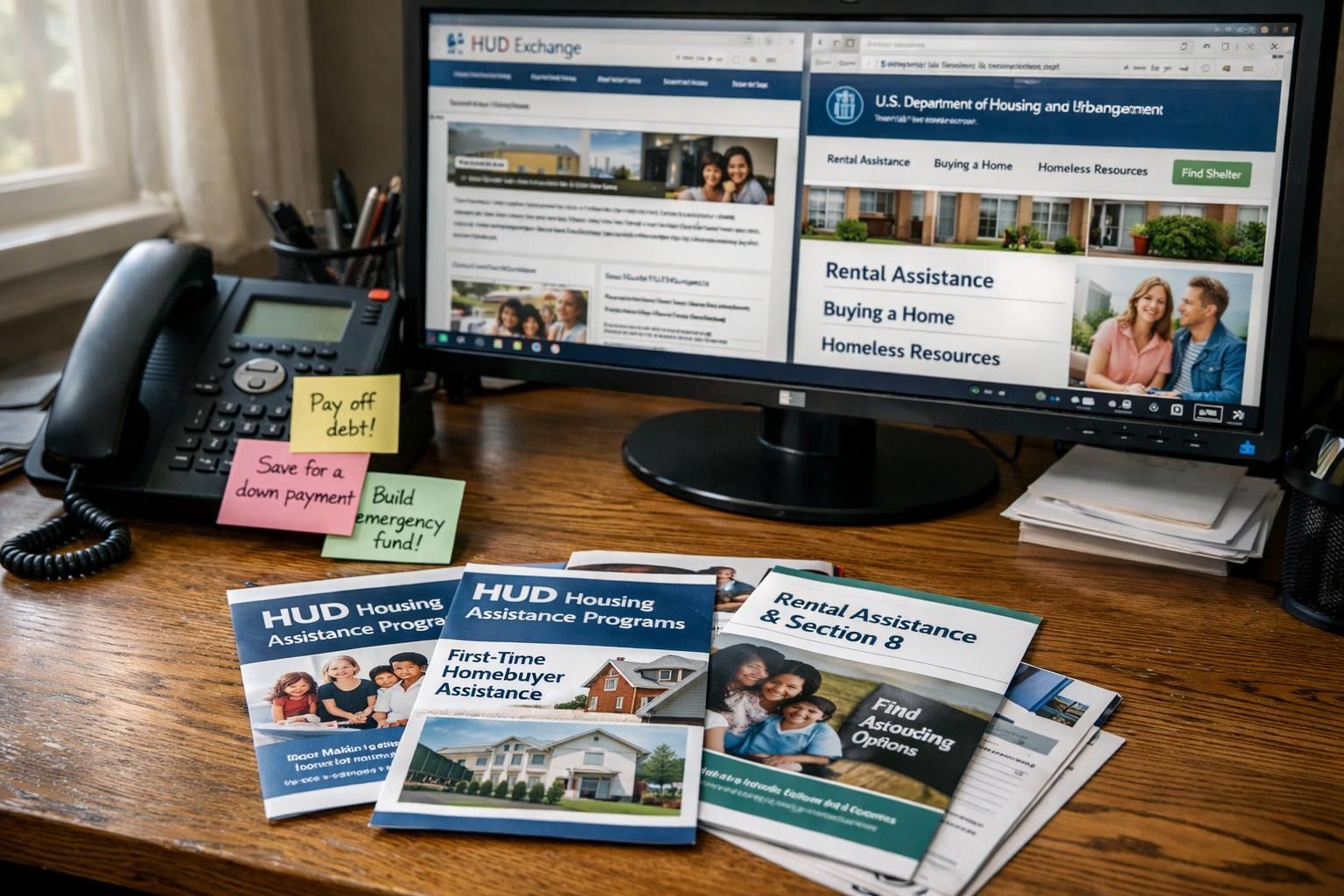
HUD-certified housing counselors work with you to understand your financial situation and show you a path through challenges. These experts offer guidance using HUD programs and proven tools, giving you practical steps for your next move.
Review homeowner finances and assess foreclosure risk
A housing counseling agency will ask you to bring mortgage statements from the past three to six months, proof of income, bank account records, California property tax bills, and homeowners insurance documents.
A HUD-approved counselor reviews each document closely using detailed budgets and expense worksheets. They calculate your monthly costs versus earnings to assess whether you are at risk of foreclosure under California's process.
You may need to show hardship evidence such as medical bills or job loss letters. Your counselor checks these alongside regular financial papers during the intake process. This honest review lets counselors determine if a missed payment is likely or has already occurred, and actionable advice follows to help prioritize spending so mortgage payments come first.
Negotiate with lenders on behalf of homeowners
HUD-certified housing counselors work directly with your lender to seek solutions like loan modifications and repayment plans. These experts can escalate issues to the FHA's National Servicing Center if needed, ensuring lenders follow proper loss mitigation steps.
You do not have to face calls or confusing notices alone. Your counselor will sort through all correspondence and help you respond quickly — keeping doors open for options such as home equity conversion mortgages or special repayment plans. Their goal is finding a plan that fits your situation while protecting your sensitive information throughout every conversation.
Explain options such as loan modification, forbearance, and repayment plans
Loan modification changes the terms of your existing mortgage by lowering your interest rate or extending the loan term, reducing your monthly payment and helping you stay in your home.
Forbearance allows you to pause or reduce payments for a set period without facing foreclosure right away — giving you time to recover from job loss or medical hardship. Repayment plans let you catch up on late payments by adding a portion of what is owed to future regular payments over several months.
HUD-approved counseling agencies will walk you through eligibility requirements for all available options under federal programs. Studies show that homeowners who get this type of counseling are 1.6 times more likely to avoid foreclosure than those who do not seek help.
Create customized action plans to prevent foreclosure
HUD-certified housing counselors build a personalized action plan by reviewing your finances, assessing your foreclosure risk, and helping you prioritize mortgage payments. Counselors suggest realistic budgeting strategies and explore options like loan modification, forbearance agreements, or repayment plans tailored to your situation.
Working with a certified counselor increases your chances of success significantly — 56 percent of counselees who create these action plans become current on their mortgages. 1 Follow-up meetings help track progress and adjust the plan as your circumstances change.
How to Find a HUD-Approved Counselor in California
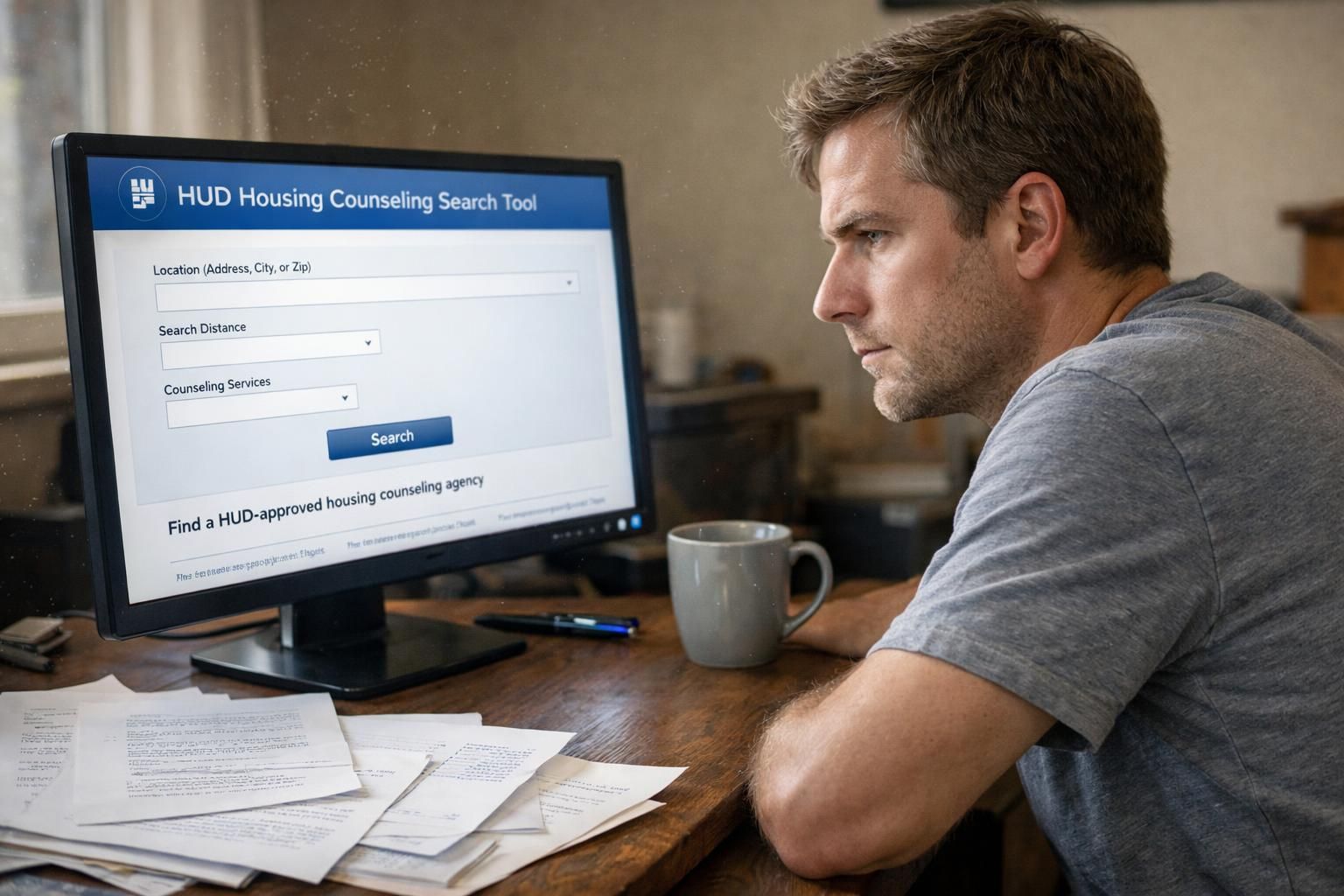
You can connect with a HUD-approved housing counseling agency using the search tool at hudhousingcounselors.hud.gov or by calling the helpline. California has a large network of approved agencies serving communities across the state.
Use the HUD website search tool
Find HUD-approved housing counseling agencies by visiting hudhousingcounselors.hud.gov or www.consumerfinance.gov/find-a-housing-counselor. Enter your California zip code and choose a search radius. The tool lets you filter by counseling method — face-to-face, phone, video conference, or internet — and by service type, including bringing your mortgage current, reverse mortgage counseling, or fair housing rights support.
Secure search connections use .gov domains and HTTPS for data protection. Information is available in multiple languages, and special accommodations for disabilities can be requested through listed agencies.
Call the HUD hotline (800-569-4287)
Call the HUD hotline at 1-800-569-4287 for free help from a HUD-certified housing counseling agency. 2 Trained staff will guide you through foreclosure avoidance, explain your rights under California law, and connect you to local HUD-approved counselors in your area. Spanish-language support and TTY options at 202-708-1455 are also available.
Access services in multiple languages and for individuals with disabilities
California's diversity means language access is especially important. Many HUD-approved counselors across Los Angeles, San Diego, and the Bay Area speak Spanish, Mandarin, Vietnamese, Tagalog, and other languages. The HUD hotline at 800-569-4287 offers multilingual assistance. 2
TTY support is available at 202-708-1455 for those with hearing impairments. For further accessibility concerns, contact HUD directly at 202-708-1112. 3 Every California homeowner deserves clear guidance regardless of background or ability.
Understanding Foreclosure in California

Foreclosure can feel overwhelming, but understanding California's specific process gives you more control and more time to act.
How Foreclosure Works in California
California primarily uses a non-judicial foreclosure process, meaning lenders do not need to go through the court system to foreclose. This makes the timeline faster than in many other states. The process typically begins after you miss several mortgage payments, with the lender recording a Notice of Default with the county recorder's office.
California law generally requires a waiting period after the Notice of Default is filed before the lender can record a Notice of Trustee's Sale. After the Notice of Trustee's Sale is recorded, there is an additional waiting period before the sale can occur. From start to finish, the non-judicial process can move as quickly as four to five months, which is why contacting a HUD-certified counselor early is critical.
California's Homeowner Bill of Rights provides important protections, including restrictions on dual tracking — the practice of pursuing foreclosure while simultaneously reviewing a borrower for a loan modification. HUD-certified counselors understand these state-specific protections and can help you assert your rights.
What Foreclosure Means for California Homeowners
Foreclosure means your lender uses a legal process to take back your home after missed mortgage payments, resulting in a forced sale of your property. Beyond losing your home, foreclosure damages your credit score for years and can trigger tax consequences in California.
In some cases, California's anti-deficiency rules may protect you from owing the remaining loan balance after a foreclosure sale on a purchase-money mortgage — but this depends on your specific loan and situation. A HUD-certified housing counselor can help clarify what these protections mean for you and guide you toward solutions such as loan modification or repayment plans before foreclosure reaches its final stage.
What to Bring to Your First Appointment

Careful preparation makes your counseling session more productive and helps your housing counseling agency build the right plan for you.
Mortgage statements, income documentation, and hardship letter
Bring recent mortgage statements from the last three to six months, along with proof of income such as pay stubs or benefit letters. A detailed hardship letter explaining your financial difficulties — supported by documents like medical bills, divorce paperwork, or job loss notices — is also essential. Recent California and federal tax returns help your counselor review longer-term financial trends and support any loan modification request.
Property tax records and other relevant financial documents
California property tax bills show your current tax status and any delinquencies with your county assessor. Homeowners insurance documents, bank statements, and HOA records help counselors assess your total monthly obligations. Evidence of any liens, legal judgments, or outstanding repair costs against the property is also important.
The U.S. Department of Housing and Urban Development uses all of this material for a full review before building your personalized action plan. Having clear copies of every document ensures nothing is missed during sensitive discussions about keeping your home.
What to Expect During Counseling

Certified HUD housing counselors will guide you through every step with care. You can expect a private, respectful session that protects your sensitive information as required by the U.S. Department of Housing and Urban Development.
From intake to action plan
The process begins with a review of all your financial documents — mortgage statements, income records, hardship letter, and California property tax statements. Your counselor assesses your current situation and identifies immediate foreclosure risks.
After intake, the counselor builds a custom action plan outlining steps to help you avoid foreclosure, explains options like loan modification or forbearance, and contacts your lender if needed. More than half — 56 percent — of people working with a housing counseling agency become current on their mortgages after this support. 4 Follow-up sessions allow you to track progress and adjust plans as your situation evolves.
Your counselor works for you — not the lender
Many California homeowners fear sharing financial details or feel embarrassed asking for help. HUD counselors treat your concerns with confidentiality, as required by the U.S. Department of Housing and Urban Development — your information stays private. These experts work only for you, never the lender, and their goal is to empower you to make informed decisions while protecting your rights through free government programs. Most clients leave sessions feeling more confident and ready to handle next steps. 4
Beyond Foreclosure Prevention
HUD-certified housing counselors in California help with more than just foreclosure. If you are a senior considering a reverse mortgage, counseling for the FHA's Home Equity Conversion Mortgage (HECM) program provides clear guidance on risks, benefits, and required steps before you proceed.
Rental housing assistance is another key resource. Counselors help renters find and keep affordable housing while explaining fair housing rights under California and federal law. Budgeting advice, financial management programs, and referrals to California-specific assistance programs — such as those administered through the California Housing Finance Agency — can further strengthen your overall stability.
When Counseling Might Not Be Enough
Sometimes, working with a HUD-certified housing counselor may not stop foreclosure. If you owe significantly more than your home is worth, mortgage payments consume more than 50% of your household income even after modification, or the property has major unresolved repair issues or multiple liens, keeping the home may not be realistic.
In these situations, a HUD-certified counselor will explain California-specific alternatives such as short sales or deeds in lieu of foreclosure. These options can help protect your credit and limit further financial damage. California's anti-deficiency protections may apply in some scenarios, so it is worth discussing your specific loan type with your counselor before making any decisions.
Your counselor will create an action plan focused on your future stability, drawing from HUD programs tailored to difficult situations like yours.
Conclusion
HUD-approved foreclosure counseling gives California homeowners a real path forward during hard times. With help from a certified housing counselor, you can understand your options — including the state-specific protections California law provides — and make informed decisions about your home.
Use the HUD search tool at hudhousingcounselors.hud.gov or call 1-800-569-4287 to connect with expert support at no cost. Every situation is different, and these counselors listen closely and offer steps that fit your needs. You do not need to face foreclosure alone.
If foreclosure cannot be avoided and you need to sell your home quickly, KDS Homebuyers works with California homeowners to provide fair, no-obligation cash offers. Visit kdshomebuyers.net to learn more and request your free cash offer today.
FAQs
1. What is HUD foreclosure counseling and who provides it?
HUD foreclosure counseling offers free help to homeowners at risk of losing their homes. Certified housing counselors from agencies approved by the U.S. Department of Housing and Urban Development provide this service throughout California.
2. How do I find a certified housing counselor in California?
Search for HUD-certified housing counselors at hudhousingcounselors.hud.gov by entering your California zip code to find approved agencies near you.
3. Does California's foreclosure process give me time to seek help?
California primarily uses a non-judicial process, which can move in as few as four to five months. Acting quickly — ideally before or immediately after a Notice of Default is filed — gives you the most options.
4. Are there California-specific protections I should know about?
Yes. California's Homeowner Bill of Rights limits dual tracking by lenders, and California's anti-deficiency rules may protect you from owing a remaining loan balance after foreclosure in certain situations. A HUD counselor can explain how these apply to your case.
5. Is my personal information safe with a HUD-approved agency?
Yes. All HUD programs require that your sensitive information stays protected when you work with an official housing counseling agency or counselor.
References
- ^ http://www.hud.gov/helping-americans/avoiding-foreclosure
- ^ https://www.hud.gov/stat/sfh/housing-counseling
- ^ https://www.hud.gov/findacounselor
- ^ https://www.huduser.gov/portal/publications/pdf/foreclosure_counseling_v2.pdf
- ^ https://curs.sites.unc.edu/wp-content/uploads/sites/1430/2013/05/Roheeffectivepracticesfinalreport.pdf
