

Probate vs. Trust: What's the Difference When Selling a House in California
If you need to sell a house after a loved one's death in California, the probate vs. trust process can feel confusing and overwhelming. Many homeowners don't realize that using a living trust can help avoid probate court altogether. 2 This guide breaks down how estate planning choices like wills, revocable trusts, and probate affect home sales, timelines, and costs in California. Find out which option makes selling your inherited property easier and faster. 3
Key Takeaways
- California probate typically takes 9 to 18 months or longer. Statutory attorney and executor fees under California's Probate Code can reach 4%–5% of the gross estate value—sometimes more. All filings become public record through the Superior Court.
- A living trust lets you avoid California probate entirely. When real estate is held in a revocable living trust, the successor trustee can sell it in as little as 30–90 days with no court delays. 1 2
- Trust administration keeps your affairs private. Only trustees and beneficiaries see details about property transfers—unlike California probate, where all court records are publicly accessible.
- Failing to fund the trust creates problems. If your California home was never retitled into the trust's name, it will still go through probate even if a trust exists. 6
- California's estate threshold for full probate is $184,500 (as of 2024). Estates above this amount generally require full Superior Court supervision unless assets pass through a trust, joint tenancy, or beneficiary designation.
What Is Probate in California?

Probate is a legal process supervised by California's Superior Court that manages a person's estate after death. You will face probate if the deceased owned real property solely in their name and did not place it in a trust.
Definition and purpose of probate
California probate is handled through the Superior Court in the county where the decedent lived—such as Los Angeles County Superior Court or San Diego Superior Court. The process validates the last will and testament, appoints an executor or administrator, settles debts, and distributes assets to heirs.
If someone dies without a will, California's intestate succession laws govern who inherits. California law requires full probate court supervision for estates exceeding $184,500 in gross value (adjusted periodically). Assets that pass through joint tenancy, beneficiary designations, life insurance, or a properly funded living trust generally avoid this requirement.
Key steps in California probate
You begin by filing the will and a petition with the Superior Court in the appropriate county. Once the court appoints an executor or administrator and issues Letters Testamentary or Letters of Administration, that person can begin managing the estate.
The executor must inventory all assets and obtain a court-approved appraisal through a California Probate Referee—a state-appointed appraiser who values real property and other assets. Creditors receive formal notice and have four months from the date Letters are issued to file claims. After debts, property taxes, and any required state or federal tax filings are resolved, the executor petitions the court for final distribution.
California law sets statutory fees for both the attorney and the executor based on the gross value of the estate—not the net. For example, on a $900,000 Los Angeles home, each party may be entitled to roughly $21,000 in statutory compensation, totaling over $42,000 before any extraordinary fees. Working with an experienced probate attorney helps ensure each step meets California's specific requirements.
Timeline expectations (9–18 months or longer)
California probate is among the lengthiest in the country. Most estates take 9 to 18 months; contested estates or those with complex assets can stretch to two or three years. Mandatory creditor waiting periods, court hearing schedules, and required Probate Referee appraisals all add time. Selling a house through California probate rarely closes quickly.
A properly funded living trust bypasses all of this. Trust administration in California typically takes 30 to 90 days once the successor trustee has authority—a dramatic difference for families who need to access funds or sell property promptly.
What Is a Trust in California?

A revocable living trust lets you transfer real estate and personal property to a trustee you control during your lifetime. California families use them widely to sidestep the state's costly and time-consuming probate process.
Definition of a living trust (revocable trust)
A revocable living trust is created while you are alive. You serve as the initial trustee, retaining full control, and name a successor trustee to take over if you become incapacitated or pass away. 2 You fund the trust by recording a new deed transferring your California real estate into the trust's name—typically prepared by an estate planning attorney and recorded with the county recorder's office.
After your death, the successor trustee can act immediately without petitioning any court. Assets transfer directly to beneficiaries according to the trust terms, keeping everything out of public record. 1
Roles of grantor, trustee, and beneficiaries
As the grantor, you create and fund the trust. During your lifetime you typically serve as your own trustee. Your chosen successor trustee—often a spouse, adult child, or professional trustee—steps in at your death or incapacity without needing court approval.
In California, the successor trustee must send a notice to all heirs and beneficiaries within 60 days of the grantor's death under California's trust notification rules. This notice starts a 120-day window during which beneficiaries can contest the trust. After that period, the trustee can proceed with selling real property, paying debts, and distributing assets.
Key benefit: avoiding California probate
The primary reason California homeowners use living trusts is to avoid the state's expensive and public probate system. With real estate properly titled in the trust, your successor trustee can list and sell the home, sign escrow documents, and distribute proceeds—all without a Superior Court judge's involvement. You skip mandatory court hearings, Probate Referee fees, and statutory attorney and executor commissions, keeping significantly more money for your beneficiaries.
Key Differences Between Probate and Trust in California
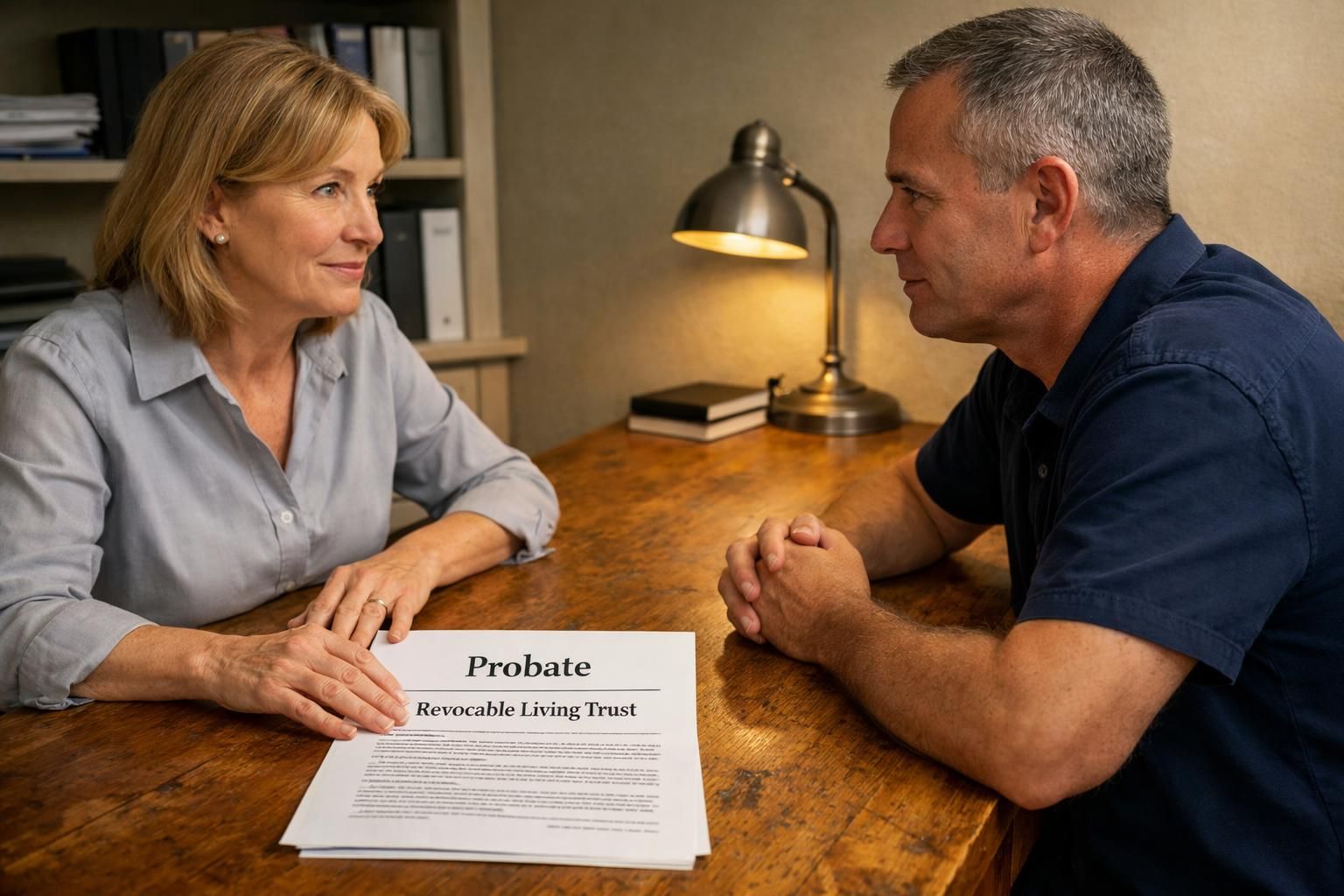
Court involvement
California probate sales require direct Superior Court supervision. You must file a petition, obtain court confirmation of the sale price, and in many cases hold a court hearing where outside buyers can overbid—a process unique to California probate sales. The court must confirm that the sale price meets at least 90% of the court-approved appraised value before escrow can close.
Selling property held in a properly funded living trust eliminates this entirely. The successor trustee signs escrow documents using a Trustee's Certificate of Trust, and the transaction closes like a standard sale—no hearings, no overbid process, no judge required.
Privacy considerations
California probate filings are public record, accessible through the Superior Court in any county. Anyone can look up the decedent's assets, debts, heir information, and distribution plan. In high-value markets like San Francisco or Los Angeles, this public exposure can invite unwanted attention.
A living trust keeps all of this private. Only the trustee and named beneficiaries know the terms of the trust agreement and what assets are being distributed.
Timeline and cost comparisons in California
California probate typically takes 9 to 18 months, often longer. Statutory attorney and executor fees are calculated on the gross estate value—meaning a $1 million home generates combined statutory fees of around $46,000 before any extraordinary charges. Add Probate Referee fees, filing costs, and property taxes accruing during the process, and total probate costs can easily reach 5%–7% of gross estate value.
Setting up a revocable living trust in California typically costs between $1,500 and $3,500 through an estate planning attorney. Trust administration after death is far less expensive, and the successor trustee can often close a home sale within 30 to 60 days. The savings—in both time and money—are significant, especially in California's high-value real estate markets.
Selling a House in California Probate

Steps: petition, appointment, appraisal, listing, court confirmation
California probate home sales follow a specific court-supervised sequence. First, you or your probate attorney file a petition with the Superior Court to open the estate. The court issues Letters Testamentary or Letters of Administration, giving the executor legal authority to act.
A court-appointed Probate Referee then appraises the property at fair market value. The executor lists the home, typically with a real estate agent experienced in California probate. Once an offer is accepted, the executor must petition the court for confirmation. California law then requires a public overbid hearing—other buyers can appear in court and bid at least 10% above the original offer on the first $10,000 plus 5% above that amount. This process adds weeks and unpredictability to the sale.
After court confirmation and close of escrow, the executor pays remaining debts, files required tax returns, and petitions for final distribution. The entire process from opening to distribution routinely spans 12 to 18 months in busy California courts.
Heir agreements, repairs, and timeline concerns
When multiple heirs must agree on a California probate sale, disagreements over pricing or distribution can send the matter back to court—adding months and additional legal fees. California's statutory fee structure means every delay costs the estate money.
Repairs are also complicated. Court approval is typically needed before spending estate funds on improvements, which means properties often sell as-is. Meanwhile, property taxes, homeowner's insurance, and maintenance costs continue accumulating throughout the probate period. Families in Sacramento or the Inland Empire dealing with older properties can find carrying costs substantial over a 12–18 month wait.
Probate and California real estate
Probate affects California real estate in direct and costly ways. Because California has some of the highest home values in the country, statutory probate fees here are among the highest in the nation. An executor managing a $1.2 million San Diego home faces the same court process as one managing a $400,000 Sacramento property—just with larger fees. Executors carry personal fiduciary liability for mistakes, making experienced legal counsel essential throughout the process.
Selling a House Held in a California Trust

Trustee authority and faster transactions
If a California home is titled in a living trust, the successor trustee can sell it without any court petition or confirmation hearing. The trustee provides escrow with a Trustee's Certificate of Trust—a condensed document confirming authority to act—instead of a full copy of the trust. 4 Sales can close in 30 to 60 days. 3 There is no overbid process, no court hearing date to wait for, and no Probate Referee fee to pay.
Buyers also benefit—trust sales allow standard contingencies like inspections and financing, making the property more attractive than a probate listing sold as-is with court uncertainty attached.
Trustee responsibilities and disputes
California successor trustees have significant legal duties. Within 60 days of the grantor's death, the trustee must provide formal notice to all heirs and beneficiaries under California law. Beneficiaries then have 120 days to contest the trust. The trustee must keep accurate records, pay valid debts and taxes, and distribute assets strictly according to the trust terms.
If beneficiaries believe the trustee is not acting in their best interest, they can petition the Superior Court for trustee removal or an accounting. 5 Consulting a California estate planning attorney helps trustees avoid missteps that could expose them to personal liability.
What If There's Both Probate and a Trust in California?
You may need to deal with both probate and trust administration if a loved one forgot to transfer all assets into their living trust before death. This is more common than people expect and requires careful legal guidance to resolve.
Improper funding and mixed assets
The most common problem California estate planners see is a trust that was created but never fully funded. If a California home was never re-deeded into the trust's name, it must go through Superior Court probate even if a valid trust exists—adding 9 to 18 months of delays and thousands in fees. 6
A pour-over will can direct stray assets into the trust at death, but those assets still pass through probate first. Bank accounts, brokerage accounts, and vehicles left outside the trust face the same issue. Reviewing and updating beneficiary designations and title documents regularly is essential—especially after major life events like marriage, divorce, or purchasing a new home.
Importance of legal guidance in California
California's probate and trust laws are detailed and can be unforgiving of errors. A qualified California estate planning attorney can coordinate trust funding, ensure deeds are properly recorded with the county assessor, help trustees navigate notice requirements, and manage tax filings. If an estate includes business interests, out-of-state property, or disputes among heirs, professional help is not optional—it is essential for protecting everyone involved.
Tax Implications for California Inherited Property
Inherited real estate in California generally receives a stepped-up cost basis to fair market value on the date of death. This means heirs who sell quickly after inheriting typically owe little or no capital gains tax on appreciation that occurred during the decedent's lifetime—a significant benefit in California's high-appreciation markets.
California does not have a state estate tax or inheritance tax. However, federal estate tax applies to estates exceeding $13.61 million in 2024. One important California-specific rule: Proposition 19 (effective February 2021) significantly limits the parent-child property tax reassessment exclusion. Under Prop 19, inherited property that is not used as the heir's primary residence is fully reassessed to current market value for property tax purposes—which can mean a dramatic increase in annual property taxes, especially in high-value areas like the Bay Area or Los Angeles. Discussing Prop 19's impact with a California estate attorney or tax advisor before selling or retaining inherited property is strongly recommended.
Common Questions About California Probate vs. Trust
Which is better for selling property in California?
For most California homeowners, a living trust is clearly the better option for selling inherited property. It avoids the state's lengthy, expensive, and public probate process. The successor trustee can sell the home in 30 to 60 days without court approval, overbid hearings, or Probate Referee fees. 7 Given California's high property values and correspondingly high statutory probate fees, the financial benefit of a trust is especially significant here.
Probate is not impossible to navigate in California, but it demands patience, legal expertise, and ongoing carrying costs while the court process unfolds.
When should you seek professional help in California?
You should consult a California estate planning or probate attorney any time you are dealing with real property in the estate, contested heirs, unclear title, business interests, or an estate above the $184,500 probate threshold. Trustees and executors carry personal fiduciary liability under California law, and mistakes in the probate or trust administration process can lead to court challenges, surcharges, or personal financial liability. Early legal guidance prevents the most costly errors.
Conclusion
For California homeowners and their families, the choice between probate and a living trust has real financial consequences. Probate in California is expensive, public, and slow—often lasting well over a year and costing tens of thousands in statutory fees alone. A properly funded revocable living trust gives your successor trustee the authority to sell your home quickly, privately, and without court involvement.
If you are currently managing an inherited property—whether it's in Los Angeles, Sacramento, San Diego, or anywhere else in California—understanding which process applies to your situation is the first step. Consult a qualified California estate planning attorney to review your options, verify how the property is titled, and make sure any trust is properly funded.
If you need to sell inherited property quickly regardless of whether it's in probate or held in trust, KDS Homebuyers can help. We buy California houses for cash directly from homeowners and estate representatives—no repairs, no open houses, no lengthy escrow waits. Visit kdshomebuyers.net to request your free cash offer today and find out how fast and simple selling an inherited property in California can be.
FAQs
1. What is the probate threshold in California?
As of 2024, California requires full Superior Court probate for estates with gross assets exceeding $184,500. Assets held in a trust, joint tenancy, or with named beneficiaries generally do not count toward this threshold.
2. Does California have a state estate or inheritance tax?
No. California does not impose a state estate tax or inheritance tax. Federal estate tax may apply to estates above $13.61 million in 2024.
3. How does Proposition 19 affect inherited property in California?
Under Prop 19, a parent-child property tax reassessment exclusion is only available if the heir uses the inherited home as their primary residence. All other inherited properties are reassessed to current market value, which can significantly increase annual property taxes.
4. Can a successor trustee sell a California home without going to court?
Yes—as long as the property is properly titled in the trust's name. The successor trustee can sign escrow documents using a Trustee's Certificate of Trust, and the sale proceeds like a standard transaction without any court confirmation hearing.
5. What happens if a California home was never transferred into a trust?
If the property was not retitled into the trust before the grantor's death, it must go through California Superior Court probate regardless of whether a trust exists. A pour-over will can direct the asset into the trust, but it still passes through probate first.
6. How long does California probate take compared to trust administration?
California probate typically takes 9 to 18 months or longer. Trust administration for a properly funded living trust usually takes 30 to 90 days—a dramatic difference that affects when heirs can access funds or complete a property sale.
References
- ^ https://www.metlife.com/stories/legal/what-type-of-trust-should-you-create-for-your-estate/
- ^ https://extension.umn.edu/transfer-and-estate-planning/trusts-definitions-types-and-taxation
- ^ https://usleadlist.com/resources/understanding-probate-vs-trust-sale
- ^ https://teamtapper.com/blog/trust-sale-vs-probate-sale/ (2023-12-28)
- ^ https://www.barrattorneys.com/blog/trust-vs-probate-what-to-choose/ (2026-01-21)
- ^ https://www.heritagelawwi.com/the-legal-risks-of-improperly-funding-a-trust
- ^ https://www.lametrohomefinder.com/blog/probate-vs-trust-sale-california
