

Can You Sell a House Before Probate? What the Law Says in Indiana
Trying to sell a house before probate can feel confusing and stressful, especially during an already difficult time. Many people do not realize that property owned solely by a deceased person usually cannot be sold until the probate process begins and a personal representative is appointed by an Indiana court. 1 This article explains what probate means in Indiana, when you can legally sell, and how estate planning tools like living trusts, joint tenancy, or transfer-on-death deeds may help you avoid delays. 3
Key Takeaways
- You generally cannot sell a house owned solely by a deceased person until Indiana probate begins and the court appoints a personal representative with legal authority (letters testamentary). 1
- Property held in joint tenancy with right of survivorship, a living trust, or a transfer-on-death deed can bypass Indiana probate entirely.
- Selling without proper court authority risks title defects, denial of title insurance, mortgage rejections, and lawsuits from heirs or creditors.
- Indiana allows small estate affidavits for probate estates valued under $50,000, offering a faster, less expensive alternative to full probate.
- Indiana probate typically takes 6 to 12 months for straightforward estates, but disputes among heirs or missing paperwork can extend that timeline significantly. Always consult an experienced Indiana probate attorney before selling estate real estate.
Understanding Probate and Property Sales in Indiana
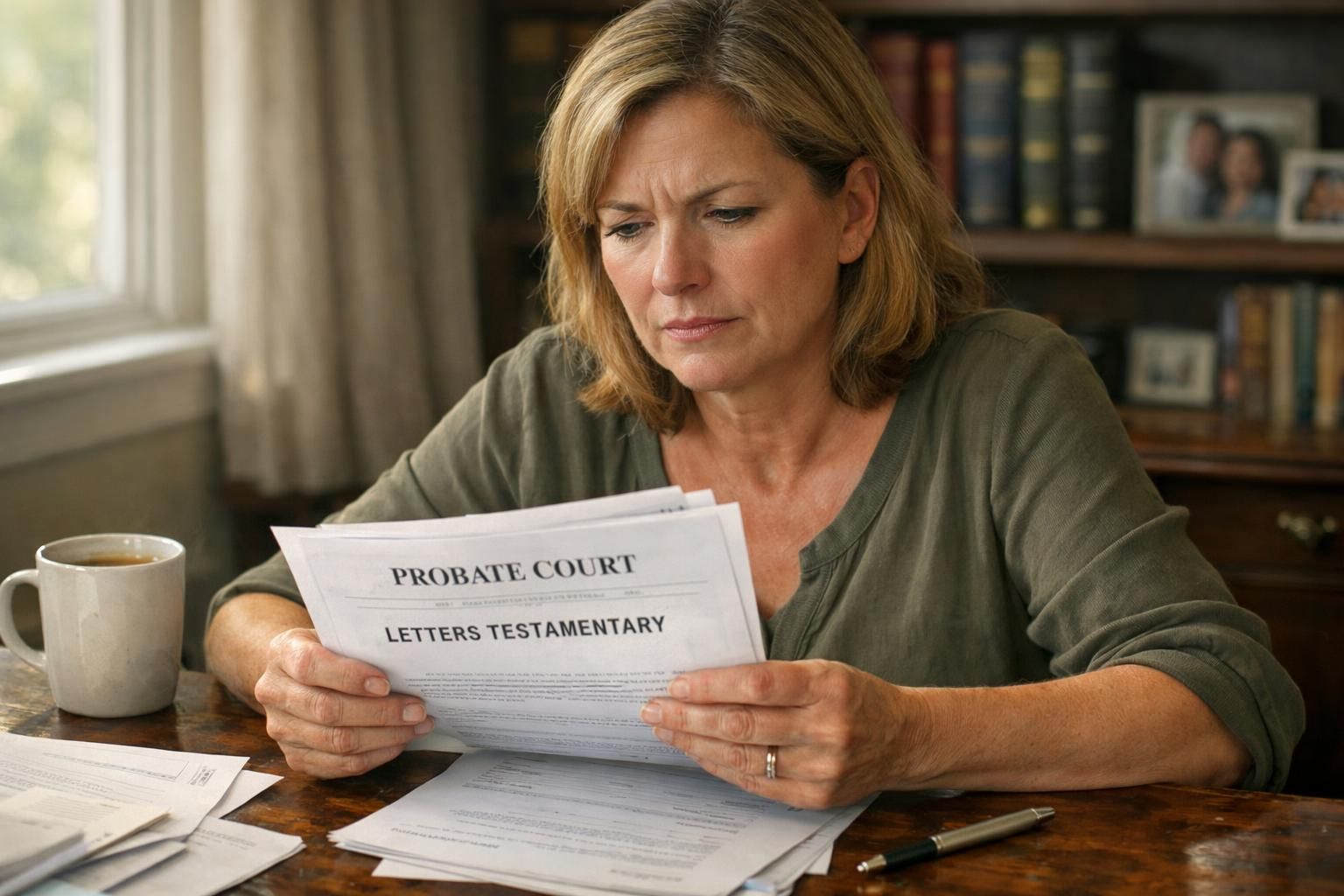
Indiana probate law shapes how estate assets like a house are transferred after someone passes away. Key terms to understand include personal representative, probate court, and letters testamentary.
What is probate?
Probate is the court-supervised legal process that validates a will and authorizes the transfer of a deceased person's assets. In Indiana, probate cases are handled by the Circuit Court or Superior Court in the county where the deceased lived. The court appoints a personal representative — called an executor if named in the will — to manage estate administration.
You may need to complete this step before selling a house that belonged only to your loved one at the time of death. 1 Indiana probate ensures all debts and taxes are paid before assets are distributed to heirs or beneficiaries. If there is no will, Indiana's intestate succession laws determine who inherits.
Why is probate required before property sales?
Indiana probate is required before a property sale to protect everyone involved. The personal representative must receive legal authority from the court before handling estate assets, including real estate. Without that authority, title insurance companies will refuse to insure the property and buyers cannot obtain a mortgage.
Selling a house before completing probate can create title defects that cloud ownership for years. The process also confirms all heirs and beneficiaries, prevents fraud, and ensures creditors are paid before any transfer occurs. Skipping required steps puts you at risk of invalid sales and potential lawsuits under Indiana estate law.
Key terms: executor, probate estate, letters testamentary
- The executor is the person named in the will, or appointed by the Indiana court, who manages all estate assets, pays debts and taxes, and may oversee property sales.
- A probate estate includes everything owned solely by the deceased that must pass through estate administration — commonly a home, bank accounts without named beneficiaries, and personal property. 2
- Letters testamentary are official court documents granting the executor legal authority to act for the estate, including listing real estate for sale or accessing financial accounts.
- Executors must present letters testamentary before selling a house. Without them, Indiana title companies will not approve any transfer of legal title.
- If no will exists, the court appoints an administrator instead. In both cases, proper court-issued paperwork is required before making decisions about estate real property.
- Letters testamentary protect executors from personal liability and confirm every action meets Indiana probate court requirements. 2
When You CAN Sell Before Probate Closes in Indiana

Certain property transfers bypass the full Indiana probate process through estate planning tools. These options can speed up real estate sales and give families faster access to estate assets.
Joint tenancy with right of survivorship
Property held in joint tenancy with right of survivorship passes directly to the surviving owner when one co-owner dies — no Indiana probate required. You can sell the house as soon as title is updated, without court approval or a personal representative.
Joint tenancy is common between spouses or close family members in Indiana and is recognized by title insurance companies as a valid transfer. Unlike tenants-in-common ownership, which often requires probate, joint tenancy lets survivors move quickly during a difficult time.
Transfer-on-death deeds
Indiana recognizes transfer-on-death (TOD) deeds, allowing property owners to name a beneficiary who receives the home directly at death without going through probate. To be effective, the TOD deed must be properly recorded with the county recorder's office before the owner's death.
A TOD deed does not affect your ownership rights during your lifetime and can be revoked at any time. This makes it a flexible estate planning tool for homeowners in Indianapolis, Carmel, and throughout Indiana. 3 Consult an Indiana probate attorney to confirm the deed is properly drafted and recorded.
Living trusts
Property held in a properly funded revocable living trust completely avoids Indiana probate. After the grantor's death, the successor trustee can sell the house without waiting for letters testamentary or court approval — as long as real estate was legally transferred into the trust before death.
Living trusts reduce stress for families by allowing the trustee to act quickly. This method is especially useful when dealing with inheritance tax considerations or when the estate includes multiple properties across Indiana counties.
Small estate affidavits
Indiana allows heirs to use a small estate affidavit when the total value of the probate estate is $50,000 or less. This simplified process lets you transfer estate assets — including real property in qualifying cases — without going through full probate court proceedings.
You must complete state-specific forms accurately and follow all required procedures. This path is often faster and less expensive than a court-supervised sale. Always verify current Indiana requirements and consult a probate attorney if questions arise about eligibility or next steps.
Court-Supervised Sales During Indiana Probate

Indiana courts oversee home sales during probate to protect heirs, creditors, and buyers. You need proper authority from the probate court before moving forward with any sale of estate real property.
Petitioning for authority to sell
Selling a house during Indiana probate requires specific legal steps. As personal representative, you must secure court authority before any sale. 4
- File a formal petition with the Indiana Circuit or Superior Court in the county where the estate is open, demonstrating you are following proper estate administration rules.
- Submit supporting documents including the death certificate, letters testamentary, and a property appraisal to prove your appointment and establish fair market value.
- Clearly state why selling the home is necessary — such as paying estate debts or distributing proceeds among heirs — satisfying your fiduciary duty under Indiana law. 4
- Follow Indiana probate rules closely, including deadlines and documentation requirements for real estate sales.
- Provide written notice to all heirs, beneficiaries, and creditors so every interested party stays informed about the proposed sale.
- Allow time for potential objections before proceeding; this protects against future title defects and legal disputes.
- Wait for official court approval before listing or accepting any offer on the property. 5
- Work with an experienced Indiana probate attorney, especially if the estate involves complications such as no will, co-ownership disputes, HOA liens, or out-of-state heirs.
- Keep detailed records of every step; these protect you from later claims of personal liability.
Indiana's unsupervised administration option
Indiana law permits unsupervised administration in many estates, which means the personal representative can manage and sell estate property without obtaining court approval for each individual transaction. This can significantly shorten the timeline for selling a house compared to states that require court confirmation of every sale.
To qualify for unsupervised administration, the will must authorize it or all interested parties must consent. Even under unsupervised administration, the personal representative still holds a fiduciary duty to heirs and must follow Indiana probate statutes. Consulting with a probate attorney ensures you are using this option correctly.
Notice to heirs and handling objections
Indiana probate law requires the personal representative to notify all heirs, beneficiaries, and creditors of proposed estate property sales. State law sets specific timeframes for sending these notices, and skipping this step can invalidate a sale.
- Every interested party has the right to object within the time window set by Indiana law; objections can come from heirs, creditors, or others with a stake in estate assets. 5
- Unresolved objections can lead to additional court hearings or mandatory mediation, extending your timeline by weeks or months.
- Maintain complete written records of all notices sent and responses received; Indiana courts will examine this documentation.
- Failure to notify someone correctly could invalidate the sale entirely, and title companies may refuse to insure a transaction not completed by the book.
- Executors who skip notice requirements face personal liability, potential lawsuits, and possible removal as administrator of the estate.
Risks of Selling Without Proper Authority

Selling a house without proper Indiana court authority can lead to costly legal disputes, title defects, and serious personal liability for the executor.
Invalid sales and title defects
Attempting to transfer Indiana real estate before probate is properly handled often creates title defects that appear in county public records. Title insurance companies will refuse to insure these properties, meaning buyers cannot obtain a mortgage or complete closing.
A personal representative who acts without authority may trigger lawsuits from heirs or creditors. Courts can reverse transactions after the fact, leaving both sellers and buyers exposed to significant financial losses. Fixing title defects years later can cost thousands of dollars and take considerable time in Indiana courts.
Personal liability for executors
Selling estate property without clear court authority or proper letters testamentary puts you at risk for personal liability as executor. The Indiana probate court can remove you from your role and require you to pay back losses if beneficiaries claim financial harm.
Heirs and creditors may file lawsuits against an executor who violates Indiana probate statutes. Always consult a qualified Indiana probate attorney before making decisions about selling estate assets, including real property held in trusts or other estate planning arrangements.
Legal action from heirs or creditors
Heirs or creditors can file lawsuits in Indiana probate court if you transfer estate assets without proper authority. 5 They may ask the judge to reverse an invalid sale, demand damages, or seek your removal as personal representative. Legal challenges drain estate funds and harm everyone involved. Always secure proper authority before proceeding with any sale during the Indiana probate process. 6
Indiana Probate Timeline Expectations

Typical Indiana timeframes
Simple Indiana estates with a clear will, cooperative heirs, and few assets often close within 6 to 12 months. The first one to four months typically involve filing the petition, notifying heirs, and receiving letters testamentary from the court. Inventory and appraisal of assets can take several additional months depending on estate complexity.
If disputes arise between beneficiaries — which can happen in larger metro areas like Indianapolis or Noblesville just as easily as in smaller counties — expect delays pushing asset distribution past 18 months. Estates involving contested wills, creditor claims, or real estate in multiple Indiana counties can take two years or longer. 7
Factors that speed up or delay the process
- Estates with a clear will and a named executor tend to move through Indiana probate courts faster than intestate estates.
- Cooperation from all heirs and beneficiaries allows the personal representative to manage estate administration more smoothly.
- Disputes among heirs or will contests can extend Indiana probate for months or years.
- Simple estates with a single Indiana property typically settle faster than those with multiple properties or out-of-state assets requiring ancillary probate.
- Missing documents, unclear titles, or unrecorded deeds force extra verification steps and slow down property sales.
- Court backlogs in busy Indiana counties — including Marion County courts serving Indianapolis — can cause unexpected waits for hearings.
- Minimal debts and no large creditor claims keep timelines shorter.
- Federal estate tax returns are required only for estates exceeding the federal exemption threshold ($13.61 million in 2024). Indiana does not have a separate state estate tax or inheritance tax for most transfers, which simplifies administration for many families.
- Using Indiana's small estate affidavit process — available for estates under $50,000 — can bypass full formal probate and speed things up considerably.
- Out-of-state heirs who cannot attend hearings or respond promptly may delay decisions on property distribution.
Indiana Tax Considerations When Selling Probate Property
Indiana does not impose a state estate tax or a state inheritance tax for most heirs. Class A beneficiaries — spouses, children, grandchildren, and parents — are fully exempt from Indiana inheritance tax, which was fully repealed in 2013. This means most Indiana families selling inherited property face no state-level inheritance or estate tax.
However, federal capital gains taxes may apply when you sell inherited real estate. Indiana generally follows federal rules for inherited property, and the stepped-up cost basis at the date of death often reduces or eliminates capital gains tax on appreciated property. Consult a tax professional to understand your specific situation before closing any probate sale.
Indiana also does not impose a real estate transfer tax at the state level, though county-level recording fees and other closing costs still apply.
Alternatives and Solutions for Indiana Families
Family buyouts
A family buyout allows one heir to purchase the shares of other heirs during Indiana estate administration, avoiding a forced sale. All beneficiaries must agree on terms, and a professional appraisal typically sets the property's fair market value. Legal documentation is essential to protect everyone and satisfy Indiana probate court requirements.
Estate advances
Estate advances give heirs quick access to cash while Indiana probate continues. Unlike loans, estate advances require no monthly payments and are repaid only from the inheritance after probate settles. 5 Companies specializing in estate advances work with executors and verify eligibility through court documents. Always have an Indiana probate attorney review any agreement before signing.
Selling to probate-savvy buyers
Selling to real estate investors who understand Indiana probate can reduce stress for personal representatives. These buyers typically offer fast cash, purchase properties as-is, and structure contracts to accommodate Indiana court approval timelines. 9 This is especially helpful when a property in Indianapolis or elsewhere in Indiana is vacant and generating ongoing expenses like property taxes, HOA fees, or maintenance costs. You still must complete every step required by Indiana probate law before closing. 9
What is Probate in Indiana Real Estate
Probate in Indiana real estate is a court-supervised process handled by the Circuit or Superior Court in the county where the deceased resided. It transfers property ownership after death and verifies that debts and taxes are paid before assets pass to heirs. 10
As personal representative, you file the will and a petition with your local Indiana probate court, receive letters testamentary, collect estate assets, pay valid debts, and then arrange distribution or sale of real property according to state law. Real estate rarely skips this step even when a valid will exists. Working with an experienced Indiana probate attorney protects your interests and helps you avoid title defects or heir disputes down the line.
Conclusion
Selling a house before Indiana probate closes presents real legal challenges. State law, the terms of any will, and how property is titled all shape what you can and cannot do. If you want to avoid delays, estate planning tools like transfer-on-death deeds, living trusts, or joint tenancy are worth discussing with a qualified Indiana attorney before you need them.
If you are already navigating the Indiana probate process and need to sell inherited property quickly, KDS Homebuyers works directly with personal representatives and families across Indiana. Visit kdshomebuyers.net for a free, no-obligation cash offer and to learn how we can help simplify the process during a difficult time.
FAQs
1. Can a personal representative sell a house before Indiana probate starts?
Generally, no. A personal representative cannot sell estate real property before the Indiana probate process begins and the court grants authority through letters testamentary.
2. What happens if someone tries to sell an Indiana estate house without probate authority?
The sale may be invalid, title companies will likely refuse to insure it, and the seller may face lawsuits from heirs or creditors and personal liability under Indiana law.
3. Does Indiana allow transfer-on-death deeds to avoid probate?
Yes. Indiana recognizes transfer-on-death deeds for real property. When properly recorded with the county recorder before death, a TOD deed transfers ownership directly to the named beneficiary without probate.
4. How does Indiana's small estate affidavit work for real property?
When the total probate estate value is $50,000 or less, Indiana heirs may use a small estate affidavit to transfer assets without full probate court proceedings, saving time and money.
5. Are there Indiana state estate or inheritance taxes on probate property sales?
Indiana fully repealed its inheritance tax in 2013 and has no state estate tax. Federal capital gains tax rules may still apply depending on the property's value and how long it was held. Consult a tax professional for guidance specific to your situation.
References
- ^ https://www.mymetrotex.com/201738texas-probate-selling-an-estate-with-or-without-a-will/
- ^ https://www.mass.gov/probate-of-wills-and-estates
- ^ https://www.farrellfritz.com/insights/tax-tracker/transfer-on-death-deeds-adopted-by-new-york/ (2024-06-27)
- ^ https://legacyassuranceplan.com/articles/wills-probate/legal-requirements-when-selling-property-during-probate
- ^ https://www.ledbetterlawfl.com/selling-a-house-before-during-or-after-probate
- ^ https://www.heritagelawwi.com/can-i-sell-a-house-before-probate-is-complete
- ^ https://www.findlaw.com/estate/probate/probate-process-and-timeline.html (2025-07-24)
- ^ https://larsonbrown.law/2023/01/09/the-probate-timeline/
- ^ https://www.homehelpersgroup.com/can-you-sell-a-house-before-probate-what-to-know-now/ (2025-11-12)
- ^ https://selfhelp.courts.ca.gov/probate
