

How a Home Appraisal Works (And What to Expect as a Seller) in Colorado
Selling your home in Colorado can feel stressful, especially when you worry about getting a fair price. A home appraisal gives you an unbiased property value that lenders, buyers, and sellers depend on. 1 This guide explains how appraisals work in Colorado, what impacts your home's market value, and ways to avoid surprises or setbacks.
Key Takeaways
- A home appraisal is a required step for most mortgage-backed sales in Colorado, giving an unbiased estimate of your property's market value. Licensed appraisers follow USPAP standards and compare recent local sales to set this value.
- Appraisals usually happen after offer acceptance but before closing. The process takes around 7 to 21 days from start to finish, with appraisal fees typically between $400–$700 in the Denver metro and Front Range markets.
- If the appraisal comes in lower than your contract price—something that happens about 10–15% of the time—the deal can hit delays or fall through unless the buyer covers the gap or you renegotiate.
- Major repairs, deferred maintenance, or title problems will reduce your home's appraised value and could block loan approvals, especially FHA and VA loans. Fix issues before the appraisal if possible.
- Selling directly to a cash buyer lets you skip lender-required appraisals, making it easier and faster to close—this option saves on approval wait times and avoids risks tied to low valuations.
What is a Home Appraisal and Why Does it Matter?
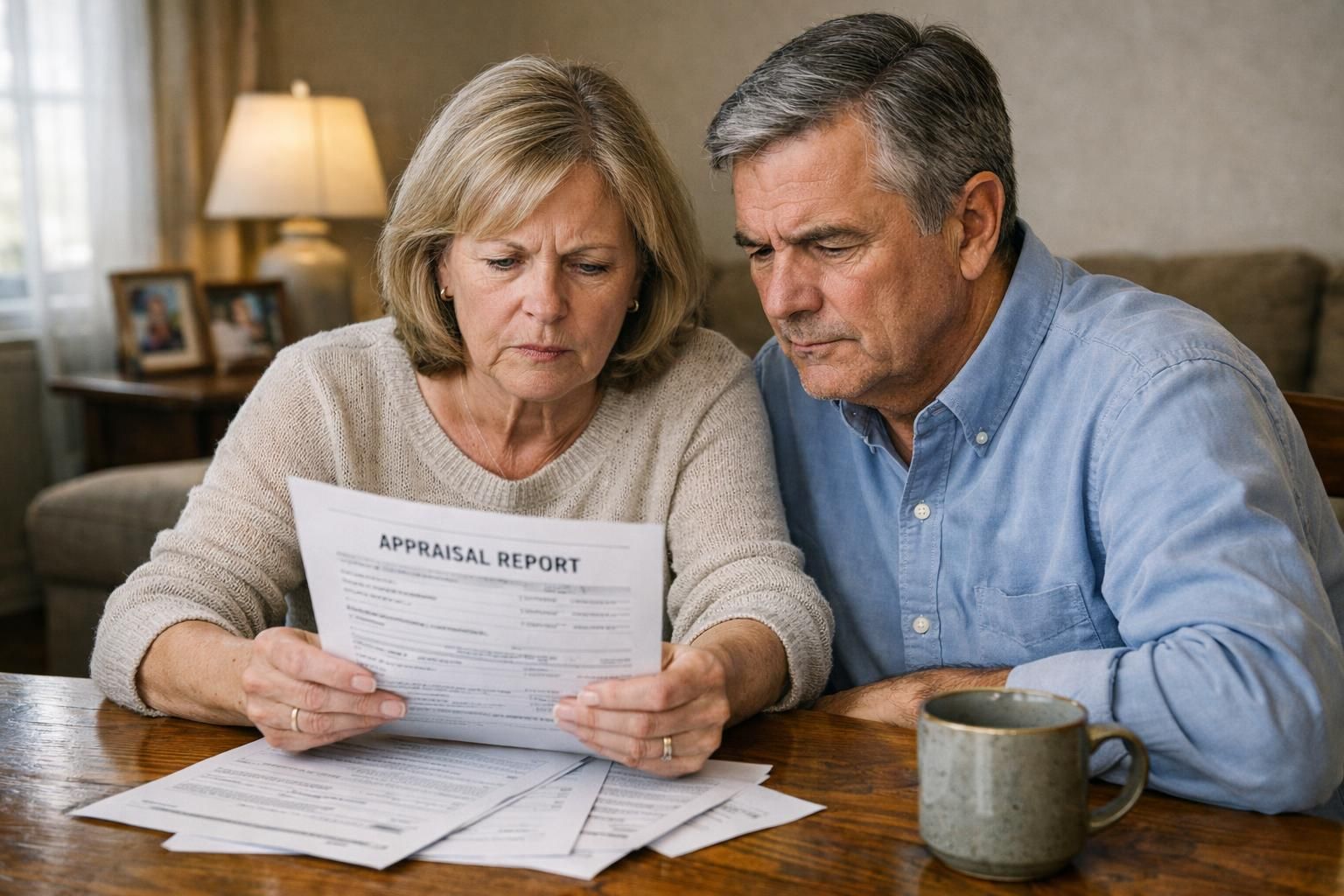
A home appraisal gives you a fair estimate of your property's market value, based on analysis from a Colorado-licensed appraiser. Mortgage lenders require this step to make sure the property supports your loan amount and protects their investment.
Definition of a home appraisal
A home appraisal gives you an unbiased, professional estimate of your property's value. A Colorado-licensed or certified appraiser conducts this evaluation for banks, mortgage lenders, and sometimes insurance companies. 2 The expert follows strict rules called Uniform Standards of Professional Appraisal Practice, known as USPAP. Colorado appraisers are licensed and regulated through the Board of Real Estate Appraisers, which operates under the Colorado Division of Real Estate.
An appraisal report includes details about property condition, square footage, improvements, location factors like school districts, and comparable sales data from nearby properties. In competitive markets like Denver or Aurora, comps can shift quickly, making recent data especially important.
Lenders use this document to decide loan amounts and ensure they are not lending more than the home's worth. Sellers rely on fair valuation to support their price in negotiations or help prevent surprises during the Colorado closing process. 1
Importance for sellers, buyers, and lenders
Appraisals hold real weight in any Colorado real estate transaction. As a seller, you depend on the appraisal to confirm your property value matches the final sale price and protects you from selling below market value.
For buyers, appraisals help prevent overpaying and confirm they are making a fair investment based on comparable sales and current Front Range market trends. Colorado's real estate market has seen significant price appreciation in recent years, making accurate appraisals especially important.
Lenders rely on state-licensed appraisers for an unbiased opinion of value before approving mortgage loans or refinancing requests, calculating the loan-to-value ratio and aiming for ratios at or below 80 percent. Appraisals also matter during divorce settlements handled in Colorado district courts, probate proceedings through the Colorado court system, and when tapping into home equity.
Difference between a home appraisal and a home inspection
A home appraisal estimates your property value for the mortgage lender, focusing on fair market value based on comparable sales and local real estate trends. A Colorado-licensed appraiser checks basic condition, square footage, upgrades, and location but does not examine every system in depth.
Home inspectors do a more detailed job, testing systems like HVAC, roofing, plumbing, and electrical to find safety issues or needed repairs before closing. In Colorado, buyers typically hire their own inspector during the inspection objection period outlined in the standard Colorado Real Estate Commission contract forms.
Both reports can impact loan approval, but only the inspection report checks every detail of your property's structure and function. If major repairs surface during this process, speaking with a real estate agent early helps you understand your options.
When Do Appraisals Happen in the Selling Process?

Most home appraisals in Colorado take place after you accept an offer but before the closing date, especially when a mortgage lender is involved. Understanding this timing helps you prepare for each step and plan for loan approval.
Traditional sales (after offer acceptance, before closing)
After both parties sign the Colorado Contract to Buy and Sell Real Estate, your mortgage lender orders a home appraisal. This happens before closing to confirm the property value matches the contract price. The buyer typically pays the appraisal fee, which appears on the closing disclosure three days before the transaction finalizes.
A licensed appraiser will visit your home within this window, using data from the MLS and county assessor records. Colorado is a public records state, so appraisers have access to publicly recorded sale prices, which supports stronger comparable sales analysis. Their final report can impact loan approval if it comes in lower than expected.
Refinances, estate settlements, and divorce situations
Refinancing your Colorado home requires a property appraisal to update the home value for loan approval. Lenders use this to determine your loan-to-value ratio and available equity. Strong equity may qualify you for an appraisal waiver, but most refinancing transactions still require a licensed appraiser.
In estate settlements handled through Colorado's probate courts, an appraisal helps establish the fair market value of real estate for tax purposes or stepped-up basis calculations. Divorce cases heard in Colorado district courts rely on professional appraisals to fairly distribute real property between parties. These valuations protect everyone's financial interests during difficult transitions.
Appraisal exceptions for all-cash sales
Cash buyers do not need mortgage lender approval, so the appraisal process is usually skipped. This can speed up your Colorado real estate transaction significantly and help you avoid delays tied to traditional loan requirements. Most all-cash sales in markets like Denver and Colorado Springs close much faster as a result.
Selling directly to a cash buyer lets you bypass appraisal contingencies and save on appraisal fees, which typically range between $400 to $700 along the Front Range. Many Colorado home sellers in challenging situations choose the cash route because it streamlines closing and eliminates risks tied to low appraisals threatening the deal.
What Does an Appraiser Do?

A Colorado-licensed appraiser visits your home, reviews its condition and upgrades, and uses comparable sales along with market trends to produce an unbiased report.
On-site inspection process (interior and exterior evaluation)
An on-site appraisal inspection gives the appraiser a close look at your property. This detailed visit impacts your final appraised value and can affect your real estate transaction.
- The Colorado-licensed appraiser schedules a visit, typically lasting about 30 minutes for standard homes. Larger or unique properties may take longer.
- You can be present during the appraisal. The appraiser walks through both the interior and exterior, reviewing every major area.
- Inside, the appraiser evaluates bedrooms, bathrooms, kitchen, living spaces, finished basements, and any additions. Home upgrades like new roofing or updated kitchens are carefully noted.
- Outside, they check curb appeal, siding, windows, roofing, porches, garages, driveways, landscaping, and lot size. In Colorado, features like mountain views, large lots, or proximity to open space can add value.
- FHA and VA loan programs require extra scrutiny for safety issues such as handrails on stairs or peeling paint in homes built before 1978.
- The appraiser takes photos of every major room and all exterior sides for documentation required by lenders and the Colorado Division of Real Estate.
- They assess visible repairs needed; deferred maintenance influences market value and limits loan approval options.
- Square footage is measured for finished living areas only. In Colorado, finished basements are common and can add significant value when properly permitted and documented.
- Modernizations such as remodeled kitchens or energy-efficient upgrades are added to the report and may boost fair market value.
- All findings feed into valuation models like the sales comparison approach using recent local comparable sales data.
Use of comparable sales (comps) and market trends
Appraisers use comparable sales, often called "comps," to estimate your home's fair market value. Recent sales of similar homes in your neighborhood carry the most weight. Appraisers pull data from the MLS and Colorado county assessor records, looking at properties with matching square footage, bedroom and bathroom count, lot size, age, and condition. Homes that sold within 90 days are preferred.
Colorado's real estate market can vary significantly by region. Denver metro values differ from those in Colorado Springs or more rural mountain communities. Seasonal trends also matter — Colorado real estate tends to be most active in spring and summer. Mortgage lenders want evidence-based valuations following Fannie Mae and Freddie Mac guidelines, ensuring your home value estimate reflects solid, current data.
Key Factors That Impact Appraised Value

Location, condition, age, updates, and neighborhood trends
Property location plays a major role in your Colorado home appraisal. Appraisers consider your neighborhood, school district quality, distance to amenities, crime rates, and proximity to employment centers or recreational areas. Homes near Denver's light rail corridors, open space preserves, or top-rated Jefferson County and Cherry Creek school districts often command higher values.
Your home's condition matters just as much as its address. Well-maintained houses with recent upgrades appraise stronger during the process. Updating kitchens or bathrooms can increase property value, especially if you have receipts and pulled permits through your local municipality. Colorado's high-altitude climate also means appraisers pay attention to roof condition, exterior paint, and HVAC systems designed for cold winters. Rising neighborhood values across the Front Range have generally supported strong appraisals in recent years, though market shifts can affect this.
How to Prepare for a Home Appraisal

Practical tips: repairs, cleaning, decluttering, and documentation
Tackle minor repairs before the appraisal. Fix leaky faucets, replace bulbs, patch chipped paint, and address cracked windows. Even small problems can raise questions about property condition and reduce your home value estimate. Clean every room and organize closets to make all areas accessible for the appraiser's inspection.
Declutter countertops, entryways, and garages so square footage stands out clearly. Prepare documents showing proof of recent upgrades — receipts, permits pulled through your Colorado county or city building department, and photos. If you have finished a basement or added a bedroom, confirm that work was properly permitted, as unpermitted improvements carry less appraisal weight in Colorado.
Keep utilities running throughout the visit so each system works as intended. Let the appraiser work openly without feeling pressured — a transparent approach builds trust and supports a smoother process tied to mortgage loan approval.
What Happens After the Appraisal?
Your Colorado-licensed appraiser will send an appraisal report to your mortgage lender within a few days. Review the home value estimate and work with your real estate agent or loan officer if you see any issues with the final property value.
Report timeline and possible outcomes (matching, low, or significant issues)
After the appraiser visits, most lenders receive the official report within 1 to 2 weeks. From order to delivery, expect the full process to take about 7 to 21 days. Federal law requires the lender to provide you with a copy of the report.
If your home's appraised value matches or exceeds the contract price, your Colorado real estate transaction should move forward smoothly. About 10–15% of appraisals come in below contract price, creating an "appraisal gap." In these cases, buyers might increase their down payment to cover the difference or renegotiate with you as the seller. If an appraisal contingency exists in the Colorado Contract to Buy and Sell and talks don't resolve things, buyers may walk away without penalty. Significant issues flagged by the appraiser can also delay closing or affect second mortgage options.
Common Appraisal Challenges for Distressed Properties
Distressed properties in Colorado often face appraisal challenges due to repair needs, outdated features, or legal complications — learn how these hurdles can affect your fair market value.
Issues with major repairs, deferred maintenance, or title complications
Major repairs like roof damage, faulty wiring, or foundation problems can lower your home appraisal. Properties needing significant repairs may not qualify for conventional mortgage loans. Colorado's climate adds specific concerns — hail damage to roofs is extremely common along the Front Range, and appraisers take note of unrepaired storm damage.
Deferred maintenance such as peeling paint, missing handrails, or non-working smoke detectors can fail FHA appraisals. Buyers using government-backed loans may struggle to get financing approval if visible neglect exists. Title complications create additional hurdles — mechanic's liens, HOA liens, or ownership disputes must be resolved through Colorado's title and closing process before moving forward. Working with a Colorado-licensed appraiser and an experienced real estate agent helps you address these challenges early.
Options for Sellers with Appraisal Concerns
If your Colorado home appraisal comes in lower than expected, you still have several ways forward. Real estate professionals can help you explore the best solution for your property's unique situation.
Selling directly to a cash buyer to bypass appraisal challenges
Selling your home to a cash buyer lets you skip the lender's appraisal process entirely. You do not have to worry about low appraisals or delays caused by strict mortgage requirements. Cash buyers use their own property analyses rather than relying on a licensed appraiser's report, which means you can avoid fair market value disputes or appraisal contingencies that could slow down closing. 3
Many Colorado sellers in difficult situations — whether dealing with inherited properties, divorce, financial hardship, or major repair needs — choose this route because it reduces risk and speeds up the transaction. You save time since there is no appraisal fee or waiting for mortgage lender approval. This option can be especially valuable in Colorado's active markets, where closing quickly can make a significant difference.
Understanding Your Selling Options in Colorado
Listing your property on the Colorado MLS involves several steps, with real estate agents and licensed appraisers playing key roles. Appraisers use the sales comparison approach to determine fair market value by comparing your home against recent comparable sales. Because Colorado is a public records state, sale prices are available to appraisers through county records, supporting more accurate valuations.
If you accept an offer that relies on a mortgage loan, expect a Colorado-licensed appraiser selected by the lender or their appraisal management company, as required under federal Dodd-Frank Act rules. Appraisal costs typically range from $400 to $700 for most single-family homes along the Front Range. 4
If appraisal issues arise, some Colorado sellers choose to work with cash buyers who typically bypass the appraisal step entirely, speeding up closing and reducing stress over disputed valuations. Reviewing all available options puts you in the best position for any Colorado real estate transaction.
Conclusion
Understanding the home appraisal process puts you in control during your Colorado real estate transaction. With clear steps, realistic expectations, and input from a Colorado-licensed appraiser, you can prepare your property to perform well. Small upgrades and proper documentation of permitted work can boost your market value estimate. If challenges arise, reach out to a trusted real estate professional for guidance on next steps — whether that means renegotiating, making repairs, or exploring a faster cash sale option.
If you want to skip the appraisal process altogether and close on your timeline, KDS Homebuyers buys homes directly from Colorado homeowners for cash. Visit kdshomebuyers.net to request your free, no-obligation cash offer today.
FAQs
1. What is a home appraisal and why do Colorado sellers need one?
A home appraisal is an expert's estimate of your property value during a real estate transaction. Colorado mortgage lenders require this step to confirm fair market value before approving a loan or refinancing.
2. How does the appraisal process work for home sellers in Colorado?
A Colorado-licensed appraiser reviews recent comparable sales from county records and the MLS, inspects property condition, and considers square footage, upgrades, lot size, and location. The result becomes part of the official appraisal report used in the transaction.
3. What do Colorado appraisers look for during their visit?
Appraisers check overall condition, finished square footage, permitted improvements, exterior condition including roof and siding, and features like finished basements or mountain views that affect Colorado market value.
4. Can a low appraisal affect my Colorado home sale?
Yes. If your home appraises below contract price, it can cause delays, force renegotiation, or allow the buyer to exit the deal under the appraisal contingency in the Colorado Contract to Buy and Sell Real Estate.
5. Is there any way to challenge an appraisal report in Colorado?
You can request a reconsideration of value through your real estate agent by providing evidence such as more accurate comparable sales or pointing out errors in square footage calculations. These requests succeed less than 10% of the time but are worth pursuing if you have strong supporting data.
6. How can I avoid appraisal issues when selling my Colorado home?
Address visible repairs before the appraisal, document all permitted improvements, and ensure utilities are functioning. Alternatively, selling to a cash buyer eliminates the lender-required appraisal entirely.
