

How to Sell Your House Without a Realtor (Step-by-Step) in Colorado
Selling your home can feel overwhelming, especially if you want to sell house without realtor help. 1 Many Colorado homeowners choose this path, called for sale by owner (FSBO), to save money on commission fees in markets ranging from Denver to Colorado Springs.
This guide will walk you step-by-step through pricing, paperwork, the multiple listing service (MLS), and everything else you need for a smooth real estate transaction in Colorado. 2 Get ready to take control of your home sale with clear, Colorado-specific advice and practical tips.
Key Takeaways
- Selling as FSBO can save you about 2.5–3% in listing agent commission, but FSBO homes often sell for 18% less than agent-listed properties and on average net $22,020 less (National Association of Realtors).
- Colorado requires sellers to complete the state-mandated Seller's Property Disclosure form and comply with the Colorado Real Estate Commission's (CREC) rules even when selling without an agent.
- Flat-fee MLS services ($75–$1,500), professional photos ($150–$400), and platforms like Zillow help market your property across Colorado's competitive Front Range and mountain communities.
- Always have a Colorado real estate attorney review contracts — missing required disclosures or deed errors can lead to lawsuits; attorney fees typically run $150–$350 per hour.
- Common mistakes include overpricing (49% of FSBO sellers wish they had set a different price), poor marketing, skipping inspections ($300–$500), and neglecting Colorado-specific HOA disclosure requirements.
Understanding FSBO (For Sale By Owner)
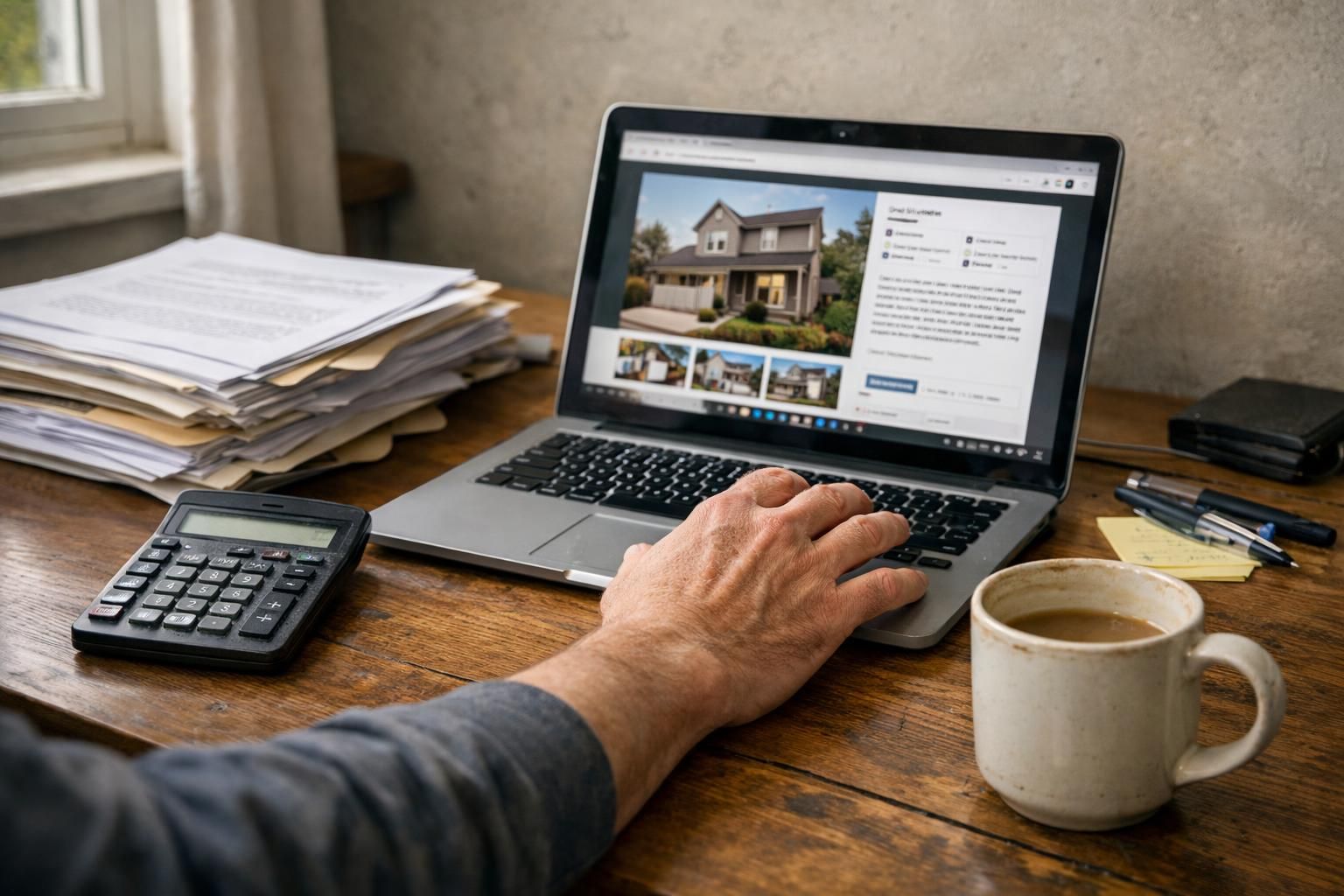
Selling a house without a real estate agent in Colorado means you take charge of the process, from listing to closing. You can save thousands on commission fees, but you will need to handle pricing, marketing, and legal paperwork yourself — including forms specific to Colorado law.
What does selling without a realtor mean in Colorado?
Selling without a realtor (FSBO) means you set the price, handle marketing, schedule showings, and negotiate with buyers yourself. All paperwork — including Colorado's required Seller's Property Disclosure form, the deed, tax records, and any HOA documents — falls to you.
FSBO makes up about 5% of all U.S. home sales according to the National Association of Realtors. 1 In Colorado's active Front Range market, many FSBO sellers already know their buyer — in fact, 38% sell to someone they know directly.
If you are willing to invest time into pricing research, flat-fee MLS listings, and learning Colorado's disclosure rules, FSBO could help you keep more proceeds from your sale.
Potential commission savings vs. trade-offs
Choosing to sell your Colorado home without a realtor can save significant money, but there are real trade-offs to consider.
| Potential Commission Savings | Trade-Offs and Risks |
|---|---|
|
|
|
|
Overview of time commitment and responsibilities
Selling a house without a realtor in Colorado can demand 40–60 hours or more of your personal time. You will need to gather Colorado disclosure documents, price your home using local comps, market on MLS platforms, manage showings, negotiate with buyers, and coordinate with a Colorado title company through closing.
Expect the full process to take three to six months. High emotional stakes can add stress, especially in competitive markets like Denver or Aurora where offers can move fast. Weigh these demands carefully before starting FSBO on your own.
Is Selling Without a Realtor Right for You?

Selling your Colorado home without a real estate agent puts you in charge, but it requires extra time and decision-making. Weigh your comfort level with tasks like home appraisal, handling legal documents, and working directly with buyer's agents before choosing this path.
Ideal scenarios for FSBO in Colorado
- You already know a qualified buyer — a family member, neighbor, or coworker. Roughly 38% of FSBO sales happen between people who already have a connection.
- The local market is active. Denver and Aurora regularly see strong buyer demand, which can favor owners who want to avoid listing agent fees.
- Your property is in excellent condition and needs few repairs. Colorado buyers in competitive zip codes often waive inspection contingencies on well-maintained homes.
- You have prior real estate experience or feel comfortable handling Colorado-specific paperwork such as the CREC Seller's Property Disclosure and HOA documents.
- Saving money is a priority — avoiding a full listing commission on a $500,000 Front Range home can mean keeping $12,500 or more.
- Your timeline is flexible enough to dedicate time to photography, MLS listing, showings, and contract review.
When FSBO might not be the best option
Selling without a realtor often brings extra risk if your situation is complicated. Divorce, probate, foreclosure, or major property damage can make a Colorado real estate transaction difficult to manage alone. Missing required state disclosures or CREC contract requirements can expose you to lawsuits or delayed closings.
Data shows FSBO homes typically sell for 18% less than agent-listed properties, and legal errors trouble 36% of solo sellers. In Colorado's probate process, the court may require specific documentation before a sale can proceed — adding complexity that benefits from professional guidance.
If you need help understanding Colorado contracts, preparing documents, or dealing with HOA resale certificates and competitive market analysis, hiring professional support can save time and protect your interests.
Step-by-Step Process to Sell Without a Realtor in Colorado

Determine your home's value using comps and online tools
Look at recent comparable sales from the last six months in your Colorado neighborhood. 3 Find homes that match yours in size, age, lot, and number of rooms. Review active MLS listings and recently sold properties in your area.
Use Zillow and Redfin for initial estimates, but treat these cautiously — Zillow Zestimates can carry significant error rates for off-market Colorado homes, especially in rural mountain communities where comparable sales are sparse. A competitive market analysis (CMA) gives you a more accurate baseline. In Denver and its suburbs, prices per square foot vary significantly by neighborhood, so hyper-local data matters.
Prepare your home for sale with necessary repairs
Fix wall scuffs, patch holes, and update outdated fixtures. Deep clean kitchens and bathrooms so buyers can picture themselves living there. A professional cleaning service typically costs $200–$300 and creates a strong first impression.
Schedule a pre-listing inspection ($300–$500) before putting your home on the market. Addressing issues early avoids negotiation trouble or lost deals later. 4 In Colorado's climate, pay special attention to the roof, foundation, radon levels, and HVAC systems — these are common buyer concerns.
Gather essential Colorado documents
Start with your property deed to prove legal ownership. Collect recent county property tax records and any HOA documents. Colorado law requires specific disclosures including:
- Seller's Property Disclosure form — mandated by the Colorado Real Estate Commission for most residential sales.
- Lead-based paint disclosure — federally required for homes built before 1978.
- HOA resale documents — including the declaration, bylaws, budget, and meeting minutes; Colorado law gives buyers specific rights to review and rescind based on HOA documents.
- Radon disclosure — Colorado has elevated radon levels in many areas; disclosure of any known radon test results is strongly advised and may be required depending on your county.
- Square footage disclosure — Colorado follows specific measurement standards; misrepresenting square footage is a common source of disputes.
Also prepare your sales contract, previous appraisal reports, home inspection report, closing statement, payoff letter from your lender if a mortgage balance remains, and repair receipts.
Price your home strategically
Set your list price to match common buyer search thresholds. For example, price at $499,000 rather than $505,000 if most buyers cap their searches at $500,000. This improves your visibility on Zillow and MLS searches across Colorado.
Use a CMA and recent local sales to anchor your price in reality. Overpricing is one of the most common FSBO mistakes — 49% of FSBO sellers wish they had set a different price. 3 In competitive Denver-area markets, a well-priced home can still attract multiple offers. In slower mountain or rural markets, pricing too high can leave your listing sitting for months.
Market your property effectively
Use a Colorado flat-fee MLS service to reach the largest pool of buyers for $75–$1,500. Your listing will syndicate to Zillow, Realtor.com, and other platforms that buyer's agents use daily. Post professional photos — 83% of buyers say listing images are the most important part of an online ad. Professional photography typically costs $150–$400 and pays off in stronger offers.
Add virtual tours; homes with 3D walkthroughs receive 37% more views. Also use free platforms like Zillow FSBO, Facebook Marketplace, and neighborhood-specific Colorado Facebook groups. Place a yard sign for drive-by visibility, especially in high-traffic suburban areas like Lakewood or Aurora.
Handle showings with safety and professionalism
Use a lockbox for secure access during showings. Organize appointments with a scheduling tool like ShowingTime and always verify buyer identity before a walkthrough. List the financing types you will accept — cash, conventional, FHA, or VA — in your listing details. Keep communication professional and businesslike with every potential buyer or buyer's agent throughout the process.
Review and negotiate offers
Colorado purchase offers typically include the purchase price, closing date, inspection contingency, appraisal contingency, financing contingency, and earnest money (usually 1–3% of the sale price). Review each offer carefully, paying close attention to deadlines and any special terms.
Use MLS comps and your CMA before responding to any offer. Counter low offers politely but firmly. Colorado's standard contract — the CREC Contract to Buy and Sell Real Estate — includes specific timelines for objection and resolution periods that you must track carefully as a FSBO seller. A real estate attorney can guide you through these details.
Navigate contracts and the closing process
Colorado uses the CREC Contract to Buy and Sell Real Estate as the standard purchase agreement. This contract includes objection deadlines, inspection resolution periods, and title review timelines that are strictly observed by Colorado title companies and lenders.
Have a Colorado real estate attorney review your contract before anyone signs. The closing process typically takes 30–45 days after signing. Work with a Colorado licensed title company, which manages document preparation, holds escrow funds, and records the deed with the county clerk and recorder.
Colorado tax considerations at closing
Colorado does not have a state real estate transfer tax, which simplifies closing compared to some other states. However, sellers must pay all county property taxes owed through the closing date; Colorado property taxes are paid in arrears, so proration calculations are an important part of your closing statement.
For capital gains, Colorado follows federal rules. If you have lived in the home as your primary residence for at least two of the last five years, you may exclude up to $250,000 in gains ($500,000 for married couples filing jointly) under federal law. Colorado's state income tax rate is a flat 4.4%, which applies to any taxable capital gains not excluded under the federal exemption. Consult a tax professional if your gain approaches these thresholds.
Work with a Colorado title company
Colorado is a title company state — it is standard practice, though not legally required in all cases, to use a licensed title company rather than a closing attorney. Title company fees in Colorado typically range from $500 to $1,500 depending on the sale price and services provided.
Your title company will conduct a title search, clear any liens or clouds on title, hold earnest money in escrow, prepare the closing disclosure, and record the deed with the appropriate county. Always confirm there are no outstanding liens, mechanic's liens, or HOA liens before closing day.
Close the sale
Review all documents carefully before signing the deed, closing disclosure, and bill of sale. Verify that all funds have cleared before handing over keys. Closing costs (not counting agent commission) typically average around $5,000–$6,000 in Colorado. Confirm with your title company that all parties have completed every required step and that the deed has been recorded with the county clerk and recorder.
Legal and Financial Considerations in Colorado

Colorado disclosure requirements
Colorado requires sellers to complete the Seller's Property Disclosure (SPD) form, a standardized document developed by the Colorado Real Estate Commission. This form covers the condition of the structure, roof, mechanical systems, water and sewer, environmental hazards, and any known legal issues affecting the property.
Failing to disclose known material defects — such as foundation problems, water intrusion, or a failing HVAC system — can result in lawsuits after closing. Federal law also requires a lead-based paint disclosure for all homes built before 1978. Colorado sellers should also be aware that radon is prevalent in many parts of the state; disclosing known test results is strongly recommended.
Some transfer types, such as certain court-ordered sales or transfers between spouses, may have limited disclosure exemptions — consult a Colorado real estate attorney to confirm what applies to your situation.
Title issues and tax implications
Liens, old mortgages, HOA delinquencies, and boundary disputes can cloud a Colorado title and stop your closing. A licensed Colorado title company will search county records and clear these issues before you can transfer ownership. Do not skip this step.
Colorado property taxes are collected in arrears, meaning you will owe a prorated share of the current year's taxes at closing. Gather your most recent county assessor statements and confirm your current balance. Your title company will calculate the exact proration on the closing disclosure.
Importance of consulting a Colorado real estate attorney
Colorado does not legally require an attorney at every closing, but consulting one is strongly advisable for FSBO sellers. A Colorado real estate attorney can review your purchase contract for compliance with state law, clear title issues, and verify that all required CREC forms are properly completed.
Attorney fees in Colorado typically range from $150 to $350 per hour. This investment protects you from expensive errors in contracts, disclosures, or deed preparation. If your sale involves probate, divorce, inherited property, or an LLC, legal counsel is especially important given Colorado's specific probate and property transfer laws.
Common FSBO Mistakes to Avoid in Colorado

Overpricing your home
Setting your asking price too high based on emotional attachment rather than market data is the most common FSBO mistake. In Colorado's Front Range market, overpriced homes accumulate days on market quickly, which buyers and their agents notice. Data shows 49% of FSBO sellers regret their original price. 3 Use local MLS comps and a CMA to anchor your price before listing.
Poor marketing and low-quality photos
Over 83% of buyers say listing photos are the most important feature in a home ad. Blurry or poorly lit photos can cause buyers to skip your property entirely, even in a strong Colorado market. Invest $150–$400 in professional photography. Listings with virtual tours get 37% more views — a meaningful advantage when competing against agent-listed homes on Denver-area MLS platforms.
Neglecting Colorado HOA disclosure requirements
Colorado has some of the most active HOA communities in the country, particularly in Denver suburbs and mountain resort areas. Under Colorado law, sellers must provide buyers with specific HOA documents — including the declaration, bylaws, budget, reserve study, and meeting minutes — within a set timeframe. Buyers have a right to review these documents and may terminate the contract if they find the HOA financially unsound. Failing to deliver required HOA documents on time can derail your closing.
Inadequate disclosures and skipping inspections
Incomplete Seller's Property Disclosures can expose you to post-closing lawsuits in Colorado. A pre-listing inspection ($300–$500) helps you identify issues — especially radon, roof condition, or foundation concerns common in Colorado — before a buyer discovers them and backs out or demands price reductions. Federal lead-based paint disclosures are also required for pre-1978 homes. 8
Failing to have contracts reviewed by a professional
Colorado's CREC Contract to Buy and Sell Real Estate contains strict deadlines for inspection objections, title review, and financing contingencies. Missing a deadline — even by one day — can have serious legal consequences. Have a Colorado real estate attorney or a knowledgeable title professional review your contract before you sign anything.
Alternative Options to FSBO in Colorado
Flat-fee MLS services
Colorado flat-fee MLS services let you list your home on the MLS for a set price, typically $75–$1,500, without paying a full listing commission. Your property gets seen by buyer's agents statewide and syndicates to major sites like Zillow and Realtor.com. Many FSBO homeowners using flat-fee MLS save thousands in agent fees while still gaining broad market exposure.
Limited-service brokers
Limited-service brokers offer partial agent services for a reduced fee — usually 1–2%. You can choose which tasks you need help with, such as contract preparation or negotiating with a buyer's agent. This approach gives you more support than pure FSBO while still keeping costs well below a traditional full-service commission.
Selling to cash buyers
Selling to a cash buyer offers speed and simplicity — especially useful if you face foreclosure, inherited a property, or own a home that needs significant repairs. Cash buyers typically close in days rather than months, skipping open houses, appraisals, and lender delays. Offers generally range from 60–80% of market value depending on property condition and local Colorado market conditions. This route works best for sellers who prioritize certainty and speed over maximizing net proceeds.
Conclusion
Selling your house without a real estate agent in Colorado is entirely possible, but it requires careful attention to state-specific rules — from the CREC Seller's Property Disclosure and HOA document requirements to county property tax proration and title company coordination. Use flat-fee MLS services, professional photography, and local comps to compete effectively. Work with a Colorado real estate attorney to review contracts and protect yourself from post-closing liability.
If the FSBO process feels like too much to manage — or if you simply want a faster, simpler option — KDS Homebuyers purchases homes directly from Colorado homeowners for cash, with no repairs, no showings, and no commissions. Visit kdshomebuyers.net to request your free, no-obligation cash offer today.
FAQs
1. What Colorado-specific disclosures do I need when selling FSBO?
Colorado requires the Seller's Property Disclosure (SPD) form for most residential sales, plus a federal lead-based paint disclosure for homes built before 1978. HOA documents must also be provided to buyers within a legally defined timeframe if your property is in an HOA.
2. Do I need to use an attorney to close a home sale in Colorado?
Colorado is a title company state and does not legally require an attorney at every closing, but consulting a real estate attorney is strongly recommended for FSBO sellers to review contracts and ensure compliance with state law.
3. How do I list my Colorado home on the MLS without an agent?
You can pay a Colorado flat-fee MLS service to list your home on the MLS. Fees typically range from $75 to $1,500 and your listing will appear on Zillow, Realtor.com, and other platforms used by buyer's agents statewide.
4. How does Colorado's property tax work at closing?
Colorado property taxes are paid in arrears. At closing, your title company will prorate the current year's taxes and you will owe your share through the closing date. Gather your most recent county assessor statement before closing.
5. Are capital gains from a Colorado home sale taxable?
Federal law allows an exclusion of up to $250,000 ($500,000 for married couples) on gains from a primary residence if you have lived there for at least two of the last five years. Any gains above the exclusion are subject to Colorado's flat 4.4% state income tax in addition to applicable federal rates. Consult a tax professional for your specific situation.
References
- ^ https://www.realtor.com/advice/buy/what-is-fsbo-for-sale-by-owner/ (2022-10-10)
- ^ https://www.bankrate.com/real-estate/sell-house-by-owner-in-california/ (2025-03-18)
- ^ https://www.opendoor.com/articles/sell-your-house-without-a-realtor (2025-10-21)
- ^ https://www.homelight.com/blog/sell-house-by-owner-chicago/
- ^ https://www.wesellsumter.com/top-5-mistakes-people-make-when-selling-for-sale-by-owner/
