

Judicial vs. Non-Judicial Foreclosure: What's the Difference in Washington
If you feel worried about losing your home in Washington, you are not alone. Washington is a non-judicial foreclosure state, meaning lenders generally do not need to go through the court system to foreclose on a property. 3 Understanding how Washington's foreclosure process works — and how it compares to judicial states — can help you protect your rights and plan your next steps. 1
Key Takeaways
- Washington uses non-judicial foreclosure as its primary process. A trustee handles the sale under a power-of-sale clause in the deed of trust — no court filing is required by the lender.
- Washington's foreclosure timeline typically runs 4 to 6 months from the notice of default to the trustee's sale, making it much faster than judicial states like Florida or New York.
- Washington's Deed of Trust Act provides important homeowner protections, including a mandatory 30-day pre-notice period, a 20-day right to cure, and access to mediation through the Foreclosure Fairness Act.
- Washington has anti-deficiency protections for certain residential loans sold at trustee's sale, limiting a lender's ability to pursue you for the remaining balance.
- Federal law still gives you at least 120 days after missing a payment before official foreclosure proceedings begin. Acting fast and knowing Washington's specific rules is critical.
What Is Judicial Foreclosure?

Judicial foreclosure uses the state court system to resolve mortgage default. The lender must follow formal legal steps, which significantly slows down the timeline compared to Washington's process.
Court involvement and lender lawsuit filing
In judicial foreclosure states, the mortgage lender starts the process by filing a lawsuit in state court. The homeowner is served with a summons and complaint and typically has 20 to 30 days to respond. If no answer is filed, the judge can enter a default judgment allowing the foreclosure to proceed.
Washington does not use this process as its standard approach. However, in rare cases — such as when a property loan does not include a power-of-sale clause — a lender in Washington may pursue judicial foreclosure through Superior Court. This is uncommon but legally available under Washington law.
States like Florida and New York average well over a year in foreclosure timelines due to court backlogs. Washington homeowners benefit from a faster, more structured process — though that also means less time to respond once notices arrive.
Summons, judgment, and sale approval process
In judicial foreclosure states, after the lender's lawsuit is filed, the court sends the borrower a summons. If the judge rules for the lender, a judgment of foreclosure is entered and the property is ordered to public auction. Some states require an additional court hearing to confirm the sale after bidding ends.
Washington bypasses all of this under non-judicial foreclosure. There is no summons, no courtroom judgment, and no post-sale court confirmation. The trustee manages the process directly, which compresses the timeline considerably. Seattle and Tacoma homeowners facing default should be aware that the clock moves faster here than in most other states.
States that use judicial foreclosure
Connecticut, Florida, Illinois, New York, and New Jersey are among the states that require lenders to go through state court before foreclosing. These states often see timelines ranging from one to three or more years. Washington is not among them — its primary foreclosure method is non-judicial, governed by the Washington Deed of Trust Act.
What Is Non-Judicial Foreclosure?

Non-judicial foreclosure lets lenders take back a property without using the state court system. In Washington, most home loans use a deed of trust with a power-of-sale clause, which authorizes this process.
Power-of-sale clause and trustee-led process in Washington
Washington's Deed of Trust Act governs non-judicial foreclosure in the state. When you sign a deed of trust, you grant a third-party trustee the authority to sell your property if you default — without going through the courts. The lender directs the trustee to begin the process, which starts with issuing a notice of default.
The trustee sends required notices to you directly, records documents with the county, and ultimately conducts the trustee's sale at public auction. Because no judge needs to approve each step, the entire process can move from first notice to sale in roughly four to six months in Washington.
Washington's notice requirements and timeline
Washington law requires a specific sequence of notices before any trustee's sale can occur:
- Pre-foreclosure notice (30 days): Before issuing a notice of default, the lender or servicer must send a pre-foreclosure notice informing you of available resources, including the Washington State Homeowner Hotline and mediation rights under the Foreclosure Fairness Act.
- Notice of default: After 30 days, if no resolution is reached, the trustee records and mails a notice of default. You then have 20 days to cure the default by paying the overdue amount.
- Notice of trustee's sale: At least 90 days before the sale date, the trustee records and mails a notice of trustee's sale. The sale date must be at least 190 days after the borrower fell behind on payments.
Washington homeowners have the right to request mediation under the Foreclosure Fairness Act within 20 days of receiving the notice of default. This can pause the foreclosure clock and bring the lender to the table to discuss loan modification or other alternatives. Homeowners in Seattle, Tacoma, Spokane, and throughout the state have used this tool to negotiate more time and better outcomes.
Washington as a non-judicial foreclosure state
Washington joins states like California, Arizona, Texas, and Georgia in using non-judicial foreclosure as the primary method. Lenders prefer this route because it avoids court delays and allows the trustee to manage the process efficiently. If your deed of trust includes a power-of-sale clause — which nearly all Washington home loans do — this process applies to you.
Key Differences Between Judicial and Non-Judicial Foreclosure
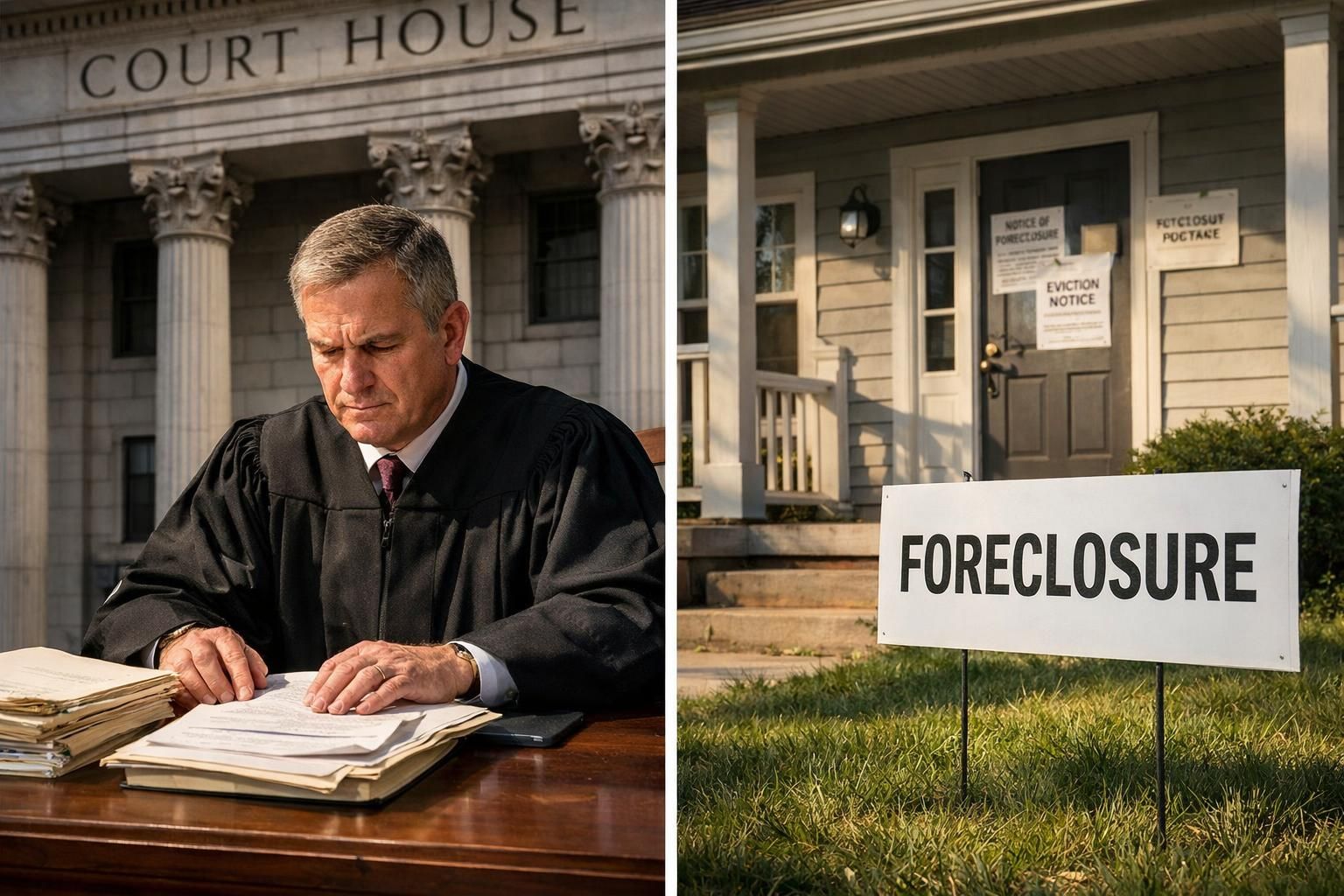
Court involvement, timelines, redemption rights, deficiency judgments, and notification processes
Judicial foreclosure requires the lender to file a lawsuit, serve the homeowner, and obtain court approval at multiple stages. This process can take one to three or more years in states like Florida or New York. Washington's non-judicial process skips the court entirely — the trustee manages everything, and a sale can happen in as little as four to six months.
Redemption rights: Washington does not provide a post-sale redemption period for non-judicial (trustee's sale) foreclosures. Once the trustee's sale is complete, you cannot reclaim the property by paying off the debt. This makes acting before the sale date absolutely critical.
Deficiency judgments: Washington law provides significant anti-deficiency protection after a trustee's sale. In most cases involving a residential property sold at a trustee's sale, the lender cannot pursue a deficiency judgment against you for the remaining loan balance. This is an important distinction from many judicial foreclosure states where courts routinely approve deficiency claims.
Notification: In judicial states, you receive a court summons. In Washington, you receive a pre-foreclosure notice, then a notice of default, then a notice of trustee's sale — each with specific deadlines. Reading every piece of mail carefully and responding quickly is essential.
Homeowner Rights in Washington's Foreclosure Process
Washington homeowners have meaningful rights even under the non-judicial process. Your servicer must follow both federal rules and the Washington Deed of Trust Act before any sale can occur.
Notice requirements, right to cure, mediation, and response options
Federal law requires your mortgage servicer to wait until you are more than 120 days behind before beginning any foreclosure action. During this window, you can request loss mitigation options such as loan modification, forbearance, or repayment plans.
Washington's Foreclosure Fairness Act gives owner-occupants the right to request mediation after receiving a notice of default. This must be requested within 20 days. Mediation connects you with a neutral third party and requires the lender to negotiate in good faith — it has helped many Washington homeowners reach workable agreements without losing their homes.
You also have a 20-day right to cure the default after the notice of default is issued, meaning you can stop the process entirely by bringing your loan current within that window. If you want to challenge the foreclosure legally — for example, due to improper notice or servicer errors — you would need to file a separate lawsuit in Washington Superior Court, since there is no built-in court hearing in the non-judicial process.
Timeline Comparison: Washington vs. Judicial Foreclosure States
Month-by-month breakdown for Washington homeowners
- Days 1–30 (Missed payment): Your servicer begins contact attempts. Federal law prevents formal foreclosure from starting until you are 120 days past due.
- Day 30–120: Servicer sends pre-foreclosure notice required under Washington law, informing you of mediation rights and available resources. Loss mitigation options remain open.
- After 120 days: Trustee issues and records the notice of default. You have 20 days to cure the default. If you request mediation within 20 days, the process pauses.
- 90+ days after notice of default: If no resolution, the trustee records and mails the notice of trustee's sale, setting a sale date at least 90 days out.
- Trustee's sale (approximately Month 5–6): Property is sold at public auction. In Washington, trustee's sales often take place at the county courthouse or a designated location. Once the sale occurs, you have no redemption period.
By comparison, Florida homeowners may face a process that stretches beyond three years. In Washington, the entire timeline — from first missed payment to trustee's sale — typically runs five to seven months if no mediation or legal action is taken.
What Washington Homeowners Can Do to Take Action
You can protect your home by understanding Washington's specific foreclosure laws, responding quickly to notices, and exploring available alternatives before the trustee's sale date arrives.
Verify Washington's process, understand your timeline, explore loss mitigation, and consider alternatives
Confirm that your loan uses a deed of trust with a power-of-sale clause — this is standard in Washington. Check what stage of the process you are in by reviewing any notices you have received and noting their deadlines.
During the 120-day federal review window, contact your mortgage servicer about loss mitigation options: loan modification, repayment plan, forbearance, short sale, or deed in lieu of foreclosure. Request mediation under the Foreclosure Fairness Act if you have received a notice of default — this is one of Washington's most powerful tools for homeowners.
If you believe the servicer made errors — such as failing to send required notices or violating the Deed of Trust Act — consult a Washington foreclosure defense attorney or contact the Washington State Department of Financial Institutions for guidance. The Washington State Homeowner Hotline (1-877-894-4663) also connects you with free HUD-approved housing counselors.
Foreclosure Avoidance Strategies for Washington Homeowners
Start by requesting a loss mitigation review immediately. Use Washington's mandatory pre-foreclosure notice period and mediation rights to slow the process and negotiate. 4 A short sale or deed in lieu of foreclosure may allow you to avoid the trustee's sale entirely while limiting damage to your credit.
Because Washington does not offer post-sale redemption, every option must be exercised before the trustee's sale date. Raise defenses early — improper notice, servicer errors, or predatory lending claims must be brought in Superior Court if you want to halt the sale. 5 Washington's anti-deficiency protections for residential trustee's sales reduce financial exposure after the fact, but preventing the sale is always the better outcome.
Conclusion: Act Early to Protect Your Washington Home
Facing foreclosure in Washington is stressful, but the state's non-judicial process gives you defined windows to act — and meaningful tools like mediation and the right to cure. The key is moving quickly. Once the trustee's sale occurs, there is no redemption period and your options disappear.
Speak with a Washington foreclosure attorney or a HUD-approved housing counselor as soon as you receive any notice. The earlier you act, the more choices you have — from loan modification to mediation to selling your home on your own terms.
If you need to sell quickly to avoid foreclosure, KDS Homebuyers purchases homes directly from Washington homeowners for cash, with no repairs, no agent commissions, and a fast closing timeline. Visit kdshomebuyers.net to request a free, no-obligation cash offer and explore your options before the foreclosure clock runs out.
FAQs
1. Is Washington a judicial or non-judicial foreclosure state?
Washington is primarily a non-judicial foreclosure state. Lenders use the deed of trust and its power-of-sale clause to foreclose through a trustee, without going through the court system in most cases.
2. How long does non-judicial foreclosure take in Washington?
Washington's non-judicial foreclosure process typically takes five to seven months from the first missed payment to the trustee's sale, factoring in federal waiting periods and required state notices.
3. Do I have a redemption period after a trustee's sale in Washington?
No. Washington does not provide a post-sale redemption period for non-judicial foreclosures. Once the trustee's sale is complete, you cannot reclaim the property by paying off the debt.
4. Can a lender pursue a deficiency judgment against me in Washington?
Washington law provides significant anti-deficiency protections for residential properties sold at a trustee's sale. In most cases, the lender cannot pursue you for any remaining loan balance after the sale.
5. What is the Foreclosure Fairness Act in Washington?
Washington's Foreclosure Fairness Act gives owner-occupants the right to request mediation after receiving a notice of default. Mediation must be requested within 20 days and requires the lender to negotiate in good faith with a neutral mediator present.
6. Can Washington lenders ever use judicial foreclosure?
Yes, in rare circumstances — such as when a loan does not include a power-of-sale clause — a lender may pursue judicial foreclosure through Washington Superior Court. This is uncommon but legally available under state law.
References
- ^ https://www.auction.com/blog/judicial-vs-non-judicial-foreclosures/ (2024-11-21)
- ^ https://www.nolo.com/legal-encyclopedia/the-difference-between-a-judicial-and-nonjudicial-foreclosure.html
- ^ https://www.justia.com/foreclosure/judicial-vs-non-judicial-foreclosure/ (2025-10-18)
- ^ https://scholarship.law.nd.edu/cgi/viewcontent.cgi?article=2219&context=law_faculty_scholarship
- ^ https://scholarlycommons.law.emory.edu/cgi/viewcontent.cgi?article=1116&context=elj
