

Probate vs. Trust: What's the Difference When Selling a House in Washington
If you need to sell a house after a loved one's death, the probate vs. trust process can feel confusing and stressful. Many homeowners do not realize that using a living trust can help avoid probate court altogether. 2 This guide breaks down how estate planning choices like wills, revocable trusts, and probate affect home sales in Washington state, including timelines, costs, and tax considerations. Find out which option makes selling your inherited property easier and faster. 3
Key Takeaways
- Selling a house through Washington probate usually takes 6 to 18 months or longer. Legal fees and court costs can add up to 3%–7% of the property's value. Probate also makes your private information public record.
- A living trust allows you to avoid probate. When real estate is held in a revocable living trust, the successor trustee can sell it in as little as 30–90 days with less paperwork and no court delays. 1 2 3
- Trust administration keeps your information private. Only trustees and beneficiaries see details about property transfers—unlike probate where all records are public.
- Mistakes like failing to title assets into the trust cause problems. If a home or account is left out, it still goes through probate—even if a trust exists. 6
- Washington has no state estate tax exemption threshold matching the federal level. The state estate tax kicks in at $2.193 million (2024), so proper planning matters more here than in many other states.
- Cash buyers make selling inherited property quick—trust-owned homes may close in 30–60 days; probated properties take longer because courts must approve sales first.
What Is Probate?

Probate is a legal process that takes place after someone dies and leaves property behind. In Washington, you face probate in the Superior Court of the county where the decedent lived if the estate includes assets titled solely in that person's name and no trust holds those assets.
Definition and purpose of probate in Washington
Probate is the court-supervised process that manages a person's estate after death. Washington uses a relatively streamlined system compared to many states—most estates qualify for "nonintervention" administration, meaning the personal representative can act without court approval at every step once granted that authority by the court.
The main goal is to verify the will if one exists, appoint a personal representative, pay debts, and distribute remaining assets to heirs. Washington's intestacy laws govern who inherits when there is no valid will. Washington is a community property state, which affects how marital assets are treated during probate and estate planning.
Washington's small estate threshold allows heirs to use a simple affidavit to claim personal property worth $100,000 or less without opening a full probate case. Real property, however, generally requires formal probate unless it is held in a trust or passes via joint tenancy with right of survivorship.
Key steps in Washington probate
You start by filing the will and a petition with the Superior Court in the county where the decedent lived—for example, King County Superior Court for estates in Seattle or Bellevue. The court appoints a personal representative and issues Letters Testamentary or Letters of Administration.
The personal representative inventories all assets, notifies creditors, and publishes a notice to creditors in a local newspaper. Washington law gives creditors four months from the date of first publication to file claims. After settling debts and any Washington state estate tax obligations, the personal representative distributes remaining assets and closes the estate.
Washington's nonintervention administration powers mean the personal representative can sell real property without seeking court approval for each transaction, which is a significant advantage over many other states. Still, the overall process takes time, and working with an estate planning attorney helps avoid costly mistakes.
Timeline expectations
Even with Washington's nonintervention system, most estates take 6 to 18 months to close. The four-month creditor claim period alone creates a mandatory waiting time. Disputes among heirs, unclear titles, or Washington estate tax filings can push the timeline past two years. Selling a house during that window requires patience and careful coordination.
What Is a Trust?

A trust lets you transfer real estate or personal property to a chosen manager, called a trustee. In Washington, trusts are governed by the Washington Trust Act, which sets out the duties of trustees and the rights of beneficiaries.
Definition of a living trust (revocable trust)
A living trust, or revocable living trust, is set up while you are alive. You keep full control over your assets and can change or cancel the trust at any time. 2 You name yourself as trustee and pick a successor trustee who takes over when you pass away or become incapacitated.
You transfer real estate into the trust by recording a new deed—typically a warranty deed or quitclaim deed—in the county where the property sits, such as Pierce County for Tacoma properties or Spokane County for Spokane homes. After your death, assets in the trust transfer directly to your beneficiaries without going through probate court. 1
Roles of grantor, trustee, and beneficiaries
You serve as the grantor when you create the trust. As trustee during your lifetime, you manage assets just as you always have. Your successor trustee—often a spouse, adult child, or professional trustee—steps in at death or incapacity without needing court authority.
Under the Washington Trust Act, the successor trustee has a fiduciary duty to act in the best interests of beneficiaries. This includes paying debts, filing any required Washington estate tax return, and distributing assets according to the trust terms.
Key benefit: avoiding probate court
A properly funded living trust lets your successor trustee sell a Washington home without opening probate in Superior Court. This eliminates the mandatory four-month creditor waiting period that applies in formal probate and keeps your family's financial affairs private. Trust records are not filed with any court and are not part of the public record.
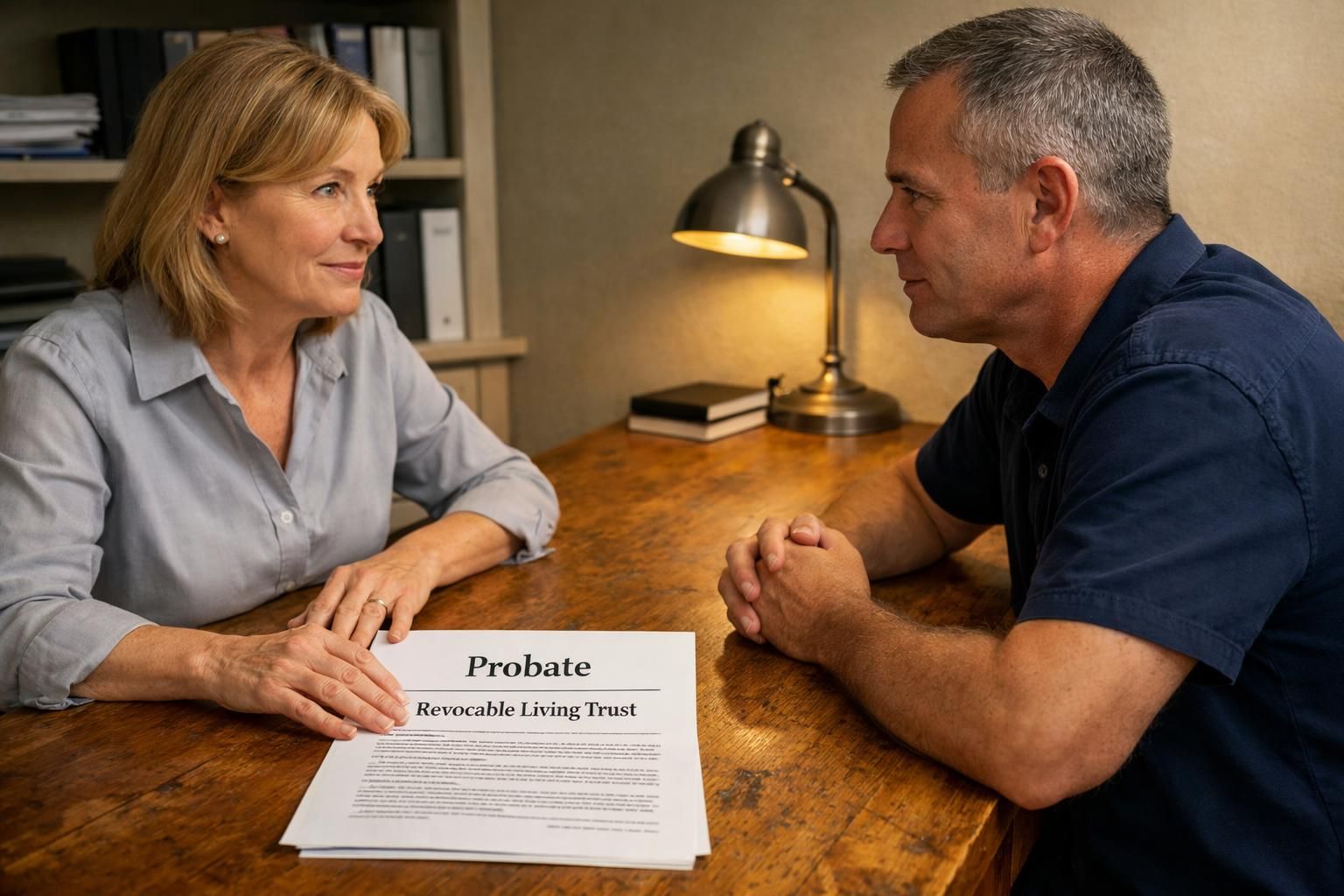
Key Differences Between Probate and Trust
Court involvement
Washington probate opens in the Superior Court of the county where the decedent lived. Even under nonintervention administration, you must file a petition, publish a creditor notice, and eventually file a declaration of completion. All filings are public record.
Selling property held in a living trust avoids that court process entirely. The successor trustee presents a trustee's certification and the trust document to a title company, and the sale proceeds like any standard real estate transaction—privately and without judge approval.
Privacy considerations
Washington probate filings—including the will, inventory, and creditor notices—become part of the public record in the county courthouse. Anyone can review them. A revocable living trust keeps your affairs private; only the trustee and beneficiaries know the terms.
Timeline and cost comparisons
Washington probate typically takes 9 to 18 months due to the mandatory four-month creditor period and estate administration steps. Trust administration usually wraps up in 30 to 90 days.
Probate costs in Washington range from 3% to 7% of estate value when you factor in attorney fees, court filing fees, and personal representative compensation. Setting up a revocable living trust costs roughly $1,500 to $3,500 upfront but eliminates most of those ongoing costs. More money stays with your beneficiaries.
Selling a House in Washington Probate

Steps: appointing personal representative, appraising property, listing, and closing
Washington's nonintervention administration is an advantage. Once the Superior Court grants nonintervention powers, the personal representative can list and sell the home without seeking court confirmation of the sale price—unlike California, where a judge must approve probate sales. This makes the Washington process somewhat faster, but you still must wait out the creditor period before distributing proceeds.
Key steps include filing with the county Superior Court, publishing a creditor notice in a local newspaper for three consecutive weeks, ordering an appraisal, and then listing the property. After the four-month creditor window closes, you can close the sale and distribute proceeds.
Common concerns: heir agreements, repairs, and timeline
Multiple heirs must agree on price and terms. Disagreements among family members can stall a sale and may require mediation or a return to Superior Court. The estate continues to incur property taxes, insurance, and maintenance costs during the wait—expenses that reduce the final distribution to heirs.
Washington properties in probate typically sell as-is, since the personal representative may need estate funds to make repairs and spending those funds requires careful documentation. Many buyers are cautious about probate sales for this reason, which can limit your buyer pool and affect sale price.
Washington state tax considerations
Washington imposes a state estate tax on estates exceeding $2.193 million (2024 threshold). Rates range from 10% to 20%. This is significantly lower than the federal exemption of $13.61 million, meaning many Washington estates owe state estate tax even when no federal estate tax applies. The personal representative must file a Washington estate tax return within nine months of the date of death if the estate exceeds the threshold.
Washington also has a real estate excise tax (REET) on property sales. Transfers to a beneficiary through probate or trust are generally exempt from REET, but a subsequent sale to a third-party buyer is not. Rates are graduated based on sale price, ranging from 1.1% to 3% for most residential properties.
Probate affects real estate directly, and Washington's estate tax rules make working with an estate planning attorney especially important here.
Selling a House Held in Trust in Washington

Simpler process: trustee authority and faster transactions
If your home sits in a Washington living trust, the successor trustee can sell it right away without probate court approval. Trust sales often close in 30 to 60 days. 3 You only need the trust agreement and a trustee's certification rather than the stack of court filings required in probate. 4
Washington title companies are familiar with trust sales and can issue title insurance based on the trustee's certification. Buyers can request inspections and include contingencies, making trust-held homes more attractive than properties sold through probate.
Trustee responsibilities and disputes
Under the Washington Trust Act, the successor trustee has a fiduciary duty to all beneficiaries. This includes maintaining accurate records, paying the Washington state estate tax if applicable, resolving creditor claims, and distributing assets according to the trust terms.
Disputes among beneficiaries are possible, especially if the trustee's decisions are questioned. Unlike probate, trust administration has less built-in court oversight, so problems can go unaddressed longer. 5 Consulting a Washington estate planning attorney before making major decisions protects the trustee from personal liability.
What If There's Both Probate and Trust?
You may face both probate and trust administration if a loved one did not transfer all assets into the living trust. A Seattle-area homeowner might have a fully drafted trust but forgot to re-deed a vacation property in Eastern Washington—that property still goes through Spokane County Superior Court probate.
Improper funding and mixed assets
Improper funding is the most common trust mistake. If a Washington home is never deeded into the trust, probate opens even when a valid trust exists. 6 A pour-over will can capture missed assets and direct them into the trust at death, but those assets still go through probate first—adding months to the process.
Retirement accounts and life insurance policies with named beneficiaries pass outside both probate and the trust. Reviewing beneficiary designations regularly ensures these assets go where you intend without triggering unintended tax consequences.
Importance of legal guidance in Washington
Washington's community property rules, state estate tax, and the Washington Trust Act create layers of complexity that national estate planning templates often miss. An experienced Washington estate planning attorney ensures your trust is properly funded, your deeds are correctly recorded in the right county, and your estate tax exposure is minimized. Every Washington family's situation is different—professional guidance prevents costly errors and delays.
Common Questions About Probate vs. Trust in Washington
Which is better for selling property in Washington?
Selling through a living trust is usually easier, faster, and less expensive in Washington. 7 The trustee manages the sale directly without court approval, often closing within 30 to 60 days. 7 Washington's nonintervention probate is better than many states, but the mandatory four-month creditor period still creates delays that a trust avoids entirely.
Tax implications in Washington
Inherited real estate receives a stepped-up cost basis to fair market value at the date of death, whether it passes through probate or a revocable trust. This reduces capital gains tax if you sell soon after inheriting.
Washington has no state income tax, but it does impose a state estate tax starting at $2.193 million—well below the federal threshold. Estates above that amount must file a Washington estate tax return within nine months of death. The real estate excise tax applies to the eventual sale of the property, with graduated rates based on sale price. Discussing these specifics with a Washington estate planning attorney or CPA is essential.
When to seek professional help
Complex situations—contested wills, unclear property titles, blended families, business interests, or estates near or above Washington's $2.193 million estate tax threshold—all call for professional guidance. Personal representatives and successor trustees carry fiduciary duties and can face personal liability for errors. A Washington-licensed estate planning attorney helps you navigate Superior Court requirements, Washington Trust Act obligations, and state tax filings correctly.
Conclusion
Navigating probate or trust processes in Washington
You do not have to face probate or trust administration alone. Washington's nonintervention probate system offers some built-in efficiency, but a properly funded revocable living trust still provides faster, more private, and lower-cost transfers of real property to your loved ones. Understanding Washington's unique rules—community property, the state estate tax, and county-level Superior Court filing requirements—helps you make informed choices that protect your family.
Make informed decisions
Each estate is unique. Washington's state estate tax exemption of $2.193 million means many middle-class homeowners in high-value markets like Seattle and Bellevue need to think carefully about estate planning tools beyond a simple will. Review beneficiary designations regularly, ensure your trust is funded correctly, and consult a qualified Washington estate planning attorney before major decisions. Taking these steps puts you in control of your family's financial future and avoids unnecessary delays when it matters most.
Options for selling inherited Washington property quickly
Cash buyers offer a fast, simple path for selling inherited property. Trust-held homes can close in 30 to 60 days; even probate properties move faster with a cash offer because there are no financing contingencies. Cash buyers typically purchase homes as-is, which helps when you cannot afford repairs or do not want to manage a property during a lengthy estate administration.
If you are dealing with an inherited home in Washington—whether it's going through King County probate or being transferred by a successor trustee in Pierce County—KDS Homebuyers can help. Visit kdshomebuyers.net for a free, no-obligation cash offer and take the first step toward settling the estate quickly and peacefully.
FAQs
1. What is the main difference between probate and a trust when selling real estate in Washington?
Washington probate opens in the Superior Court of the county where the decedent lived and requires a mandatory four-month creditor notice period before closing the estate. A living trust lets the successor trustee sell real property immediately without court involvement.
2. Does Washington probate require court approval to sell a house?
Not always. Under Washington's nonintervention administration, the personal representative can sell the home without court confirmation of the sale price—a significant advantage over states like California. However, the four-month creditor period still applies before proceeds are distributed.
3. How does Washington's state estate tax affect inherited property?
Washington taxes estates above $2.193 million (2024) at rates from 10% to 20%. This threshold is much lower than the federal exemption, so many Washington homeowners in markets like Seattle and Bellevue need to plan carefully to minimize state estate tax exposure.
4. Does a living trust avoid Washington's real estate excise tax?
Transferring property into a trust or to a beneficiary through trust administration is generally exempt from REET. However, when the property is eventually sold to a third-party buyer, the standard graduated REET rates apply based on the sale price.
5. What happens if I forget to deed a Washington property into my trust?
The property goes through probate in the county Superior Court even if you have a valid trust. A pour-over will can redirect the asset into the trust, but it still passes through probate first, adding months to the process. 6
6. Can I use both a pour-over will and a living trust in Washington?
Yes. Many Washington estate plans combine both. The pour-over will captures any assets not transferred into the trust during your lifetime and directs them into the trust at death, ensuring all assets follow your intended distribution plan managed by your successor trustee.
References
- ^ https://www.metlife.com/stories/legal/what-type-of-trust-should-you-create-for-your-estate/
- ^ https://extension.umn.edu/transfer-and-estate-planning/trusts-definitions-types-and-taxation
- ^ https://usleadlist.com/resources/understanding-probate-vs-trust-sale
- ^ https://teamtapper.com/blog/trust-sale-vs-probate-sale/ (2023-12-28)
- ^ https://www.barrattorneys.com/blog/trust-vs-probate-what-to-choose/ (2026-01-21)
- ^ https://www.heritagelawwi.com/the-legal-risks-of-improperly-funding-a-trust
- ^ https://www.lametrohomefinder.com/blog/probate-vs-trust-sale-california
