

Selling a Flood-Damaged House: Disclosure Rules and Options in Colorado
Selling a house with flood damage in Colorado can feel overwhelming. State law requires you to share details about any water damage when you sell, or you could face lawsuits. 1 This guide covers your legal responsibilities under Colorado disclosure rules, your selling options, and ways to protect your property value and peace of mind. 3
Key Takeaways
- Colorado requires sellers to disclose all known material defects, including flood and water damage, on the state-mandated Seller's Property Disclosure form — hiding known issues can lead to fraud claims or lawsuits.
- Colorado uses a detailed property disclosure form that asks about water intrusion, drainage issues, and flood zone status. Buyers typically have a window to review and object after receiving the disclosure.
- Flood-damaged homes in Colorado typically sell for 15%–25% less than comparable undamaged properties. Cash buyers often pay 50%–70% of After Repair Value.
- Buyers will request repair records, insurance claim documentation, CLUE reports, mold remediation receipts, and proof of flood insurance — incomplete paperwork slows sales or lowers offers.
- Cash buyers and real estate investors can close in as little as one to three weeks, no repairs required — helpful when holding costs in Denver's market add up quickly.
Federal Flood Disclosure Requirements
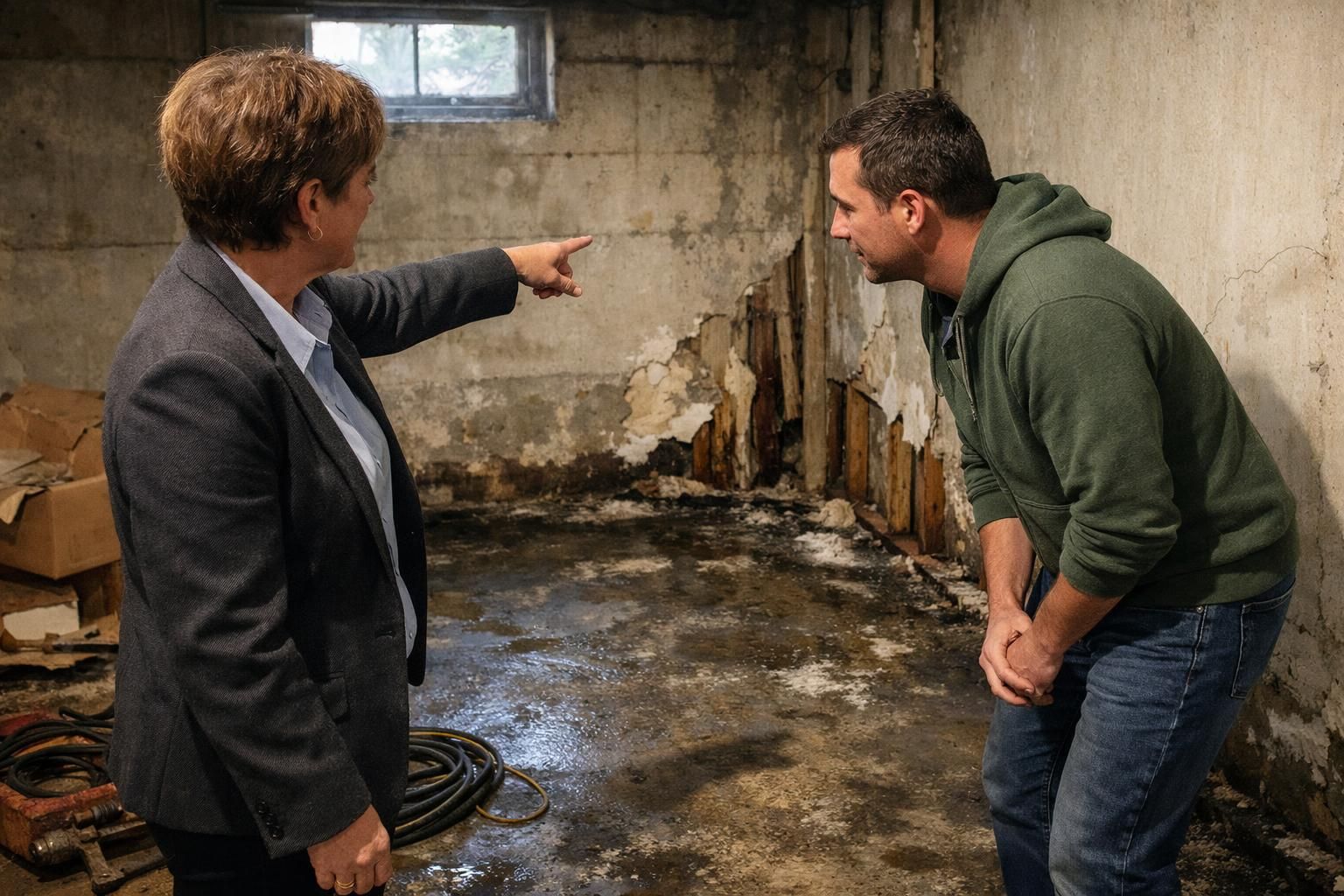
Federal law requires you to disclose known flood damage or water issues when selling your property. Real estate agents and home inspectors use these rules to protect both buyers and sellers.
Legal obligations for disclosing flood damage
You must disclose all known flood damage and material defects before selling. No single federal law forces you to share all past flood risk, but you must report any known problems — mold, electrical damage, structural issues — that affect value or safety. REALTORS® in Colorado follow a Code of Ethics requiring them to disclose previous flood events in addition to state rules. 1
Insurance claims history appears in CLUE reports, which buyers can access during the sale process. Hiding water damage can lead to lawsuits or fraud claims after closing. Full disclosure upfront protects you legally and keeps transactions on track.
Difference between material defects and known issues
Material defects affect safety or value — mold, electrical damage, structural problems, and water intrusion all qualify under Colorado law. Known issues cover all conditions you are aware of, even those that have been repaired. If your home flooded but was professionally restored with mold remediation, that prior event is still a known issue you must disclose. Colorado's disclosure form asks about both: unrepaired defects and prior incidents. Full transparency protects against post-sale lawsuits and shows buyers clear documentation of your home's condition.
Consequences of non-disclosure
Failing to disclose flood damage can land you in serious legal trouble. Colorado buyers may sue for fraud or misrepresentation, sometimes years after closing — state law generally allows civil claims within two to three years of discovering a hidden defect, and in some cases longer depending on the circumstances. Courts routinely rule against sellers who conceal material defects such as recurring water intrusion, mold, or incomplete repairs. Damages can include repair costs and, in some cases, punitive damages. CLUE reports can expose hidden flood history during a buyer's due diligence, making concealment risky. Over-disclosure gives you far more legal protection than under-disclosure ever could.
Colorado-Specific Disclosure Requirements

Colorado has its own specific rules about how sellers must disclose flood history and water damage. Understanding these requirements helps you avoid legal risks and delays in your sale.
Colorado's Seller's Property Disclosure Form
Colorado requires most residential sellers to complete the Colorado Real Estate Commission's Seller's Property Disclosure (SPD) form. This form directly asks about water damage, drainage issues, flooding history, roof leaks, mold, and whether the property lies in a designated flood plain. You must answer these questions honestly based on your actual knowledge — "I don't know" is an acceptable answer only when genuinely applicable, not as a way to avoid disclosing known problems.
The SPD form is typically provided to the buyer early in the contract period. Under a standard Colorado contract, buyers have a set deadline to review the disclosure and raise any objections. If you fail to provide the form, or if you misrepresent known conditions, buyers have legal grounds to terminate the contract or pursue damages after closing.
For sellers in the Denver metro area, Aurora, or along Colorado's Front Range — where heavy spring runoff and intense summer thunderstorms cause periodic flooding — accurate completion of this form is especially important. The Colorado Real Estate Commission updates the SPD form periodically, so always use the current version.
FEMA flood zone designations in Colorado
If your property sits in a FEMA Special Flood Hazard Area (SFHA) — Zone A or AE — your disclosure obligations increase. Lenders require flood insurance for mortgaged properties in these zones. Colorado communities along the South Platte River corridor, Boulder Creek, and mountain-area streams have properties in high-risk FEMA zones, especially following events like the 2013 Front Range floods.
You can verify your flood zone designation at FEMA's Flood Map Service Center by entering your address. Include this designation on your disclosure form. Buyers and their lenders will check it independently, so accuracy matters.
Stricter rules in high-risk flood zones
Properties in FEMA Zone A or AE carry stricter insurance and disclosure requirements. Lenders mandate flood insurance if there is an active mortgage. Real estate investors will closely examine repair records and mold remediation documentation before making offers on high-risk properties. As climate change increases severe weather in Colorado — including more intense rain events along the Front Range — buyers are more cautious about flood history than ever. Keeping thorough records is essential for smoother negotiations. 4
Insurance Claims and Documentation

Insurance claims affect your selling timeline. Gather home insurance records, property restoration invoices, and mold remediation reports to give buyers confidence and keep the process moving.
Impact of insurance claims on the sale timeline
Buyers and lenders often ask for details about open or settled claims before closing. Cash buyer closings typically take one to four weeks; traditional sales take three to six months. If you have an open claim, disclose its status and any payout amounts to all parties. Unsettled claims can delay closing if buyers want adjuster reports or proof of completed restoration. You can assign claim rights to the buyer or reflect unpaid settlement amounts in the sale price.
Importance of repair records and adjuster reports
Organized repair records and adjuster reports directly affect your sale's success. Buyers, appraisers, and real estate agents request receipts, mold remediation paperwork, inspection results, and insurance communications before making offers on flood-damaged homes. 5 Insurance adjuster reports prove what losses were covered versus out-of-pocket. Missing paperwork can slow deals or lower your property value because investors may doubt that mold remediation was completed to professional standards. Keeping everything in chronological order builds buyer confidence and protects both sides throughout the transaction.
Documentation buyers will request
Buyers of flood-damaged homes in Colorado expect thorough records. Be prepared to provide:
- Photos and videos of all water and flood damage, including affected flooring, walls, and mechanical systems
- Written repair estimates and invoices from licensed Colorado contractors or restoration companies
- Insurance claim documentation — settlement statements, adjuster reports, and correspondence with your insurer
- Mold remediation records from certified professionals, which lenders often require before approving financing
- Foundation and structural repair invoices from licensed professionals
- FEMA flood zone map printout showing your property's designation
- Proof of current flood insurance, if applicable
- Professional inspection reports confirming repairs meet current standards
- CLUE reports covering seven years of insurance claims on your address
- Warranties for recent repairs — new insulation, replaced drywall, updated electrical — showing buyers you protected value after water intrusion
Preparing these documents upfront reduces delays, builds trust, and strengthens your negotiating position even in a challenging market.
Selling Options: Pros and Cons

Traditional sale (repairs needed, longer timeline)
A traditional sale after flood damage in Colorado typically takes three to six months. Mortgage lenders — especially FHA and VA loan providers — require all necessary repairs to be completed before closing. This includes structural fixes, electrical repairs, and mold remediation. Repair costs can range from a few thousand dollars for minor cosmetic work to tens of thousands for major structural restoration. Holding costs — mortgage payments, property taxes, homeowner's insurance, and utilities — continue to accumulate throughout the process. A Colorado real estate agent can help you navigate pricing strategies and manage buyer expectations around the required flood history disclosures.
Selling as-is to retail buyers (lower offers, potential deal failures)
Selling as-is after flood damage typically draws lower offers from retail buyers who factor in repair costs and perceived risk. Many conventional lenders refuse to finance homes with unresolved material defects, making cash buyers more common. You must still disclose all known defects on Colorado's SPD form. Retail buyers may request price reductions or concessions if professional inspections reveal additional problems. Deals can fall through if appraisers flag major restoration needs. In extreme cases — particularly in high-risk FEMA zones along Colorado's river corridors — offers may reflect land value rather than improved property value.
Selling to cash buyers (fast closing, no repairs needed)
Selling directly to cash buyers or real estate investors is often the fastest path forward for Colorado homeowners with flood-damaged properties. 6 Cash buyers typically close in 7 to 21 days with no repairs or cleaning required. Offers generally range from 50% to 70% of After Repair Value based on condition, location, and resale potential — lower than a traditional sale, but you gain speed and certainty. Always review buyer references and ask for proof of funds. Watch for vague contracts or high-pressure tactics that signal unreliable buyers.
Pricing Expectations

How flood damage affects market value in Colorado
Flood damage hurts property value immediately. Homes with a history of water damage or repeated flooding typically sell for 15% to 25% less than comparable undamaged properties. 7 Colorado buyers factor in repair costs, mold remediation risk, future insurance premiums, and FEMA flood zone status when making offers. In some cases — particularly along flood-prone waterways near Colorado Springs or in mountain communities — only investors and house flippers show interest, making cash offers well below market price.
Key factors affecting your Colorado home's value after flooding
- Extent of damage: Cosmetic water damage costs far less to address than structural issues. Mold remediation can run $2,000–$30,000; foundation repairs can exceed $50,000.
- FEMA flood zone designation: Properties in Zone A or AE require flood insurance for mortgaged buyers, reducing buyer pool and market value. Higher-risk zones see lower demand.
- Repair quality and documentation: High-quality repairs with receipts and warranties build buyer confidence and support stronger offers. Shoddy or undocumented fixes raise red flags for buyers and lenders alike.
- Neighborhood market conditions: In active Colorado markets like Denver or Lakewood, demand may partially offset flood history. Agents use comparative market analysis (CMA) with similarly affected properties to set realistic pricing.
- Repeat flooding history: Properties with multiple flood events lose value faster and face ongoing insurance challenges, even after thorough restoration.
- Colorado transfer taxes: Colorado has no state-level real estate transfer tax, though some local municipalities may impose their own fees. Factor these into your net proceeds calculation.
- Capital gains considerations: If you've owned and lived in your home for at least two of the last five years, you may qualify for the federal capital gains exclusion — up to $250,000 for single filers and $500,000 for married couples filing jointly. Colorado conforms to federal capital gains treatment but also taxes capital gains as regular income at the state level. Consult a Colorado tax professional about your specific situation.
Practical Steps to Prepare for Sale
Independent damage assessment
A professional inspection gives you a clear picture of your home's flood damage. Most licensed Colorado inspectors charge $300–$500 for a full assessment, which can reveal hidden mold, electrical problems, and structural issues. Mold can begin growing within 24 to 48 hours after flooding, so early action matters. If flooding affected your foundation, a licensed structural engineer should evaluate it. Inspection reports support your Colorado SPD disclosures, help with accurate property valuation, and reduce your risk of post-sale disputes over undisclosed defects.
Gathering flood documentation and repair records
Photograph and video every area affected by water damage before and after repairs. Collect insurance settlement statements, adjuster reports, claims correspondence, invoices for all restoration work, and any warranties on completed repairs. Organize everything chronologically so buyers, agents, and investors can review it easily. Store CLUE reports and any FEMA-related documentation together. Buyers will verify your claims history, so complete and well-organized records prevent delays and build trust.
Identifying your Colorado flood zone designation
Visit FEMA's Flood Map Service Center and enter your property address to find your official flood zone designation. Zone A and AE indicate high-risk areas; Zone X signals moderate-to-low risk. Your designation must be accurately reflected on Colorado's SPD form. Properties along the South Platte, Arkansas, and Boulder Creek corridors, and in mountain communities with steep drainage, are more likely to carry high-risk designations. Buyers and their lenders will verify this independently, so accuracy in your disclosure protects you legally.
Conclusion
Selling a flood-damaged house in Colorado is challenging, but you have real options. Follow Colorado's disclosure requirements, complete the Seller's Property Disclosure form honestly, and gather thorough documentation of all damage and repairs. Whether you choose a traditional sale, an as-is listing, or a direct cash sale, honest and complete information protects your interests and gives buyers the confidence they need to move forward.
If you need to sell quickly without making repairs, KDS Homebuyers buys houses directly from Colorado homeowners for cash — no repairs, no showings, no waiting. Visit kdshomebuyers.net to request your free cash offer today.
FAQs
1. What must I disclose about water damage when selling my house in Colorado?
Colorado requires sellers to complete the Seller's Property Disclosure (SPD) form, which directly asks about water intrusion, flooding history, mold, drainage issues, and flood zone status. You must disclose all known material defects honestly.
2. Can I sell a flood-damaged house as-is in Colorado?
Yes. You can sell as-is to real estate investors or cash buyers who purchase homes needing repairs. You must still complete Colorado's SPD form and disclose all known issues regardless of sale type.
3. Should I get a professional inspection before listing?
Yes. A professional inspection identifies hidden water damage and other defects. The report supports your disclosures, helps with fair pricing, and gives buyers confidence in the home's condition.
4. How do insurance claims affect my selling timeline in Colorado?
Open claims can delay closing because buyers and lenders want adjuster reports and proof of completed repairs. Settling claims and gathering full documentation before listing helps keep the process on track.
5. Will repairing flood damage raise my property value in Colorado?
Completing key repairs — especially mold remediation and structural fixes — typically improves buyer interest and supports stronger offers. Even in Colorado's competitive Front Range market, documented quality repairs make a meaningful difference in final sale price.
References
- ^ https://help.firststreet.org/hc/en-us/articles/360049236793-Learn-about-flood-risk-disclosures-and-which-states-have-them
- ^ https://www.nrdc.org/resources/how-states-stack-flood-disclosure (2025-04-14)
- ^ https://pmc.ncbi.nlm.nih.gov/articles/PMC8092410/
- ^ https://www.jchs.harvard.edu/blog/more-states-requiring-landlords-disclose-flood-risk-laws-vary-nationwide (2026-02-18)
- ^ https://pmc.ncbi.nlm.nih.gov/articles/PMC10162782/
- ^ https://www.bankrate.com/real-estate/selling-your-home-for-cash/ (2025-03-19)
- ^ https://www.tandfonline.com/doi/full/10.1080/10527001.2020.1836915
