

Selling a House After Your Spouse Passes Away: What to Know in Colorado
Losing a spouse is hard, and selling a house after a spouse dies can feel overwhelming. Many people do not know that the property's cost basis often gets stepped up to its current market value when one owner passes away. 3 In this post, you will learn how Colorado law handles title transfer, probate, tax rules, and the financial steps surviving spouses face. 2 Whether your home is in Denver, Colorado Springs, or a smaller community, understanding your rights before making decisions can protect both your finances and your peace of mind. 1
Key Takeaways
- Most surviving spouses should wait 6–12 months before selling. This gives time to grieve, complete Colorado probate steps, and avoid rushed decisions that may lead to regret.
- If the home is held as joint tenants with right of survivorship, title passes directly to you without probate. Colorado also recognizes transfer-on-death deeds, which can bypass probate entirely. Gather at least 10–15 certified death certificates for paperwork.
- The IRS allows a step-up in basis to fair market value on the date of your spouse's death. Because Colorado is not a community property state, only your late spouse's half of the home receives the adjustment under federal rules.
- You may exclude up to $500,000 in taxable gain if you sell within two years while filing as a qualifying widow(er); after two years the exclusion drops to $250,000 for single filers. You must have lived in the home for two of the last five years (IRC §121).
- Colorado has no state inheritance tax and no state estate tax, simplifying the picture for most surviving spouses. Selling costs such as commissions and repairs are still deductible from your capital gains calculation.
Initial Steps and Timeline

Take time to secure the property and gather your records. Contact your insurance company, utility providers, and a trusted real estate professional as you begin this process.
Securing the property and notifying utilities and insurance
After the death of a spouse, act quickly to secure the property and address essential services. These first steps protect your Colorado home and reduce future risk.
- Lock all windows, doors, and entry points to keep the property safe.
- Notify local law enforcement if the house will be vacant for a period of time.
- Inform your homeowners insurance carrier immediately. Colorado insurers often limit or exclude coverage once a home has been vacant for 30 to 60 days, so ask whether you need a vacant-home endorsement.
- Continue paying mortgage payments and property taxes on time; Colorado county treasurers assess property taxes annually, and late payments accrue interest.
- Keep utilities running at minimum levels to prevent frozen pipes during Colorado winters.
- Set up mail forwarding so important legal documents do not signal a vacant property.
- Document personal items with photos before any sorting or removal begins.
- Consult an estate attorney and a financial advisor for guidance on managing estate assets and expenses during this period.
Importance of waiting 6–12 months before making major decisions
Experts strongly suggest waiting 6 to 12 months before selling after the death of a spouse. Time gives you space to process grief, understand Colorado probate requirements, review cost basis changes, and plan any needed repairs. Rushing can result in an underprepared listing that falls short of fair market value. Taking several months also lets you sort belongings at your own pace and consult qualified Colorado attorneys and real estate professionals before committing to a path.
Emotional readiness and timing for selling
Grief can cloud judgment after a spouse's death. Waiting at least 6 to 12 months gives you time to process emotions and sort out legal or financial matters such as Colorado probate or title transfer. 2 You may feel pressure from relatives or agents, but only you know when letting go of your family home feels right. 1 Support from Colorado estate attorneys, real estate agents familiar with probate sales, and grief counselors can help you balance emotional readiness with sound financial decisions.
Legal Considerations and Title Transfer in Colorado
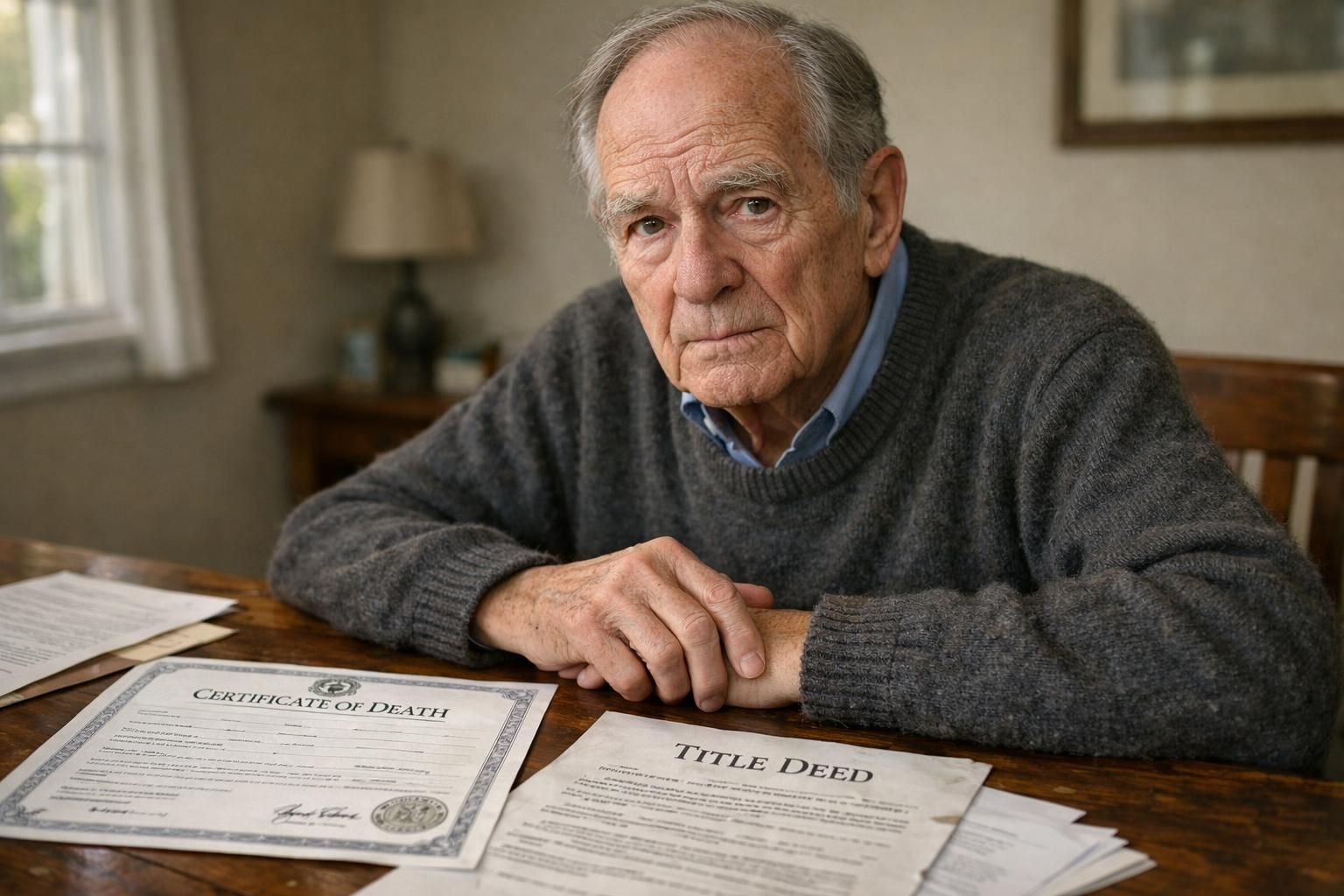
How your Colorado home transfers depends on how title was held. The probate process and required documents like a certified death certificate can affect how quickly you gain full control of the property.
How property ownership transfers based on title
If you owned your home as joint tenants with right of survivorship, Colorado law passes the property directly to you without probate. 3 You will need to record an affidavit of survivorship along with a certified death certificate at the county clerk and recorder's office where the property is located.
Colorado also allows transfer-on-death (TOD) deeds, sometimes called beneficiary deeds. If your spouse recorded a TOD deed naming you as beneficiary, ownership transfers automatically upon death without court involvement — one of the simplest tools available to Colorado homeowners.
If title was held as tenants in common, only your share belongs to you automatically. Your late spouse's undivided interest will typically go through Colorado probate before it can transfer. If the home was held in a revocable living trust, check the trust document; you may already be named as successor trustee or sole beneficiary, allowing an immediate transfer outside of probate.
Colorado is not a community property state, so the community property step-up rules that benefit spouses in states like California and Texas do not apply here. Always update official ownership records promptly after any transfer to prevent complications during a future sale.
Colorado probate basics and when it applies
Colorado probate is handled through the district court in the county where the deceased lived or owned property. Colorado follows the Uniform Probate Code, which offers several options depending on complexity:
- Small estate affidavit: If the entire estate — including the home — is valued below Colorado's small estate threshold (currently $80,000 in personal property for affidavit procedures; real property requires court action regardless of value), simplified procedures may be available for personal property but not typically for transferring real estate.
- Informal probate: Available for straightforward estates. A personal representative is appointed without a full court hearing, which speeds up the process.
- Formal probate: Required when there are disputes, unclear titles, or creditor complications. This can take six months to two years.
Colorado generally requires that probate be opened within three years of the date of death, but creditors have a window of one year from the date of death to file claims against the estate. As a practical matter, most advisors recommend completing probate and clearing the creditor-claim period before closing a sale to protect the buyer and ensure clean title.
Alternatives such as TOD deeds and living trusts can keep Colorado real estate out of probate entirely, saving time and court costs.
Death certificates and affidavits of survivorship in Colorado
Order at least 10 to 15 certified death certificates from the Colorado Department of Public Health and Environment or the county vital records office. Mortgage lenders, title companies, the county clerk and recorder, and financial institutions all require an official certified copy — photocopies are not accepted.
If your home was held as joint tenants with right of survivorship, you will file an affidavit of survivorship with the county clerk and recorder in the county where the property is located. This document, combined with the death certificate, clears the title and confirms you as sole owner. Without these filings, title companies in Denver or Aurora will not issue title insurance, which means no buyer can obtain financing.
Tax Implications in Colorado

Understanding tax consequences after the death of a spouse matters because federal capital gains tax exclusion rules, step-up in basis, and Colorado-specific rules all affect how much you keep from the sale.
Capital gains tax exclusion for Colorado surviving spouses
Under federal law (IRC §121), if you sell your primary residence within two years of your spouse's death while filing as a qualifying widow(er), you may exclude up to $500,000 in capital gains. After two years, the exclusion falls to $250,000 for single filers. You must have owned and lived in the home for at least two of the last five years before the sale.
Colorado conforms to federal capital gains treatment and taxes capital gains as ordinary income at the state level. Colorado's flat income tax rate means gains above your exclusion are taxed at the state rate in addition to federal rates. Work with a Colorado CPA or estate planning attorney to calculate your net exposure and confirm eligibility.
Step-up in basis in Colorado (a non-community property state)
Because Colorado is not a community property state, only your late spouse's half of the home receives a step-up in basis to fair market value on the date of death. Your half retains its original cost basis.
For example, if you and your spouse bought a Denver home for $300,000 and it is worth $600,000 at their passing, your new blended basis is roughly $450,000 ($150,000 original basis on your half + $300,000 stepped-up basis on their half). Any gain above $450,000 — reduced further by the capital gains exclusion — would be taxable. Keep records of the original purchase price and the cost of any improvements, as these increase your basis and reduce taxable gain.
Colorado estate and inheritance taxes
Colorado does not impose a state estate tax or a state inheritance tax. The federal estate tax exemption for 2024 is $13.61 million per individual, meaning the vast majority of Colorado homeowners are unaffected. Selling costs — real estate commissions, closing fees, and repairs made before the sale — reduce your capital gain for both federal and Colorado state tax purposes. Keep all receipts and records of these expenses.
Financial Considerations

Managing money after the death of a spouse can feel overwhelming. A Colorado financial advisor or estate planning attorney can help you protect your family home and make informed decisions.
Handling remaining mortgages, reverse mortgages, or liens
Mortgage payments do not stop after the death of a spouse. If your name is on the loan, keep making payments throughout Colorado probate or title transfer to avoid default. Under the Garn-St Germain Act, even if you were not listed as a borrower, you have the legal right to assume the loan as a surviving spouse. Notify the lender promptly and present a certified death certificate.
Liens such as mechanics' liens, HOA liens, or judgment liens recorded against the property at the county level must be resolved before closing any sale in Colorado. Title companies will identify these during a title search.
For reverse mortgages, federal rules give surviving spouses up to six months — with possible extensions up to one year — to pay off the balance or sell the home. FHA insurance covers any shortfall if the home sells for less than the amount owed.
Using life insurance or home equity to manage finances
Life insurance proceeds can be used to pay off remaining mortgages, property taxes, or Colorado HOA fees, giving you more time to decide what is right for your situation rather than forcing a rushed sale. 9
Home equity loans or lines of credit offer another way to cover estate costs during Colorado probate without selling quickly below fair market value. 8 Colorado lenders will generally require clear title before extending new credit, so resolve any title issues first.
When the surviving spouse is not listed on the mortgage
The Garn-St Germain Act protects you even if your name does not appear on the mortgage. You may assume the loan by notifying the lender and providing a certified death certificate. Continue making payments during this process to avoid default. If refinancing becomes necessary to obtain full ownership through title transfer or probate, a Colorado real estate attorney can coordinate with lenders and the court to keep the process moving.
Preparing the Colorado Home for Sale

Sorting personal items and valuing a Colorado home after the death of a spouse takes time. Work at a pace that respects your emotional well-being while addressing practical steps.
Sorting through belongings
Tackle one room at a time over several weeks or months. Document valuables with photographs for probate records and potential capital gains calculations. Items with significant monetary value — jewelry, art, collectibles — should be appraised professionally. Consider donating to local Colorado charities or holding an estate sale, but consult with other heirs before removing items that may be part of the probate estate. Professional estate organizers and clean-out services operating in the Denver metro and Front Range area can provide sensitive, experienced support.
Repairs versus selling as-is
Colorado's active real estate market — particularly along the Front Range — means well-prepared homes in good condition often attract strong offers. However, you are not obligated to make repairs. Key considerations include:
- A professional inspection identifies hidden issues that could affect fair market value or Colorado disclosure requirements. 10
- Colorado law requires sellers to disclose known material defects. Even selling as-is does not eliminate disclosure obligations.
- Cash buyers and investors typically purchase as-is but usually offer 5–10% below market value.
- Critical repairs such as roof or HVAC issues can maximize offers and reduce days on market in competitive Colorado neighborhoods.
- If time is the priority — for example, to settle debts or complete probate — an as-is sale may be the right choice.
Getting the home valued in Colorado's market
A certified appraiser can establish fair market value as of your spouse's date of death, which matters for both the step-up in basis calculation and for probate court filings. Request a comparative market analysis (CMA) from a local Colorado real estate agent to understand current buyer demand and pricing trends in your area. Markets along the Front Range can shift quickly, so current data is important whether you are in Lakewood, Aurora, or a more rural county.
Selling a Hoarder House in Colorado
Selling a hoarder house comes with unique challenges, but Colorado has specialized resources to help.
Health and safety issues
Mold, pest infestations, and biohazards pose serious health risks and may violate local building or health codes in Colorado municipalities. Colorado law requires disclosure of known material defects including health and safety hazards. Professional remediation may be required before listing, and all remediation work should be documented thoroughly for insurance claims and buyer disclosures.
Cleaning and preparation
- Secure all entry points to prevent unauthorized access.
- Remove personal belongings, trash, and debris room by room; sort items to keep, donate, or discard.
- Hire licensed, bonded cleaning or biohazard remediation companies if health risks are present.
- Schedule pest control before deep cleaning begins.
- Test for mold, especially in basements common in Colorado homes; arrange certified mold remediation if needed.
- Deep clean carpets, walls, and fixtures; repaint if staining remains.
- Dispose of hazardous materials according to Colorado Department of Public Health and Environment guidelines.
- Document every stage with photos for probate records and buyer disclosures.
- Consult a Colorado real estate agent experienced with estate and hoarder properties for an accurate valuation.
Hiring professional cleaning services
Specialized clean-out and biohazard companies operate throughout the Denver metro and Colorado Springs areas. Look for crews that are licensed, bonded, and insured. Full-service packages covering hauling, deep cleaning, and minor repairs can accelerate your timeline. Estate funds or a home equity line can cover these costs, reducing stress while preserving more of the property's value before sale.
Selling Options for Colorado Surviving Spouses
You have several ways to sell your Colorado home. Each path affects your timeline, net proceeds, and tax consequences differently.
Comparing selling methods
| Option | Timeline | Home Condition | Pricing | Best For |
|---|---|---|---|---|
| Traditional Realtor (MLS) | 30–60+ days to close | Often requires prep or repairs | At or above market value | Maximizing sale price; homes in good condition |
| Cash Buyer | 1–3 weeks | As-is; no repairs required | 5–10% below market value | Quick sale; homes needing major repairs; probate timelines |
| Other Methods (iBuyers, Auction, FSBO) | Varies | Varies by method | Varies; outcomes can be unpredictable | Flexible situations; unique property types |
| Colorado Probate Sale | 6–18 months depending on court | Any condition | Court-supervised; may be below market | Complex ownership; unclear title |
| Trustee Sale (home held in trust) | Can list immediately | Any condition | Market or negotiated | Homes in living trusts; desire to avoid probate |
Pros and cons by timeline and financial need
| Option | Pros | Cons | Best For |
|---|---|---|---|
| Traditional Realtor |
|
|
|
| Cash Buyer |
|
|
|
| Colorado Probate Sale |
|
|
|
| Trustee Sale |
|
|
|
Your emotional capacity, legal status, and immediate financial needs will guide the best choice. Always seek guidance from a Colorado real estate attorney or licensed agent before proceeding. 12
Conclusion
Selling your Colorado home after your spouse passes away involves tough decisions shaped by state law, federal tax rules, and your personal timeline. Colorado's lack of a state estate or inheritance tax simplifies one piece of the puzzle, but probate requirements, title transfer rules, and capital gains planning still require careful attention. Work with a Colorado estate attorney and financial advisor to protect your interests, and give yourself the time you need to make decisions you will feel confident about.
If you need to sell quickly or want to avoid the stress of repairs and showings, KDS Homebuyers purchases Colorado homes directly for cash in any condition. Visit kdshomebuyers.net to request a free, no-obligation cash offer and learn how a simple, fast sale might be the right solution for your situation.
FAQs
1. What happens to property ownership after the death of a spouse in Colorado?
It depends on how title was held. Joint tenancy with right of survivorship passes ownership directly to the surviving spouse without probate. A Colorado transfer-on-death deed also bypasses probate. Tenants-in-common ownership requires the deceased spouse's share to go through Colorado district court probate.
2. How does Colorado treat capital gains when a surviving spouse sells the family home?
Colorado conforms to federal capital gains rules. You may exclude up to $500,000 in gain if you sell within two years as a qualifying widow(er), or $250,000 as a single filer after that window. Colorado taxes gains above the exclusion as ordinary income at the state flat income tax rate.
3. Does Colorado have a step-up in basis rule?
Colorado follows federal law on step-up in basis. Because Colorado is not a community property state, only your late spouse's half of the home receives a step-up to fair market value on the date of death. Your original cost basis on your half remains unchanged.
4. Does Colorado have an estate or inheritance tax?
No. Colorado does not impose a state estate tax or inheritance tax. Federal estate tax applies only to estates exceeding $13.61 million in 2024, which affects very few Colorado homeowners.
5. What is a Colorado transfer-on-death deed and how does it help?
A transfer-on-death (beneficiary) deed allows a Colorado homeowner to name a beneficiary who receives the property automatically upon death, completely bypassing probate. If your spouse recorded a TOD deed naming you, you simply record the death certificate and an affidavit at the county clerk and recorder's office to complete the transfer.
6. Should I consult a professional before selling my Colorado home after my spouse's death?
Yes. A Colorado estate attorney can guide you through probate requirements and title transfer. A CPA familiar with Colorado tax law can help you maximize exclusions and account for the step-up in basis. A licensed real estate agent experienced with estate sales can help you price and market the property effectively.
References
- ^ https://heatherdomi.com/blog/selling-a-family-home-after-a-loss-why-timing-preparation-and-support-matter/ (2026-02-14)
- ^ https://www.karlaerickcaborealty.com/sellers/selling-a-house-after-death-essential-timeline-guide
- ^ https://legacyassuranceplan.com/articles/estate-maintenance/transferring-home-ownership-after-death-of-spouse
- ^ https://www.nolo.com/legal-encyclopedia/joint-owners-survivorship-32441.html (2025-10-20)
- ^ https://www.floridabar.org/public/consumer/pamphlet026/
- ^ https://www.elderlawanswers.com/the-tax-consequences-of-selling-a-house-after-the-death-of-a-spouse-18791 (2025-02-11)
