

Selling a House With Knob-and-Tube Wiring: Risks and Options in Colorado
Selling your home can get complicated if you discover knob-and-tube wiring during the process. Many insurance companies refuse coverage for homes with this outdated electrical system, making sales more difficult. 1 This guide explains the risks of knob-and-tube wiring in Colorado and gives you clear options to handle the situation. Find out what steps can protect your peace of mind—and your sale. 3
Key Takeaways
- Knob-and-tube wiring is found in homes built from the 1880s to the 1940s. It lacks a ground wire and often fails modern safety codes. Many insurance companies refuse coverage or charge premiums up to 60% higher for these homes.
- Selling with knob-and-tube wiring can lower your home's value by 10–15%. Your house may stay on the market up to 50% longer. About 65–70% of insurers deny coverage or require electrical system replacement before closing.
- FHA and VA loans almost always require removal of old wiring. Even conventional lenders hesitate without proof of upgrades or insurance approval. This cuts your buyer pool by about 60%, leaving mainly cash buyers and investors.
- Rewiring costs range from $8,000 to over $36,600 depending on your home's size and complexity. If you cannot upgrade, most Colorado sellers reduce their price by at least the repair cost plus 10–20%, offer a closing credit, or target cash buyers not dependent on financing.
- Colorado requires sellers to disclose known material defects including electrical hazards. Failure to disclose can lead to lawsuits or deal cancellations. Hire a licensed Colorado electrician for an inspection report before listing (see sources 1, 2, 3, 4, 5).
Discovering knob-and-tube wiring during a sale can feel overwhelming, but there are ways to navigate the situation successfully.
Many Colorado homeowners—particularly in Denver's older neighborhoods like Congress Park, Park Hill, and the Highlands—still find active knob-and-tube wiring during a home sale. This outdated electrical system can lower your property value by 10 to 15 percent if left as-is.
It also shrinks your pool of buyers by up to 60 percent due to insurance underwriting and lender restrictions. Homes with knob-and-tube wiring often stay on the market 30 to 50 percent longer than homes with modern electrical systems.
Colorado municipalities adopt and enforce the National Electrical Code (NEC), and local jurisdictions such as Denver and Aurora may have additional requirements. Sellers must disclose known electrical deficiencies under Colorado's real estate disclosure laws. A licensed Colorado electrician can inspect your system and advise on repairs, which typically range from $8,000 to $15,000 or more.
What Is Knob-and-Tube Wiring?

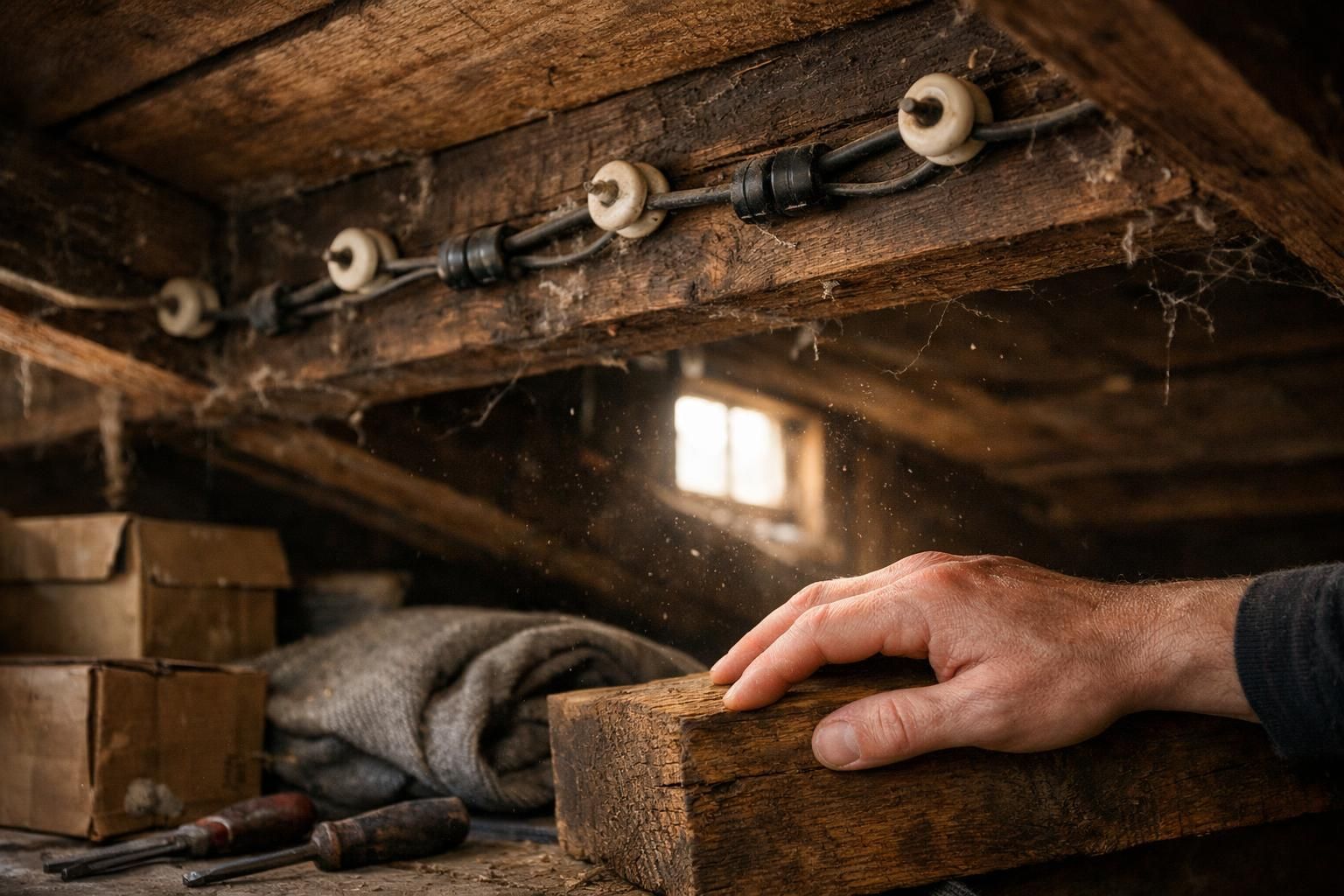
Knob-and-tube wiring uses ceramic insulators and open-air wire runs, often found in attics or basements. This early electrical system lacks a ground wire, which raises concerns for electrical safety and insurance coverage today.
An outdated electrical system used from the 1880s to the 1940s.
Homes built between the 1880s and 1940s often have knob-and-tube (K&T) wiring. This system runs electrical wires through ceramic knobs and tubes that separate conductors from wood framing. You can usually spot these porcelain insulators in attics or basement rafters. Many older Denver and Colorado Springs neighborhoods still have homes with this system.
Back then, builders used open-air insulation to help keep wires cool, but there was no ground wire for safety. These systems cannot support modern electrical loads needed for EV charging stations, smart home technology, or today's appliances. Homes with K&T wiring often need upgrades before passing an insurance inspection required by most insurers or government-backed lenders.
Features ceramic knobs, tubes, and open-air insulation, common in older homes.
You may notice porcelain knobs and ceramic tubes attached to wood framing in attics or basements. The open-air installation allows heat to escape into surrounding spaces—standard practice from the 1880s until the 1940s. Rubberized cloth covers K&T wires rather than modern plastic sheathing, and over time that cloth often deteriorates, risking exposed conductors and safety hazards.
Since this system lacks a ground wire, outlets cannot safely handle three-pronged plugs found on most modern appliances. During a home inspection in Colorado, these features will likely be flagged as failing current electrical code requirements for grounding and GFCI protection—both required under Colorado's adopted NEC standards.
Often visible in attics and basements, with porcelain insulators.
Wires used in knob-and-tube systems often run openly along joists and beams, making them easy to spot in attics or unfinished basements. Most homes with this older system show visible signs of aging such as cracked wire insulation and dust buildup around the porcelain hardware. Licensed Colorado electricians can quickly identify K&T wiring during a home inspection. Many insurance companies request removal because open-air installation increases fire hazard risks compared to shielded copper wires in modern electrical panels.
Why Knob-and-Tube Wiring Is a Problem When Selling

Knob-and-tube wiring often creates safety risks, blocks home insurance coverage, and can make it hard for buyers to get a mortgage—learn how you can address these issues before you list your Colorado property.
Safety Concerns: Fire risk, lack of grounding, and inability to handle modern electrical loads.
Outdated knob-and-tube wiring poses a serious fire hazard. The National Fire Protection Association reports that outdated electrical systems cause over 6,800 residential fires each year and $868 million in property damage. Old cloth insulation breaks down with age, and placing cellulose insulation—common in Colorado attic upgrades—too close to K&T wires can trap heat and raise fire risk significantly.
Without a ground wire, the chance of electric shock or fire during power surges increases. Modern Colorado households use appliances requiring far more electricity than these systems can safely handle. If you replace original fuses with higher-amp fuses to handle new devices, you may unknowingly create overheating risks behind walls and ceilings. These problems make home insurance harder to obtain and deter buyers worried about safety.
Insurance Issues: Many insurers won't cover homes with active K&T or charge higher premiums.
Most major insurance companies will not insure Colorado homes with active knob-and-tube wiring. 1 About 65 to 70 percent of insurers either deny coverage or require electrical system replacement right away. Some carriers refuse new policies entirely if K&T remains in use, while others raise premiums by 30 to 60 percent.
Many buyers must show proof from a licensed electrician that they plan to update the home wiring within sixty days just to obtain basic coverage. Failing this requirement often leads both insurance agents and mortgage lenders to withdraw support for your sale, making traditional transactions difficult in Colorado's competitive real estate market. 2
Financing Barriers: FHA/VA loans often require removal, and conventional lenders may hesitate.
FHA and VA loans often require the removal of knob-and-tube wiring before approving financing. Appraisers for these programs follow HUD guidelines and check for frayed or broken wires. Even though Fannie Mae, Freddie Mac, and FHA allow functional K&T if it is safe and at least 60 amps, many individual Colorado lenders still insist on full replacement to minimize risk. 3
Conventional lenders may also hesitate to approve mortgages since buyers must secure homeowners insurance first—and many Colorado insurers refuse coverage for homes with active K&T wiring. This barrier limits your pool of qualified buyers. Cash buyers or real estate investors offer more flexibility because they do not rely on standard mortgage approvals from banks or insurers worried about electrical hazards. 3
Your Disclosure Obligations in Colorado

Colorado law requires sellers to disclose known material defects that could affect a buyer's decision. Knob-and-tube wiring qualifies as a material defect and must be disclosed on the standard Colorado Seller's Property Disclosure form.
Colorado requires sellers to disclose known K&T wiring.
Colorado's real estate disclosure requirements obligate you to inform buyers about any known knob-and-tube wiring. The Colorado Real Estate Commission's standard Seller's Property Disclosure form includes questions about the electrical system's condition. Real estate agents, inspectors, and insurance companies expect this disclosure before the sale closes.
Home inspection reports in Colorado routinely flag K&T wiring, especially if it lacks a ground wire or shows signs of wear. Sharing honest details builds trust with buyers and helps avoid deal-killing surprises. Your real estate agent will guide you through the required forms to stay compliant with Colorado disclosure laws.
Failure to disclose can lead to liability or the deal falling through.
Non-disclosure of knob-and-tube wiring in Colorado creates serious legal risks including lawsuits and fraud claims. Colorado courts take material non-disclosure seriously—buyers who discover undisclosed defects after closing may pursue legal action. Home inspectors working in Denver, Aurora, and other Front Range markets are well-trained to identify K&T wiring, so concealment is unlikely to go undetected.
Insurance companies may also deny coverage or cancel policies if they discover undisclosed fire hazards after purchase. Full transparency protects you legally and financially throughout the sale process.
Options for Selling With K&T Wiring in Colorado
You have several routes to address knob-and-tube wiring before listing your Colorado home. Some sellers work with a licensed electrician for electrical upgrades, while others adjust their strategy to attract cash buyers or investors.
Replace the wiring before listing (cost: $8,000–$15,000+, timeline: 1–2 weeks).
Replacing knob-and-tube wiring before you list can make a significant difference in safety, insurance coverage, and marketability. A licensed Colorado electrician will remove outdated wiring and install modern outlets meeting current NEC requirements adopted by Colorado municipalities. For an average 1,500 square foot home, expect to pay between $8,000 and $15,000. Larger or more complex homes may see costs reach $20,000 to over $36,600.
The job often takes one to two weeks but could stretch longer if drywall or painting is needed afterward. Local inspectors in Denver, Lakewood, and other Colorado jurisdictions check attics, basements, and panels for compliance with upgraded 100-amp service requirements and arc fault circuit interrupter (AFCI) installation. Documentation from a licensed professional assures buyers your property is safe and ready for modern use.
Sell as-is with a price reduction (typically repair cost plus 10–20%).
Selling as-is with knob-and-tube wiring means you will likely need to reduce your asking price. Most buyers expect a discount equal to the electrical replacement cost, plus another 10 to 20 percent for risk and effort. Homes with visible K&T wiring often sell for 10–15% below market value and spend 30–50% longer on the Colorado market.
This route usually shrinks your buyer pool by up to 60 percent since many mortgage lenders and insurers avoid outdated electrical systems. Cash buyers or investors looking for fixer-uppers in Colorado's active investment market may show stronger interest than families needing FHA or VA financing. Providing a written estimate from a licensed electrician during negotiations helps buyers understand what they are taking on.
Offer a credit at closing.
Offering a closing credit lets buyers handle the electrical upgrade themselves after purchase. Credits are usually based on a written estimate from a Colorado-licensed electrician, typically ranging from $8,000 to $15,000 or more for full rewiring. Present the repair estimate clearly for buyers and their agents.
This approach can keep deals moving forward with traditional financing if both the insurance company and lender allow post-closing repairs. In Colorado's competitive Front Range markets where inventory can be tight, offering credits makes your home stand out without requiring you to fund expensive updates upfront.
Target cash buyers or investors who aren't financing-dependent.
Targeting cash buyers or real estate investors simplifies selling a house with knob-and-tube wiring. These buyers do not rely on traditional home loans or insurance approval, so issues like outdated electrical systems and fire hazards matter less than they do to conventional buyers. Colorado's active investor market—particularly along the Front Range—means there is steady demand for fixer-upper properties.
You can skip financing delays and complicated loan-driven inspections by working directly with these buyers. Expect offers below market value, but you gain a faster sale and avoid rewiring costs that could reach $8,000 to $15,000 or more. Providing the electrician's inspection report upfront builds trust and supports smoother negotiations. 4
Getting Your Colorado Home Ready
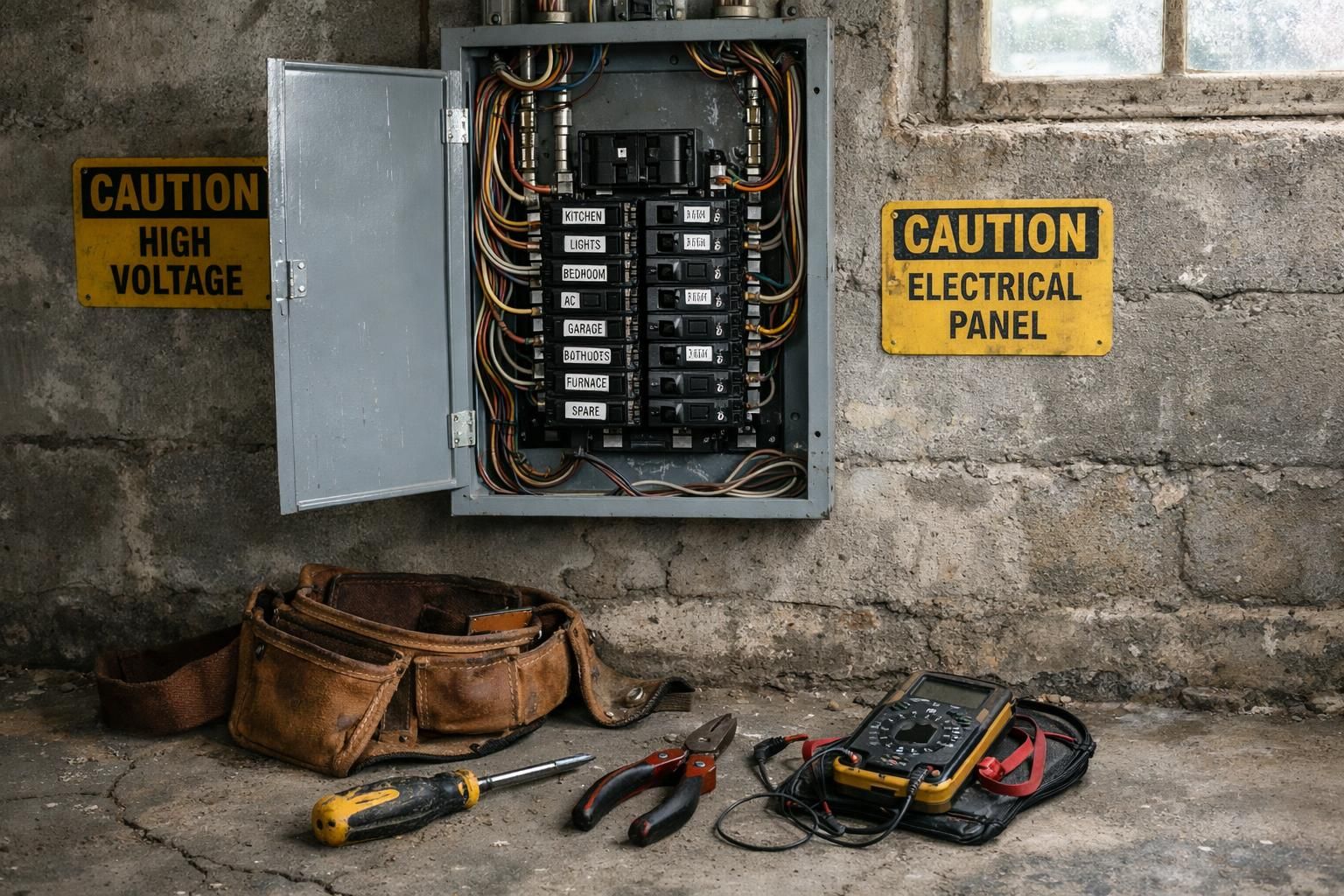
Preparing your house starts with a licensed Colorado electrician who can perform an electrical inspection and provide clear documentation—giving buyers confidence and protecting you legally.
Hire a licensed Colorado electrician for an inspection.
Hire a licensed electrician to conduct a full electrical inspection if your house has knob-and-tube wiring. A qualified professional knows how to spot hidden wires, check for ground wire issues, and test the amp capacity of old systems. Expect to pay between $200 and $500 for this service in Colorado. The inspector should provide documentation with results and a replacement estimate—paperwork that demonstrates code compliance awareness and home safety diligence before you list.
Obtain a written estimate for replacement.
Ask a licensed Colorado electrician for a written estimate covering the scope of electrical upgrades, itemized costs, and a timeline typically ranging from one to three weeks. Most estimates for full rewiring run between $8,000 and $36,600 depending on home size and complexity. A clear written estimate is often required by buyers, lenders, or Colorado insurers during due diligence. Having this information upfront makes it easier to set a fair asking price or offer closing credits.
Gather documentation for buyers.
Collect all inspection reports and estimates from your licensed electrician. Include any permits pulled through Colorado's local building departments and records of completed electrical upgrades. Colorado's Division of Real Estate and local building authorities may require permit documentation for any completed work. Insurance companies and lenders often ask for these documents during underwriting. Full records reduce negotiation delays and build buyer confidence.
Consider a pre-listing inspection.
A pre-listing inspection by a licensed electrician helps you discover knob-and-tube wiring before any buyer steps in. Early discovery puts you in control—you can plan for repairs, offer credits, or set the right price from the start. In homes built before 1950 in Denver or Colorado Springs, this step can reveal outdated electrical systems hidden behind walls or in attics. A thorough report also lets you address insurance coverage concerns upfront, which is especially important given how many Colorado insurers restrict coverage for homes with active K&T wiring.
Conclusion
You can take control of your Colorado home sale by understanding how knob-and-tube wiring affects insurance coverage, buyer interest, and electrical safety.
Knob-and-tube wiring doesn't make your home unsellable, but it requires strategy and preparation.
Homes with knob-and-tube wiring can still sell in Colorado, but you must plan ahead. Most lenders and insurers require modern electrical updates for coverage or financing. If replacement costs range from $8,000 to $36,600, expect buyers to ask for a price reduction or upgrade credit at closing. 5
Hire a licensed Colorado electrician for an inspection, get documentation on current conditions and wiring estimates, and disclose everything on your Colorado Seller's Property Disclosure form. Cash buyers or investors may move more quickly since they do not rely on conventional mortgages. Providing clear repair quotes and inspection results boosts marketability in Colorado's active real estate market. 5
If rewiring isn't feasible, consider selling directly to a cash buyer to simplify the process.
Selling as-is to a cash buyer or real estate investor often streamlines the transaction in Colorado. Cash buyers skip lender requirements and do not need home insurance approval, removing common barriers tied to knob-and-tube wiring. 6 You may receive lower offers than with traditional buyers, but you avoid paying for electrical upgrades or dealing with financing delays.
Many investors look for Colorado homes with outdated electrical systems because they plan to renovate and resell. Direct sales can cut closing timelines significantly and reduce uncertainty—especially when a licensed electrician has already completed an inspection report. 6 This approach lets you sell your house quickly while avoiding costly repairs tied to full rewiring jobs.
If you're facing this situation, KDS Homebuyers purchases Colorado homes directly for cash, in any condition—including those with knob-and-tube wiring. No repairs, no agent commissions, no financing contingencies. Visit kdshomebuyers.net to request your free cash offer today.
FAQs
1. What risks come with selling a Colorado home that has knob-and-tube wiring?
Knob-and-tube wiring is an outdated electrical system lacking a ground wire, which increases fire hazard risk. Many Colorado insurance companies see K&T wiring as unsafe, making home insurance coverage difficult or expensive to obtain.
2. How does knob-and-tube wiring affect my home's value and marketability in Colorado?
Outdated electrical systems typically lower home value by 10–15% and extend time on market by 30–50%. Buyers may worry about safety, upgrade costs, or problems passing a home inspection required by Colorado lenders.
3. Can I sell my Colorado home as-is with knob-and-tube wiring?
Yes. Some sellers choose this option if they cannot afford rewiring before listing. Cash buyers and investors are more likely to purchase Colorado homes needing electrical updates since they do not depend on insurance approval or traditional financing.
4. Should I get an electrical inspection before selling in Colorado?
A licensed Colorado electrician should inspect your home's wiring for code compliance, wire condition, capacity limits, and ceramic tube integrity. This helps you understand repair costs and gives you documentation to share with buyers and their agents.
5. What options do I have for upgrading from knob-and-tube wiring in Colorado?
You can hire a licensed electrician for complete rewiring to meet current NEC standards as adopted by your Colorado municipality, or make targeted electrical upgrades to improve safety and strengthen your negotiating position with buyers.
References
- ^ https://www.mercyelectrician.com/blog/knob-tube-wiring-the-hidden-risk-to-your-insurance-policy/
- ^ https://honeycombinsurance.com/insurance-learning-center/knob-and-tube-wiring/ (2025-10-22)
- ^ https://www.scottkompa.com/blog/buying-a-home-with-knob-and-tube-wiring/
- ^ https://npiweb.com/blog/posts/inspector-insights-the-problem-with-knob-and-tube-wiring/
- ^ https://bhhsselectstl.com/view-blog/selling-a-house-with-knob-and-tube-wiring-should-you-be-concerned (2020-01-23)
- ^ https://ibuyer.com/blog/can-you-sell-a-house-with-knob-and-tube-wiring/ (2025-11-11)
