

Selling a House With a Septic System: Inspections, Disclosures, and Tips in Washington
Selling a house with septic issues can feel overwhelming, especially if you are unsure about inspections or disclosures. Washington State requires sellers to disclose known material defects, and many county health departments impose their own septic inspection requirements before a property can change hands. 3 This guide walks you through Washington's disclosure rules, septic inspection requirements, and steps for dealing with common problems like failed drain fields or overdue tank maintenance. 1 Find out how to protect yourself in your real estate transaction and keep the process smooth.
Key Takeaways
- Washington's seller disclosure law (RCW 64.06) requires you to reveal known septic system defects on the Seller Disclosure Statement. Failing to do so can expose you to post-closing lawsuits.
- Many Washington counties — including King, Pierce, Snohomish, and Thurston — require a septic inspection or O&M (Operation &Maintenance) report at or near the time of sale.
- Septic inspections by certified contractors typically cost $300–$900. Addressing problems early can keep your sale on track; major repairs like drain field replacement can exceed $20,000.
- Selling as-is limits your buyer pool primarily to cash buyers, since most lenders will not finance homes with failed systems. Disclose all known issues upfront to avoid legal trouble after closing.
- Mark the tank location clearly, gather diagrams and maintenance records, and consider a home warranty to boost buyer confidence — especially for older systems common in rural western Washington.
Sources: 1, 2, 3, 4, 5, 6, 7, 8, 9, 10
Understanding Septic System Disclosure Requirements in Washington

Washington home buyers expect honest details about septic systems before any real estate transaction. State law and county regulations protect both parties by requiring full disclosure of your system's age, service history, and major repairs.
Importance of disclosing the septic system and known issues
Under Washington's Seller Disclosure Act (RCW 64.06), you must complete a Seller Disclosure Statement that covers the condition of your on-site sewage system, including any known defects, the date of the last inspection, and whether the system has ever failed. 1 Hiding known problems — such as a failing drain field or missed pump-outs — can lead to post-closing lawsuits in Washington Superior Court.
Buyers routinely ask for maintenance records, recent pump receipts, and repair estimates before closing. Transparency builds credibility and supports realistic pricing in competitive markets like Seattle and Tacoma. Providing honest information about your drain field and septic tank history supports smoother negotiations with both agents and buyers.
Information buyers typically request
Buyers in Washington want clear answers about your septic system before moving forward. Providing the right details reduces stress and builds trust.
- Age of the septic tank — older systems common in rural Thurston or Snohomish County often need more frequent repairs or full replacement. 2
- Maintenance records showing dates of pump-outs and inspections by a licensed O&M provider.
- History of backups, foul odors, drain field failures, or gray water issues.
- Location of the septic tank and drain field — buyers need this to avoid costly surprises during landscaping or construction.
- Results from previous county health department inspections or O&M reports.
- Whether root intrusion has affected the drain field or pipes.
- Proof that the system meets current Washington Department of Health and county environmental health standards.
- Any warranties on existing equipment, or diagrams showing piping layout.
Washington-specific disclosure laws and legal protection for sellers
Washington's Seller Disclosure Act (RCW 64.06) is the foundation of your disclosure obligation. You must complete the standard form and deliver it to the buyer, who then has three business days to rescind the purchase agreement after receipt.
Beyond state law, many Washington counties have their own on-site sewage system (OSS) transfer requirements. Thurston County, for example, requires an O&M inspection by a licensed inspector within one year of sale. King County and Pierce County have similar requirements tied to their environmental health codes. Always check with your local county health department — rules vary by jurisdiction and by the type or age of the system.
Failing to follow local real estate transaction rules can lead to legal trouble in Washington Superior Court after closing. Consult your county's environmental health division or an experienced Washington real estate attorney to confirm exactly what is required before you list.
The Pre-Sale Septic Inspection
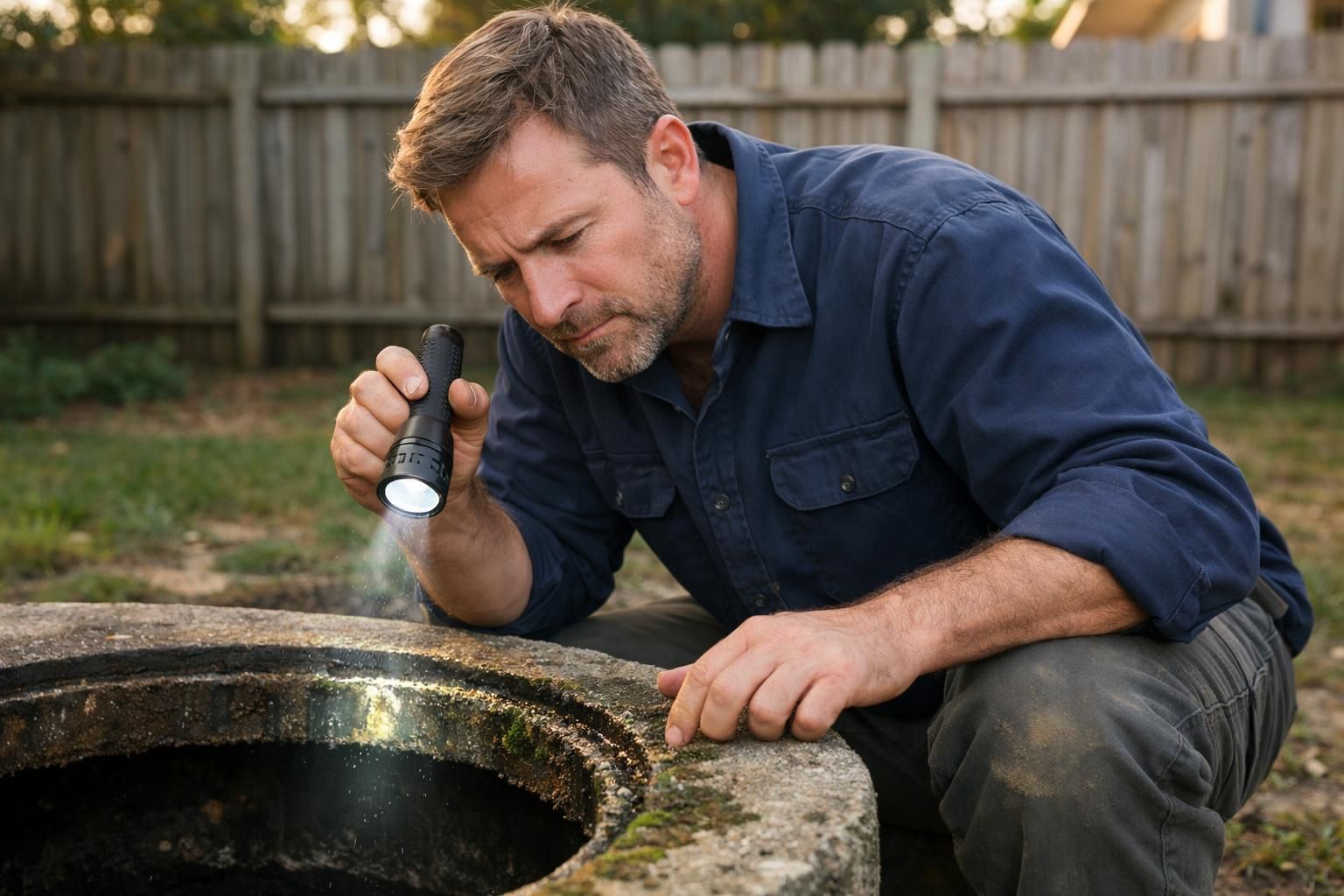
A certified inspector checks your septic tank and drainage area for signs of trouble. Knowing the condition of your sewage system protects both you and the buyer during any Washington real estate transaction.
What the inspection involves
A thorough septic inspection in Washington typically includes:
- Pumping the septic tank to check sludge levels, blockages, and wastewater flow. 4
- Examining the tank for cracks or leaks that could allow sewage to escape into Washington's groundwater.
- Evaluating the distribution box to confirm effluent moves evenly into the drain field.
- Inspecting the drain field for standing water, foul odors, or overly lush grass — common warning signs in the wet western Washington climate.
- Using cameras or soil probes to identify hidden pipe breaks or root intrusion below ground.
- Confirming compliance with Washington Department of Health standards and applicable county codes.
- Costs typically start around $300 and can reach $900 or more depending on property size, system type, and location.
Addressing inspection results early avoids last-minute negotiations and reassures buyers that you have managed maintenance responsibly.
Who performs inspections and typical costs in Washington
In Washington, on-site sewage system inspections must be performed by a licensed O&M (Operation & Maintenance) provider or a certified septic inspector approved by your county health department. You can find licensed providers through the Washington Department of Health's online database or your county environmental health office.
A basic inspection typically costs $300–$600; a full inspection with pumping generally runs $550–$900. Fees vary by county and system type. Some counties require the seller to pay; others allow the cost to be negotiated between parties. Confirm requirements with your county before listing.
Pros and cons of a pre-listing inspection
A pre-listing septic inspection gives you a clear picture of your property's condition before it hits the market. The upfront cost — typically $550–$900 — can save you significantly by catching problems before a buyer's inspector does. Repairing issues ahead of time may boost your sale price and prevent surprises during escrow.
You can use the report to demonstrate the system is functioning, making your home more competitive in markets like Bellevue or Spokane where buyers have options. Some buyers may still request their own inspection, but having an existing report speeds up due diligence and reduces the chance of a buyer walking away over septic concerns.
Common Septic Issues That Arise During Washington Home Sales

Many Washington home sales stall because of missed pump-outs, root damage in leach fields, or missing maintenance records. Here is what to watch for.
Overdue tank maintenance
Septic systems in Washington should be pumped every three to five years and inspected regularly under an O&M program. Skipping this leads to sludge buildup, sewage backups, and a failed system — all serious red flags for buyers and county health inspectors alike. Missing pump receipts force buyers to guess about the system's health, and inspection costs to rectify deferred maintenance can range from $200 to over $1,200 depending on the extent of work needed. Gather any past records now and confirm whether your system is due for service before listing.
Drain field failure or root intrusion
Washington's wet climate can accelerate drain field problems. Pooling water, soggy or spongy soil, or unusually green grass over the drain field are warning signs that wastewater is not draining properly. 7 Tree root intrusion — common on wooded western Washington properties — can block or crush pipes. Removing roots may cost $500–$1,500; replacing a failed drain field can reach $20,000 or more depending on soil conditions and permit requirements. If you see standing water or unusual growth near the drain field, call a licensed inspector immediately.
Outdated systems and poorly maintained records
Many older homes in rural Washington — particularly those built before modern county codes — have undersized or non-compliant septic systems. If your system fails inspection because it does not meet current Washington Department of Health or county standards, buyers may demand full replacement at a cost of $10,000–$30,000 or more. 8 Missing pump receipts and maintenance logs make buyers nervous. Keeping organized paperwork protects you legally under RCW 64.06 and reassures buyers they are making a sound investment.
Repair or Sell As-Is

If your septic tank needs work, you face an important choice: repair before listing or sell as-is. Understanding the costs and trade-offs helps you decide what makes sense for your situation.
Costs and benefits of repairing septic issues before selling
Facing septic issues before selling your Washington home can be stressful. Here is a straightforward breakdown:
| Repair Item | Typical Cost in Washington | Key Benefit |
| Tank pumping and cleaning | $300–$600 | Meets county O&M requirements; reassures buyers |
| Pipe repair or line cleaning | $500–$2,500 | Prevents inspection failure; widens buyer pool |
| Drain field repair or replacement | $5,000–$20,000+ | Required for conventional financing; avoids escrow holdbacks |
| Permits and county inspections | $450–$2,300 | Confirms code compliance; reduces legal exposure under RCW 64.06 |
| Full system replacement | $10,000–$30,000+ | Opens home to all buyers; maximizes sale price |
Buyers move forward with far more confidence once a recent Washington-compliant inspection report and completed repairs are on the table. Sellers who invest in upfront repairs typically face fewer price reduction requests and smoother closings.
Considerations for selling the home as-is
Selling as-is with a known septic problem in Washington significantly narrows your buyer pool. Most mortgage lenders — including those offering FHA and VA loans — will not finance homes with failed on-site sewage systems, so you will primarily attract cash buyers or investors who are comfortable taking on the risk.
You must still fully disclose all known issues on the Washington Seller Disclosure Statement. Omitting defects does not protect you — it exposes you to liability under RCW 64.06. Properties sold as-is often sit on the market longer and attract lower offers that include repair credits. That said, cash buyers can sometimes close in as little as seven to ten days, which may be worth the trade-off if speed matters more than price.
Tips for a Smooth Sale in Washington

Work with a Washington real estate agent experienced with properties on private sewage systems. Use your county health department and a licensed O&M provider to give buyers confidence throughout the process.
Gather maintenance records and pump the tank before showings
Keep maintenance records readily available — service visit logs, receipts from licensed Washington septic companies, and pump-out dates. Buyers expect this paperwork and many Washington county health departments require it. 10
Schedule a pump-out close to your listing date. At $300–$600, it demonstrates responsible ownership and ensures smooth operation during buyer showings. Homes with well-documented service histories sell faster and at stronger prices. 11
Provide system diagrams and price competitively
Supply buyers and inspectors with a clear diagram showing the tank location, drain field layout, and access points. On larger rural parcels — common in eastern Washington or on the Olympic Peninsula — this step prevents accidental damage and speeds up inspections considerably.
Price your home to reflect any known septic issues or recent repairs. If an inspection reveals $4,000 in needed work, factor that into your listing price or offer a closing credit. Transparent pricing reduces buyer hesitation and limits drawn-out negotiations over system condition.
Home warranties and clear marking of the septic tank location
A home warranty that includes septic system coverage can ease buyer concerns, especially for older systems. Review coverage limits carefully and provide buyers with the full policy details. Marking the tank with stakes or flags prevents damage during showings or landscaping and makes access easy for service crews. These simple steps protect your system and demonstrate good faith throughout the Washington transaction. 10
Additional Resources for Washington Sellers
Several resources can help you navigate selling a home with a septic system in Washington:
- Washington Department of Health – On-Site Sewage: Provides guidance on OSS regulations, licensed inspector lookup, and O&M requirements statewide.
- Your county environmental health department: King, Pierce, Thurston, and Snohomish counties each have their own transfer inspection requirements — contact them early.
- USDA Rural Development programs: If repair costs are prohibitive, federal grant and loan programs may help cover updates to failing systems in eligible rural Washington areas.
- Licensed Washington real estate attorneys: Can clarify your obligations under RCW 64.06 and help draft disclosures that protect you post-closing.
- Online contractor directories: Platforms like HomeAdvisor and Angi list certified Washington septic contractors with cost estimates and reviews.
Conclusion
Selling a Washington home with a septic system takes careful planning. Gather your maintenance records, confirm your county's transfer inspection requirements, and schedule a licensed inspection before listing. Complete and accurate disclosures under RCW 64.06 protect you legally and help buyers trust the process. Work closely with your county health department and a knowledgeable local agent to navigate state and county rules. These steps lead to fewer surprises, faster closings, and peace of mind for everyone involved.
If you want to skip repairs and sell quickly, KDS Homebuyers buys Washington homes directly for cash — including properties with septic issues — with no showings, no commissions, and no obligation. Visit kdshomebuyers.net to request your free cash offer today.
FAQs
1. Does Washington State require a septic inspection before selling a home?
Washington's state law does not mandate a single statewide inspection requirement, but many counties — including Thurston, King, and Pierce — require an O&M inspection report at or near the time of sale. Check with your county environmental health department before listing.
2. Do Washington sellers have to disclose septic system issues?
Yes. Under RCW 64.06, you must complete a Seller Disclosure Statement that includes known defects with your on-site sewage system. Hiding known problems can expose you to post-closing litigation in Washington Superior Court.
3. How does proper septic maintenance affect my home sale in Washington?
Regular pump-outs and documented O&M service records signal responsible ownership, support higher offers, and satisfy county health department requirements. Buyers and their lenders place significant weight on system documentation.
4. What if I cannot afford to repair a failing septic system before selling?
You can sell as-is with full disclosure, targeting cash buyers willing to take on repairs. USDA Rural Development programs may also offer loans or grants for qualifying Washington homeowners. Alternatively, a cash home buyer like KDS Homebuyers can make an offer on your property in its current condition.
References
- ^ https://www.epa.gov/sites/default/files/2017-08/documents/170803-homebuyerssepticguide_508c.pdf
- ^ https://ccetompkins.org/resources/your-septic-system-what-to-know-when-buying-or-selling-a-home
- ^ https://www.pulgininorton.com/septic-systems-and-seller-disclosures.html
- ^ https://www.redfin.com/blog/what-you-need-to-know-about-septic-inspections/
- ^ https://www.realtor.com/advice/sell/is-the-seller-obligated-to-get-a-septic-system-inspection-on-a-home/
- ^ https://www.johnklineseptic.com/septic-inspections-for-real-estate-transactions
- ^ https://www.wrenvironmental.com/blog/2024/may/septic-issues-that-could-sink-your-home-sale/
- ^ https://www.sellsoonbluemoon.com/blog/selling-house-with-septic-tank-problems-in-warren-mi/
- ^ https://www.vdwws.com/blog/septic-inspections-buying-or-selling-property
- ^ https://www.theseptictankman.com/blog/septic-inspections-for-sales-stop-last-minute-surprises
- ^ https://www.har.com/blog_128432_understanding-septic-tank-maintenance-the-ultimate-pumping-guide-for-homeowners
