

How to Sell a House With Solar Panels or a Solar Lease in Colorado
Selling your Colorado home with solar panels or a solar lease can feel stressful and confusing. 1 The average cost to install a solar energy system ranges from $25,595 to $33,763, making it one of your biggest investments. 2 Colorado ranks among the top states for solar adoption, with abundant sunshine and strong state incentives driving installations across the Front Range and beyond. This guide breaks down how to sell a house with owned solar panels or a solar lease in Colorado—step by step.
Key Takeaways
- Owned solar panels make your Colorado home easier to sell and can add 30%–50% of the installation cost to its value. Homes with owned panels may sell up to 4.1% faster and for as much as $15,000 more.
- Leased panels or Power Purchase Agreements (PPAs) require buyers to assume the contract, pass a credit check (typically 650–680), and sometimes pay an assumption fee of $0–$250. About 77% of leases transfer successfully, but some lenders may reject mortgages because of active leases.
- Selling with leased systems in Colorado often takes 60–90 days because buyers must qualify for both a mortgage and lease payments.
- Colorado's Xcel Energy and Black Hills Energy service territories have specific net metering rules that affect how you document energy savings for buyers.
- Complete documentation is crucial: installation records, warranties (panels: 25 years; inverter: 10–15 years), utility bills, maintenance logs, and all legal agreements.
- Homes with solar can add roughly $4 per watt in value or boost price by up to $29,000 in high-demand Colorado markets like Denver and Boulder (source: NAR).
Understanding Your Solar Situation in Colorado
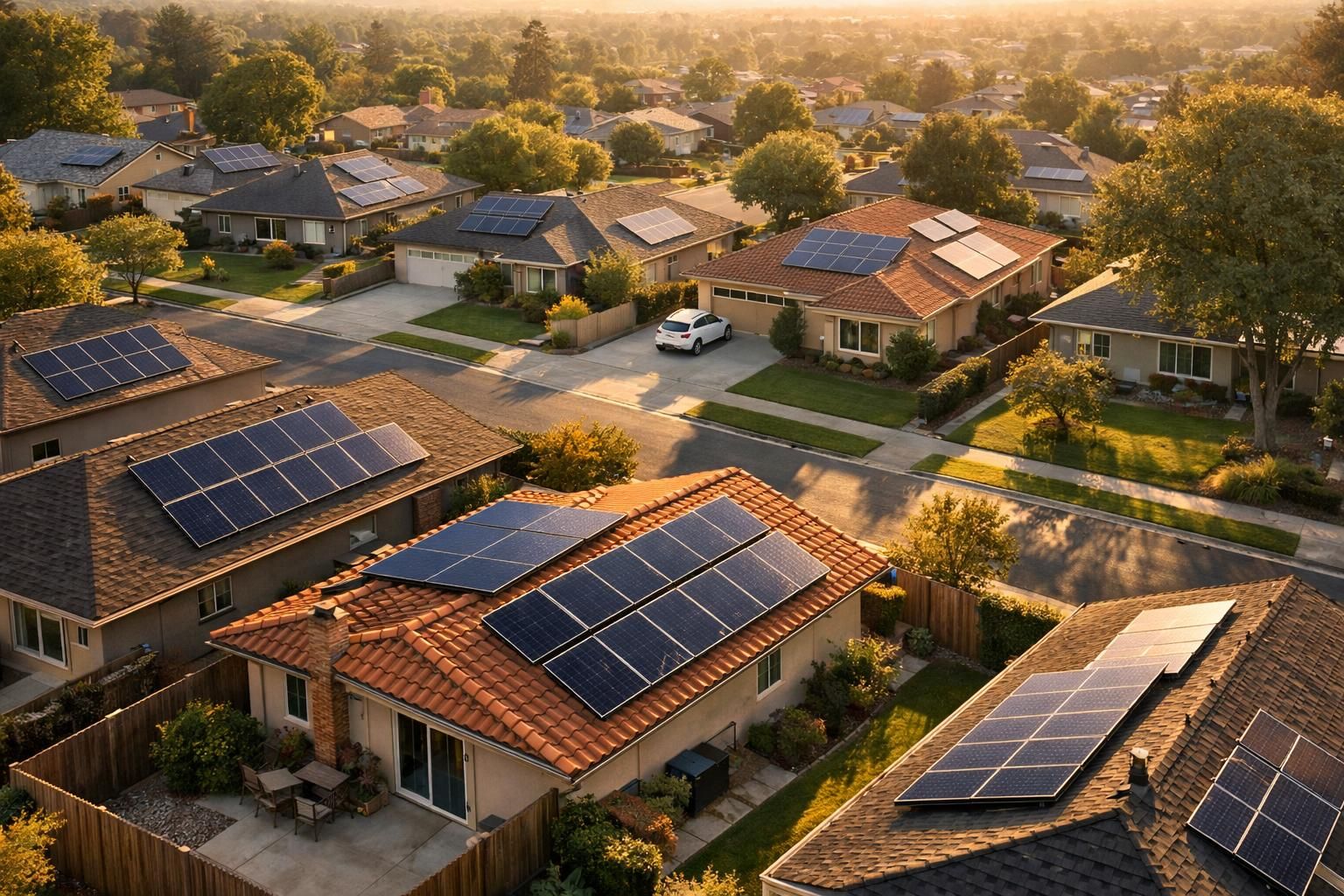
Colorado homeowners benefit from the state's generous solar incentives, including the federal Investment Tax Credit (ITC) and Colorado's own property tax exemption for residential renewable energy systems. Under Colorado law, the added value that solar panels bring to your home is exempt from property tax assessment—meaning your property taxes do not increase simply because you installed solar. Understanding whether you own or lease your system shapes every step of the sale.
Owned panels: Paid off or financed
Owned solar panels make your home sale smoother. If paid off, no third party is involved and buyers benefit from panels that become part of the real property—adding 30% to 50% of installation cost to your home's value. Colorado real estate agents regularly market owned systems as a premium feature, especially in energy-conscious communities along the Front Range.
If you still carry a solar loan, determine whether it is secured (often through a UCC-1 fixture filing recorded with the Colorado Secretary of State) or unsecured. Secured loans must be paid off at closing; unsecured personal loans stay in your name and do not encumber the title. Check with your county clerk and recorder to confirm whether any lien appears on your property.
Leased panels or Power Purchase Agreement (PPA)
Leased solar panels and PPAs let homeowners use renewable energy without buying the system outright. A lease carries a fixed monthly payment; a PPA charges per kilowatt-hour generated. Both typically run 20 to 25 years and may include an escalator clause of 2%–5% annually. Major providers active in Colorado include Sunrun, SunPower, and Tesla Energy.
When you sell a Colorado home with a leased system, the buyer must pass a credit check (usually 650–680 minimum) and may owe an assumption fee up to $250. Under standard appraisal guidelines, leased systems count as personal property and do not add value as a real property improvement—a key point for Denver-area appraisals governed by Fannie Mae and Freddie Mac underwriting rules.
How to identify your solar panel type
Before listing your Colorado home, confirm your solar arrangement using these steps:
- Review your original purchase or lease agreement for terms like "owned," "financed," or "leased."
- Check your monthly Xcel Energy or Black Hills Energy bill for separate solar charges or credits.
- Search for a UCC-1 fixture filing with the Colorado Secretary of State's office—this often signals a financed system tied to your property.
- Review your federal tax returns for Form 5695 (Residential Energy Credits), which indicates ownership.
- Contact your solar installer or provider directly to confirm ownership status.
- Ask your mortgage lender whether any solar-related debt affects your debt-to-income ratio or title.
- Gather all permits issued by your local Colorado jurisdiction (city or county building department) and interconnection agreements with your utility.
Selling a House With Owned Solar Panels in Colorado

If you own your solar energy system in Colorado, you can attract buyers with lower electricity bills, net metering credits through Xcel Energy, and long-term energy savings. Owned systems transfer with the home and typically support a higher list price.
Transferring panels with the home
Owned solar panels transfer with the property at closing in Colorado just like any other fixture. Have your documentation ready: proof of ownership, panel and inverter warranties, production history from your monitoring system, and all permits from your local building department. Panels that are fully paid off can increase property value by thousands of dollars. Because Colorado exempts solar added value from property tax reassessment, buyers face no tax penalty for acquiring a solar home—a strong selling point worth emphasizing in your listing. 1
Marketing solar as a value-add in Colorado
Highlight your system's energy production in your MLS listing with a "Solar Snapshot" that includes system size, manufacturer, annual output, and net metering credits. Utility rate increases from Xcel Energy make energy savings especially compelling to Denver and Aurora buyers. Homes with owned solar panels can sell for up to 4.1% more and move 20% faster than comparable homes with leased systems. Host open houses during daylight hours so buyers can watch the production monitor in real time—a powerful visual for Colorado's eco-conscious market.
Documentation needed
- Full installation records and local building permits from your Colorado city or county. 2
- Panel warranties (typically 25 years) and inverter warranties (10–15 years).
- Maintenance and service logs.
- Net metering agreement with Xcel Energy, Black Hills Energy, or your local utility co-op.
- Monthly production data and utility bill comparisons showing energy savings.
- Interconnection agreement and utility permission-to-operate letter.
- Proof that no UCC-1 lien encumbers the system (obtain a lien release if a loan was paid off).
Selling a House With Leased Solar Panels or a PPA in Colorado

Selling a Colorado home with leased solar panels or a PPA requires early action and clear communication with your solar provider. Understanding your options prevents closing delays.
Option 1: Buyer assumes the lease
Most Colorado buyers take over the existing solar lease. The solar company runs a credit check (minimum 650–680) and may charge an assumption fee up to $250. The transfer typically takes 30–60 days and must be coordinated through your closing attorney or title company alongside the standard Colorado real estate closing process. 3 FHA loans allow lease assumption but count lease payments against the buyer's debt-to-income ratio—important for buyers using Colorado Housing and Finance Authority (CHFA) down payment assistance programs that have DTI limits.
Option 2: Seller buys out the lease
Paying off your solar lease before selling typically costs $10,000–$30,000 but converts the system to owned equipment, removing buyer qualification hurdles. Many Colorado real estate agents recommend buyouts when the local market is competitive and you want the widest possible buyer pool. Compare the buyout cost against the value the owned system adds to your home—in the Denver metro, that can mean $8,000–$15,000 or more in additional value. Note that some leases restrict early buyouts for up to six years after installation due to federal tax credit recapture rules; confirm this with your provider before listing. 3
Option 3: Seller prepays the lease balance
Prepaying the lease at Net Present Value settles your obligation and lets the buyer enjoy free solar electricity for the remainder of the lease term. This is less expensive than a full buyout and removes the lease assumption barrier. 4 Consult your solar provider and a Colorado tax professional about any impact on past federal or state tax credits before proceeding.
Addressing buyer objections and timeline considerations
- Provide copies of the lease agreement, payment history, and recent Xcel Energy bills showing savings. 3
- Explain that about 77% of solar leases transfer successfully in real estate transactions.
- Note that cash buyers and investors—common in markets like Colorado Springs and Aurora—are typically more flexible about assuming leased panels than buyers using traditional financing.
- Contact your solar provider as soon as you list; late contact is a common cause of closing delays in Colorado transactions.
- Set realistic expectations: sales involving a solar lease typically take 60–90 days from offer to closing, slightly longer than a standard Colorado transaction.
- Work with a Colorado real estate agent experienced with renewable energy properties and familiar with local utility interconnection requirements.
Disclosure Requirements and Legal Considerations in Colorado

Colorado sellers must disclose all known material facts about a property under Colorado real estate disclosure law. A solar lease, PPA, or outstanding solar loan is a material fact that must appear on the Colorado Seller's Property Disclosure form. Failing to disclose an active lease or lien can expose you to legal liability after closing.
Colorado-specific obligations
Colorado's strong solar adoption—particularly along the Front Range and in mountain communities—means buyers and their agents are increasingly familiar with solar agreements. Still, you must disclose:
- Whether the system is owned, financed, or leased, and all associated contract terms.
- Any UCC-1 fixture filing recorded with the Colorado Secretary of State against the system.
- The net metering agreement and which utility serves the property.
- Remaining lease term, monthly payment, escalator clause, and transfer requirements.
- Any HOA restrictions that may affect the solar installation (Colorado law generally protects homeowners' rights to install solar, but HOAs may regulate placement and aesthetics).
Colorado's MLS systems require disclosure of ownership or lease status for solar systems. Providing full documentation upfront—before the inspection period—reduces the risk of contract disputes or last-minute renegotiations.
Importance of providing solar documentation during listing
Appraisers, lenders, and closing attorneys in Colorado will request solar records. Key documents include installation permits from your local building department, panel and inverter warranties, utility interconnection agreements, production history, and maintenance logs. Proper paperwork supports your asking price and keeps the transaction on schedule.
How Solar Affects Your Sale Timeline and Price in Colorado

Impact on buyer pool and marketability
Owned solar panels attract a broad buyer pool in Colorado's competitive Front Range market. Leased systems narrow the field because buyers must qualify for both their mortgage and the lease—and some lenders will not finance homes with active leased panels. Cash buyers and investors are often more flexible, making them a practical audience for Colorado homes with solar leases. Providing clear documentation from your utility and solar company helps educate buyers and keeps negotiations productive.
Pricing strategies and setting realistic expectations
Colorado buyers typically value solar at roughly $4 per watt of installed capacity, potentially adding 4–7% or up to $29,000 to a median-priced home. 5 Denver and Boulder markets—where electricity costs are rising and environmental awareness is high—tend to reward solar ownership most. Factor in any lease buyout costs and compare them against the expected price increase. Work with a Colorado real estate agent who tracks solar-related sales data in your specific county or metro area before setting your list price. 5
Colorado Tax Considerations for Solar Home Sales
Colorado offers a property tax exemption for the added value solar panels bring—your assessed value does not increase due to solar improvements. When you sell, Colorado does not impose a state-level transfer tax, though some local jurisdictions charge a document fee at closing. If you claimed the federal ITC (currently 30%) on your system, consult a tax professional about any recapture implications if you sell before the five-year recapture period ends. Colorado also allows a state income tax credit for residential renewable energy systems; confirm with your accountant whether any credit recapture applies to your situation upon sale.
Conclusion
Selling a Colorado home with solar panels or a solar lease is manageable when you understand your options and prepare early. Gather your documentation, disclose all material facts on Colorado's seller disclosure form, and work with a real estate agent experienced in renewable energy properties. Owned systems offer the clearest path to maximum value; leased systems require extra steps but are routinely transferred across Colorado's active solar market. With the right preparation, you can attract motivated buyers and close with confidence.
If you need to sell quickly and want to skip the complexity of solar lease transfers or buyout negotiations, KDS Homebuyers purchases Colorado homes directly for cash—regardless of solar ownership status. Visit kdshomebuyers.net to request a free, no-obligation cash offer on your home today.
FAQs
1. How does owning solar panels affect selling a house in Colorado?
Owned panels can increase your Colorado home's value by 4–7% and attract buyers seeking lower electricity bills and net metering benefits through Xcel Energy or other utilities. Colorado's property tax exemption for solar added value means buyers face no tax penalty for purchasing a solar home.
2. What should I know if my Colorado home has a solar lease?
Disclose the lease on Colorado's Seller's Property Disclosure form immediately. The buyer must assume the lease or you may need to buy it out before closing. Contact your solar provider as soon as you list to start the transfer process and avoid delays.
3. Can I sell a Colorado home with a solar loan still in place?
Yes, but determine whether the loan is secured by a UCC-1 fixture filing recorded with the Colorado Secretary of State. Secured loans must be paid off at closing; unsecured personal loans do not encumber the title and can remain in your name.
4. Does Colorado law require me to disclose a solar lease when selling?
Yes. A solar lease or PPA is a material fact under Colorado real estate disclosure requirements and must be disclosed on the Seller's Property Disclosure form. Failure to disclose can create legal liability after closing.
5. Should I work with a specialized agent when selling a Colorado home with solar?
Yes. Work with a Colorado real estate agent familiar with renewable energy properties, local utility interconnection rules, and solar-related appraisal guidelines. They can guide disclosure, connect you with title companies experienced in solar lease transfers, and help set a competitive price.
References
- ^ https://www.solarenergyworld.com/blog/solar-faqs/transfer-solar-when-selling-home/ (2025-05-15)
- ^ https://www.bostonsolar.us/solar-blog-resource-center/blog/finally-solar-explained-for-realtors/ (2025-11-14)
- ^ https://www.solar.com/learn/selling-a-home-with-leased-solar-panels/ (2026-01-14)
- ^ https://www.homelight.com/blog/selling-a-house-with-leased-solar-panels/ (2024-08-26)
- ^ https://solartechonline.com/blog/do-solar-panels-add-value-to-home-guide/
