

Selling a House With Water Damage: What to Disclose and How to Price It in Colorado
You may feel stressed if you need to sell a house with water damage in Colorado. Water problems can lower your home value and lead to costly repairs or mold growth. 1 This guide explains what you must disclose under Colorado law, how to price your property fairly, and what options are available to you. 2
Key Takeaways
- Colorado sellers must disclose all known water damage, leaks, mold, and repairs. The Colorado Seller's Property Disclosure form requires you to report past flooding, foundation issues, and moisture problems. Failing to disclose can lead to lawsuits, deal cancellations, or penalties under Colorado real estate law.
- Water-damaged homes in Colorado typically sell for 15–30% less than comparable undamaged properties. Severe cases with untreated Category 3 "black water" often receive offers at only 50–70% of after-repair value (ARV), especially from cash buyers and investors in markets like Denver and Aurora.
- Professional inspections by home inspectors, mold specialists, and engineers are critical. Colorado's high-altitude climate and freeze-thaw cycles create specific risks for hidden pipe bursts and foundation moisture that inspectors are trained to detect.
- Major repairs range from $15,000 to $70,000 depending on severity; minor fixes may cost $1,200–$5,000. Insurance coverage varies by event type. Many Colorado sellers do not recover full repair investments at closing.
- Cash buyers offer quick sales in as little as 3–14 days but typically pay below market value. This option is especially useful for Colorado homeowners facing urgent timelines due to probate, divorce, or ongoing damage.
Types of Water Damage
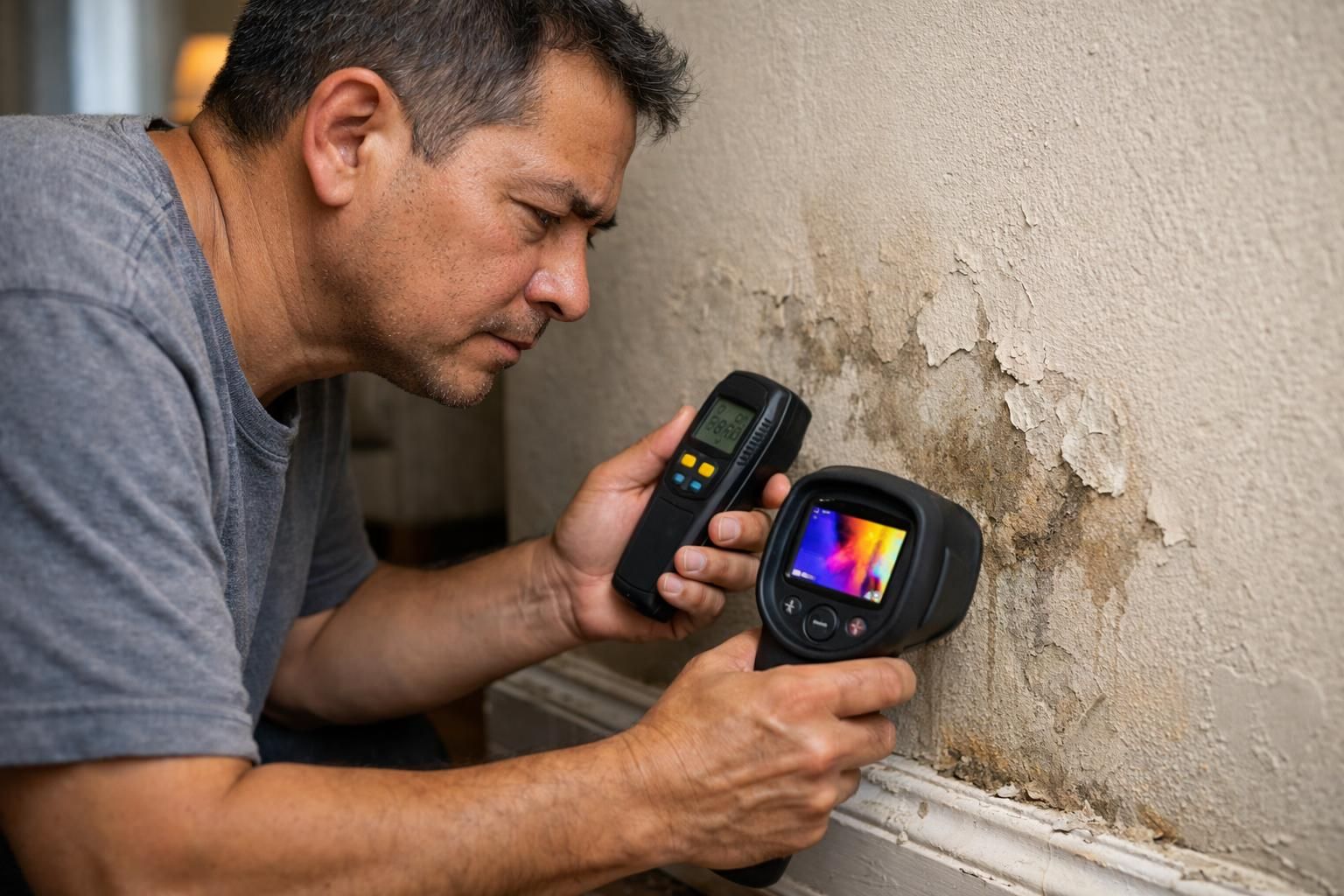
Water damage can appear in many forms and may impact your Colorado property beyond what you see on the surface. Home inspectors use moisture meters, thermal cameras, and drywall sampling to uncover hidden issues before they affect your home's value or safety.
Visible damage: stains, warping, mold
Stains on ceilings, walls, and baseboards signal past water intrusion. These marks often result from a burst pipe or roof leak and can lower your home value. Warping affects wood floors, drywall, doors, and trim; even slight swelling means moisture reached deep layers. Most particle board items swell quickly and become unsalvageable, while solid wood may recover in about six weeks with dehumidifiers.
Mold starts growing within 24 to 48 hours after water exposure in damp areas like basements or crawl spaces — both common problem areas in Colorado homes, particularly along the Front Range where seasonal temperature swings are significant. A licensed mold inspector will use specialized tools to detect hidden growths behind surfaces. Black mold (Stachybotrys) must be professionally removed, and Colorado real estate disclosure requirements obligate you to report known mold problems to buyers before closing. 1
Hidden damage: behind walls, foundation issues
Water damage that hides behind walls or beneath floors can cause major problems. In Colorado, freeze-thaw cycles during winter months are a leading cause of burst pipes and hidden moisture buildup — especially in older homes in Denver neighborhoods or mountain foothills properties. Leaky pipes, aging water heaters, and poor drainage often lead to concealed moisture collecting where you can't see it.
Unseen damage can threaten your home's foundation. Water seeping into cracks may weaken the base and attract wood-destroying insects. Serious foundation issues can prevent buyers from obtaining conventional financing, as many lenders require proof of repairs before approving loans on homes with structural concerns. A licensed structural engineer's report helps you understand the extent of hidden damage and what must be disclosed under Colorado law.
Categories of water: clean (Category 1), gray (Category 2), black (Category 3)
There are three categories of water damage. Category 1, or clean water, comes from a burst supply line or pipe and poses the lowest health risk. Category 2, or gray water, may come from appliances and contains contaminants that could cause illness. Category 3, or black water, includes sewage backups and floodwater and carries the highest health risk due to bacteria and toxins.
Professional appraisers deduct all repair costs plus add a stigma factor of 10% or more for homes damaged by black water. Most lenders will not approve FHA loans on properties with untreated black water issues because they fail strict HUD standards. Cash buyers typically offer only 50% to 70% of market value after repairs when facing severe contamination.
Legal Disclosure Requirements

Colorado has specific seller disclosure requirements. A real estate agent or attorney familiar with Colorado law can help you understand what information about water damage you must share with potential buyers.
Colorado seller disclosure laws
Colorado requires sellers to complete the Colorado Seller's Property Disclosure form, which is governed by the Colorado Real Estate Commission. This form requires you to disclose all known material defects, including water damage, moisture intrusion, past flooding, mold, and foundation problems. Colorado follows a "buyer beware" approach in some respects, but this does not exempt sellers from disclosing known defects. 2
Federal law also requires sellers of homes built before 1978 to disclose potential lead paint hazards. In Colorado, failure to disclose known defects can expose sellers to civil liability, and buyers may bring claims in Colorado district court. Statutes of limitations in Colorado for fraud-based claims can extend the window during which buyers may sue after discovering hidden damage.
Required disclosures: leaks, flooding, past repairs, mold, foundation issues
You must disclose every known instance of leaks, flooding, or water damage on your Colorado property. This includes burst pipes due to Colorado's harsh winters, roof leaks, sump pump failures, and all past repairs — even if you believe the problem is resolved. You must also share any mold problems or foundation issues.
Proper documentation protects both parties. Save inspection reports, repair receipts, insurance claims records, and photos. Over-disclosing rather than under-disclosing demonstrates good faith and reduces your legal exposure. If you have questions about what qualifies as a material defect under Colorado law, consult a Colorado-licensed real estate attorney before listing your home.
Consequences of non-disclosure: lawsuits, deal cancellation, penalties
Non-disclosure of water damage in Colorado can trigger lawsuits, deal cancellations, and steep financial penalties. If a buyer discovers after closing that you failed to disclose known leaks or flooding, they may pursue claims in Colorado district court. Attorney fees and contingency arrangements can make litigation expensive for sellers.
Courts may force you to pay for the buyer's financial losses or void the contract entirely. In cases involving intentional concealment, sellers may face fraud liability under Colorado law. Hiding water damage is never worth the legal and financial consequences.
Getting Professional Assessments
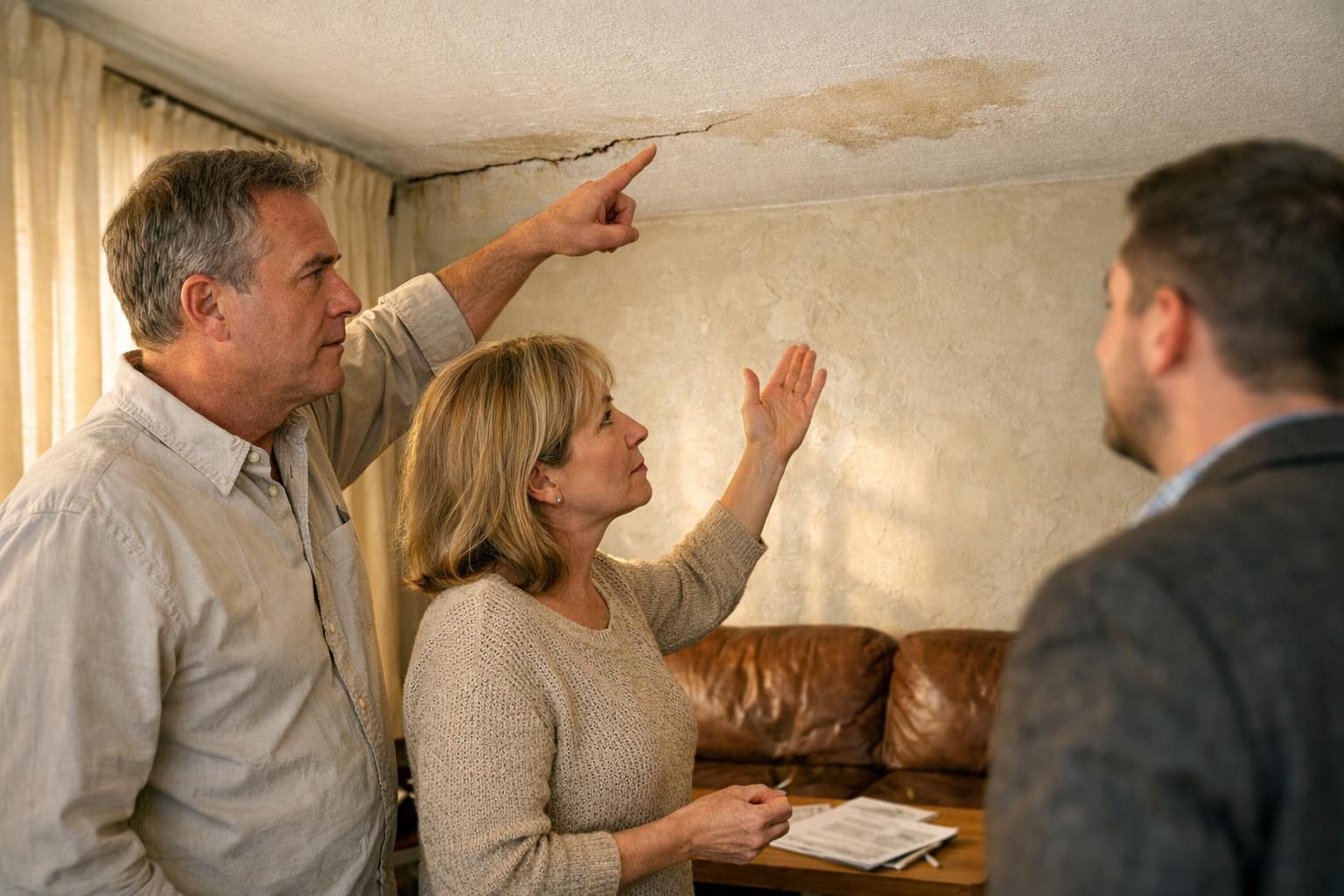
Hiring a home inspector, mold specialist, or structural engineer helps you uncover hidden water damage and gives buyers confidence in your Colorado property.
Water damage inspection
A water damage inspection gives you a clear picture of both visible and hidden problems. A licensed Colorado contractor will check for stains, warped flooring, odors, and rot, and use specialized tools to detect moisture behind walls. Inspection reports are required by insurance companies before they pay out claims and are crucial evidence for Colorado disclosure compliance.
Drying after water remediation typically takes 3 to 7 days, but lingering mold may remain hidden without proper testing. Keeping all inspection records protects both sides from future legal disputes under Colorado real estate law.
Mold testing
Certified mold inspectors use moisture meters and air sampling pumps to test for mold after water damage. If your home has had standing water for more than 24 to 48 hours, schedule a professional inspection immediately. Hidden areas behind drywall or under floors are common sites for mold growth — a serious concern in Colorado homes where basements are widely used as living spaces.
Proof of recent mold testing gives potential buyers confidence and satisfies lender documentation requirements. A complete mold assessment also protects you from lawsuits related to Colorado disclosure laws and appraisal problems tied to hidden structural damage.
Structural engineering report for foundation concerns
A structural engineering report is often requested by lenders and buyers when water damage has affected your foundation. Homes with foundation issues may not qualify for conventional or FHA loans under HUD standards. In Colorado, expansive soils are already a known foundation risk in areas like the Denver metro, making water-related foundation damage particularly significant to buyers and appraisers.
An engineer's report confirms whether your home is safe and helps set a fair market price based on actual repair needs. Properties may face a 10 to 20 percent stigma deduction in value due to reported structural concerns. A clear engineering report keeps you transparent under Colorado real estate law.
Repair vs Sell As-Is Decision

A Colorado real estate agent can help you compare repair costs with your home's expected market value. A comparative market analysis provides a clear starting point for your decision.
Costs of minor vs major repairs
Minor water damage repairs in Colorado typically cost between $1,200 and $5,000, covering drying, stain or warp repairs, basic mold removal, and repainting. Homeowners insurance may help if the damage came from a covered event such as a burst pipe.
Major repairs can reach $15,000 to $70,000. Severe mold infestations, foundation problems, or extensive subfloor replacement can take months and significant capital. Investing heavily in repairs does not always guarantee full recovery of costs at closing — many Colorado sellers find that the stigma factor remains even after completing all repairs.
Decision factors: time, urgency, financial capacity
Time and urgency weigh heavily in your choice. If you need to move quickly due to probate, divorce, job relocation, or an ongoing insurance claim, selling directly to cash buyers allows for closing in as little as 3 to 14 days. Traditional Colorado sales often take 30 to 60 days or longer, particularly if lenders require repairs before approving financing.
Financial capacity matters too. If repair costs exceed your budget, selling as-is offers relief from upfront expenses. Most cash investors offer 50% to 70% of your property's after-repair value when buying as-is. Document all completed repairs so potential buyers feel more confident moving forward.
Pricing Strategy

Pricing a Colorado home with water damage requires accurate contractor estimates and a realistic understanding of what investors will pay. Work with a real estate agent familiar with your local market — whether that's Denver, Colorado Springs, or the surrounding suburbs.
Adjusting price if repaired vs selling as-is
Repairing water damage before listing can raise your sale price, but homes with past water issues typically still sell for 15 to 30 percent less than comparable undamaged properties in Colorado. Appraisers subtract repair costs and apply a stigma factor of up to 20 percent because buyers remain concerned about hidden structural damage or mold recurrence.
Selling as-is attracts investors and cash buyers who expect significant discounts — commonly 50 to 70 percent of ARV. Getting multiple cash offers lets you compare and avoid lowball tactics. Accurate documentation from inspectors or engineers supports your asking price during negotiations.
Contractor estimates and investor pricing models
Get multiple written bids from licensed Colorado contractors for water damage repairs, mold removal, structural work, or sump pump replacement. These quotes help you compare against investor offers using real numbers.
Investors use ARV-based models, subtracting estimated repair costs plus their profit margin of 30% to 50%. Most assume worst-case scenarios when factoring in hidden leaks or foundation issues. Colorado appraisers may reduce value further due to the stigma associated with water-damaged properties, which is factored into investor calculations as well.
Marketing Challenges
Home listings with water damage face close scrutiny from Colorado lenders and appraisers, which can delay or derail the sale. Clear photos and honest descriptions help build buyer trust and keep your real estate agent prepared for difficult questions.
Appraisal issues and lender restrictions
Appraisers lower a home's value for water damage by subtracting repair costs and applying an additional 10 to 20 percent stigma factor. Active leaks or mold typically result in loan denials. FHA loans require strict HUD compliance and commonly fail appraisal when water or black mold issues are present. Homes with foundation problems rarely get through traditional mortgage underwriting in Colorado without documented repairs.
Lenders may halt closings or add weeks to your timeline if repairs are required before approving financing. Investors and cash buyers bypass these requirements, making them a faster option for Colorado homeowners facing serious water damage.
Honest listings and photo strategies
Disclose all water damage in your Colorado listing. Use clear photos to document stains, warped floors, or visible mold. Highlight professional inspections or repair records from licensed contractors. If you repaired a burst pipe or addressed flooding, include before-and-after images with dates.
Avoid concealing leaks, flooding history, or foundation concerns — this exposes you to lawsuits and violates Colorado disclosure requirements. Write honest listing language that addresses both the problems and the steps taken toward resolution. Potential buyers respond better to transparent sellers who provide detailed documentation.
Buyer Types and Negotiations
You may encounter cash buyers, investors, and traditional homebuyers with different expectations. A Colorado real estate agent can help you handle difficult negotiations and secure fair offers for your water-damaged home.
Selling to investors, flippers, or cash buyers
Most Colorado homeowners with water-damaged properties choose to sell to investors, flippers, or cash buyers. These buyers purchase homes as-is and often close in 3 to 14 days. Cash buyers typically pay 50% to 70% of ARV. Traditional buyers are rare for homes requiring major repairs, especially when lenders in the Denver metro or Colorado Springs markets decline financing on damaged properties.
Investors will likely conduct their own inspection and use contractor estimates to finalize their offer. Selling FSBO could save on agent commissions but may slow the process unless your price is highly competitive. Investors prefer complete disclosure about leaks, past flooding events, foundation issues, sump pump failures, and prior insurance claims.
Handling inspection negotiations and credit requests
After a home inspection reveals water damage, Colorado buyers commonly request repair credits or price reductions. Expect negotiations to focus on contractor estimates and documentation related to structural damage, mold, or past flooding. Prepare detailed inspection reports from licensed professionals to address buyer concerns efficiently.
Colorado's disclosure laws require you to respond truthfully about all known water-related issues. Failing to negotiate in good faith risks deal cancellation or opens the door to litigation if undisclosed defects surface after closing.
Options for Selling Your Colorado Home Fast
Selling a house with water damage in Colorado can move quickly if you work with a real estate investor. These buyers specialize in purchasing homes as-is for cash after a short walkthrough. 3 You avoid repairs, staging, and lender approval delays. You may receive less than full market value, but the speed and certainty can outweigh that gap depending on your situation. 4
You could also sell FSBO and skip agent commissions, though this requires more time and full Colorado disclosure compliance. Working with a Colorado-licensed real estate agent gives you access to pricing expertise and a wider buyer network, though agents may recommend repairs first to attract buyers who need mortgage approval. Collecting multiple cash bids helps you compare options and ensure fairness before deciding.
If your sale results in a capital gain, Colorado taxes capital gains as ordinary income at the state level. The federal exclusion for a primary residence — up to $250,000 for single filers and $500,000 for married couples filing jointly — may apply if you meet the ownership and use tests. Consult a Colorado CPA or tax professional to understand how selling a damaged property may affect your tax situation.
Conclusion
Selling a house with water damage in Colorado requires honesty, documentation, and a clear understanding of your options. You must complete the Colorado Seller's Property Disclosure form accurately, follow state and federal real estate laws, and price your property based on actual repair costs and inspection findings.
Whether you repair and list traditionally or sell as-is to a cash buyer, transparency protects you legally and builds buyer confidence. With the right information and the right partners, you can move forward with clarity and peace of mind.
If you're ready to explore a fast, straightforward sale, KDS Homebuyers buys houses directly from Colorado homeowners for cash — no repairs, no agent fees, no delays. Visit kdshomebuyers.net to request your free cash offer today.
FAQs
1. What must I disclose about water damage when selling my Colorado home?
You must complete the Colorado Seller's Property Disclosure form and report all known water damage, past leaks, flooding, mold, and repairs — including any insurance claims filed with your homeowners insurance company.
2. How does water damage affect home value in Colorado?
Water damage typically lowers home value by 15 to 30 percent. Colorado appraisers subtract estimated repair costs and apply a stigma factor of up to 20 percent, particularly for homes with foundation concerns or black mold.
3. Can I sell a Colorado house with water damage without making repairs?
Yes. You can sell as-is, but Colorado law requires full disclosure of all known defects. Cash buyers and investors regularly purchase water-damaged Colorado homes without requiring repairs beforehand.
4. Should I hire a Colorado real estate agent to sell my damaged house?
A Colorado-licensed real estate agent can help set the right price using local market comparisons and guide you through disclosure requirements. They may also recommend targeted repairs to attract buyers who need mortgage financing.
5. What risks do sellers face if they hide water damage in Colorado?
Failing to disclose known water damage in Colorado can expose you to civil lawsuits, contract rescission, and potential fraud claims. Buyers who discover hidden damage after closing may pursue claims in Colorado district court for repair costs and financial losses.
References
- ^ https://frontierrestoration.com/blog/mold-and-real-estate-transactions-buyers-and-sellers-guide/ (2025-10-21)
- ^ https://marinacciolaw.com/seller-disclosures-california-lawsuits/ (2026-01-12)
- ^ https://housecashin.com/knowledge-base/sell-water-damaged-house/
- ^ https://www.redfin.com/blog/can-you-sell-a-house-with-water-damage/ (2025-06-30)
