

Steps to Selling a House: The Complete Process From Start to Close in Washington
Selling your home in Washington State can feel overwhelming, especially in markets like Seattle or Tacoma where conditions shift quickly. Most buyers now start their search online and rely on high-quality listing photos found in the multiple listing service. 3 This guide breaks down the steps to sell a house in Washington into clear actions, from choosing a real estate agent to signing closing documents. 1 Find out how you can protect your home value and plan each step with confidence. 2
Key Takeaways
- Prepare your home early by gathering documents including your deed, mortgage payoff statement, tax records, HOA documents, repair receipts, and Washington's required Form 17 Seller Disclosure Statement. Pre-sale preparation helps prevent last-minute delays at closing.
- Compare selling methods based on your needs. Traditional listings with an agent typically cost 5–6% in commissions and take 30–60 days to close. Cash buyers can close in 10–30 days with fewer repairs required, but often offer 11–26% below market value.
- Washington imposes a graduated Real Estate Excise Tax (REET) on sellers. Rates range from 1.1% on the first $525,000 up to 3% on amounts over $3 million. Budget for this as part of your total closing costs.
- Evaluate every buyer's offer beyond price — check earnest money deposits, loan pre-approval, requested contingencies, and closing timeline.
- Total seller costs in Washington typically reach 8–10% of the sale price, including agent commissions, REET, and other closing fees. Funds are generally released within one business day after closing via wire transfer or escrow.
Pre-Sale Preparation: Before Listing

Selling your home starts with understanding Washington's real estate market and weighing your options. Careful planning now helps you avoid costly surprises during the closing process.
Deciding whether to sell: Timing and market conditions
Mortgage rates hovered near 7% through 2025, limiting buyer purchasing power in high-cost markets like Seattle and Bellevue. Homes may sit longer or sell below your ideal price in this environment.
Washington's major metros have seen inventory swings that shift quickly between seller's and buyer's markets. King County and Pierce County in particular have experienced strong demand followed by slower stretches, so researching neighborhood-level data matters.
Nationally, homes spent an average of 55 to 62 days on the market in 2024, and about 19% of sales fell through before closing due to financing failures or inspection issues. Start preparing two to three months before listing to position yourself against shifting conditions and unpredictable mortgage rates.
Choosing your selling method: Traditional listing vs. cash buyer vs. FSBO
Selecting the right way to sell your Washington home can make a significant difference, especially in urgent circumstances. Here is a direct comparison of the most common options.
| Method | How It Works | Pros | Cons | Best For |
|---|---|---|---|---|
| Traditional Listing (With Real Estate Agent) | List on MLS with a licensed Washington agent; uses professional photography, open houses, and agent-managed negotiations. | Highest exposure and potential price; agent handles complex steps. | Pay 5–6% commission; longer timelines (30–60 days to close); possible repair contingencies. | Most homeowners targeting top dollar with homes in good condition. |
| Cash Buyer | Sell fast, often in 10–30 days. No repairs or staging needed. Buyer handles most paperwork. | Quick, reliable closing; fewer showings; no major repairs required. | Offers typically 11–26% below market value; less profit if you have time to wait. | Sellers facing foreclosure, divorce, or urgent relocation; homes needing heavy repairs. |
| FSBO (For Sale By Owner) | Market and negotiate directly; handle all paperwork including Washington's Form 17 disclosure. | Save on agent commissions; full control over process. | Homes often sell for roughly 26% less; smaller buyer reach; risk of pricing or legal errors. | Experienced sellers with buyers already lined up or low-equity situations. |
Take time to review your priorities. Speed, price, and your property's condition all point toward the best choice. Tools like the MLS, professional photography, and a Comparative Market Analysis (CMA) play a key role regardless of which route you choose. 1
Gathering important documents
Selling your Washington home gets easier when you gather the right documents early. These papers speed up transactions and give buyers confidence.
- Collect your deed, which proves ownership and is required for title insurance and transfer of ownership through a Washington title company.
- Request your mortgage payoff statement from your lender detailing the exact amount needed to satisfy your loan at closing.
- Find recent property tax records and bills. Washington has no state income tax, but property taxes vary significantly by county — King County rates differ from Spokane County, for example.
- Gather HOA documents if applicable, including bylaws, fee schedules, and compliance certificates.
- Complete Washington's Form 17 Seller Disclosure Statement, which is legally required and informs buyers of all known material defects and property conditions.
- Compile receipts for home repairs or upgrades from the past five years. These build buyer trust and support your listing price.
- Include utility bills, survey/plot plans, and warranty documents for major systems like HVAC, roof, or appliances.
- For inherited properties, include any probate court orders or trust documentation from Washington Superior Court proceedings.
Having complete paperwork upfront reduces stress and prevents costly delays throughout every stage of the sale.
Assessing your home's condition: Repair or sell as-is?
A pre-sale home inspection typically costs $300–$500 in Washington and can reveal issues that may deter buyers if left unaddressed. 4 Common buyer requests include roof repairs, HVAC servicing, plumbing leaks, and electrical updates — particularly in older homes in areas like Tacoma or Spokane.
Simple fixes like repainting in neutral colors or improving landscaping provide strong returns and boost curb appeal. 3 If you sell as-is, Washington law requires you to disclose all known defects on Form 17. Buyers in as-is situations often seek price reductions of 5–20% below market value. Sellers can also negotiate repair credits at closing rather than paying out of pocket before listing.
Special Considerations for Selling a Hoarder House
Selling a hoarder house in Washington comes with unique hurdles. Professional junk removal and deep cleaning are often necessary before listing, adding cost and time. Lingering odors and visible damage will reduce buyer interest, so address these first.
Cash buyers and local property investors often show interest in as-is hoarder homes priced 5–20% below comparable properties. Washington's Form 17 disclosure still applies — you must report all known issues regardless of condition. Expect longer preparation time for photography, inspection, appraisal, and final walkthroughs.
The Traditional Listing Process

Selling through a traditional listing gives you access to agent expertise and proven marketing tools. A strong pricing strategy based on a Comparative Market Analysis (CMA) helps attract serious buyers in Washington's competitive markets.
Finding and interviewing real estate agents
Choosing the right Washington-licensed real estate agent affects your sale speed, price, and the ease of every step.
- Ask agents about their experience in your specific neighborhood — a Bellevue agent's market knowledge differs from one focused on Olympia or Spokane.
- Request details on recent sales: home types, price ranges, and days on market.
- Discuss their marketing plan including professional photography, MLS listing, open houses, and virtual tours.
- Clarify commission structures upfront. The combined rate is typically 5–6%, though it is negotiable following recent industry changes.
- Ask how they handle Washington-specific issues like Form 17 disclosures, REET calculations, and title company coordination.
- Request references and check reviews to assess communication style and problem-solving skills.
- Interview more than one agent to compare pricing strategy, negotiation tactics, and familiarity with Washington's closing process.
Preparing your home for sale: Decluttering, staging, and updates
A strong first impression attracts serious buyers and can increase your home's value in Washington's market.
- Declutter every room so buyers can visualize the space. Clear out personal photos, excess furniture, and anything crowding shelves or floors. 5
- Deep clean kitchens and bathrooms — buyers focus heavily on these areas.
- Neutralize odors from pets, smoke, or food using professional cleaning or air purifiers.
- Repaint bold walls in soft neutrals like beige or light gray to appeal to a wider range of buyers.
- Boost curb appeal by mowing, trimming, planting, and repainting the front door. Over 95% of buyers preview homes online first — great exterior photos capture attention.
- Fix minor issues like dripping faucets, cracked tiles, and squeaky doors before listing.
- Invest in professional real estate photography; listings with high-quality images can sell up to 32% faster. 6
- Consider a pre-sale home inspection to identify hidden repair needs and strengthen your negotiating position.
Setting the listing price: Competitive Market Analysis (CMA)
A CMA compares your home to similar recently sold properties in your Washington neighborhood. If updated homes in your area sold between $625,000 and $650,000, buyers will benchmark your price against those figures. Pricing too high causes homes to sit longer and often requires multiple price cuts.
Agents also factor in neighborhood amenities, school districts, and proximity to employment centers — all of which matter greatly in markets like Seattle's Eastside or South Puget Sound. A professional appraisal costs about $400–$700 in Washington and provides added guidance for setting a competitive asking price.
Showings and Offers

Showings give buyers a close look at your home, while strong offers depend on listing price, market trends, and buyer pre-approval. A well-prepared home and clear strategy improve your results.
Preparing for showings and handling feedback
- Remove personal items and extra clutter so buyers can picture their own lives in the space.
- Deep clean before any showings — focus on kitchens, bathrooms, floors, and windows.
- Make simple updates like fresh paint or new cabinet hardware for strong return on investment.
- Do not stay in the property during private showings; give buyers freedom to explore.
- Offer flexible showing times including evenings and weekends to maximize buyer traffic.
- Collect feedback from agents after each showing and respond to criticism about odors, repairs, or staging promptly.
- Track which features draw positive comments and highlight them in your marketing materials.
Evaluating offers: Price, contingencies, and buyer financing strength
Look at every offer beyond just the price. Check whether the buyer has mortgage pre-approval, a strong down payment, and earnest money held in Washington escrow. Cash buyers reduce risk because their offers are not tied to financing.
Evaluate all contingencies in the purchase agreement — home inspection, appraisal, and financing clauses all affect your timeline and certainty. 7 Some buyers waive contingencies in competitive Seattle-area markets, making transactions smoother. Respond to offers quickly — set counter-offer deadlines of 48 hours or less to maintain momentum.
Negotiating terms and accepting an offer
Review each purchase offer carefully. The document outlines price, closing date, contingencies, and any repair credits. Earnest money deposits in Washington typically range from $500 to 10% of the agreed sale price. 8
Both parties must sign the accepted offer, which sets key dates including the closing deadline and final walkthrough. Washington buyers sometimes request leaseback arrangements, allowing you to stay briefly after closing. Define the due diligence period clearly — Washington's real estate laws govern inspection timelines, title searches, and related contingencies.
Under Contract to Closing
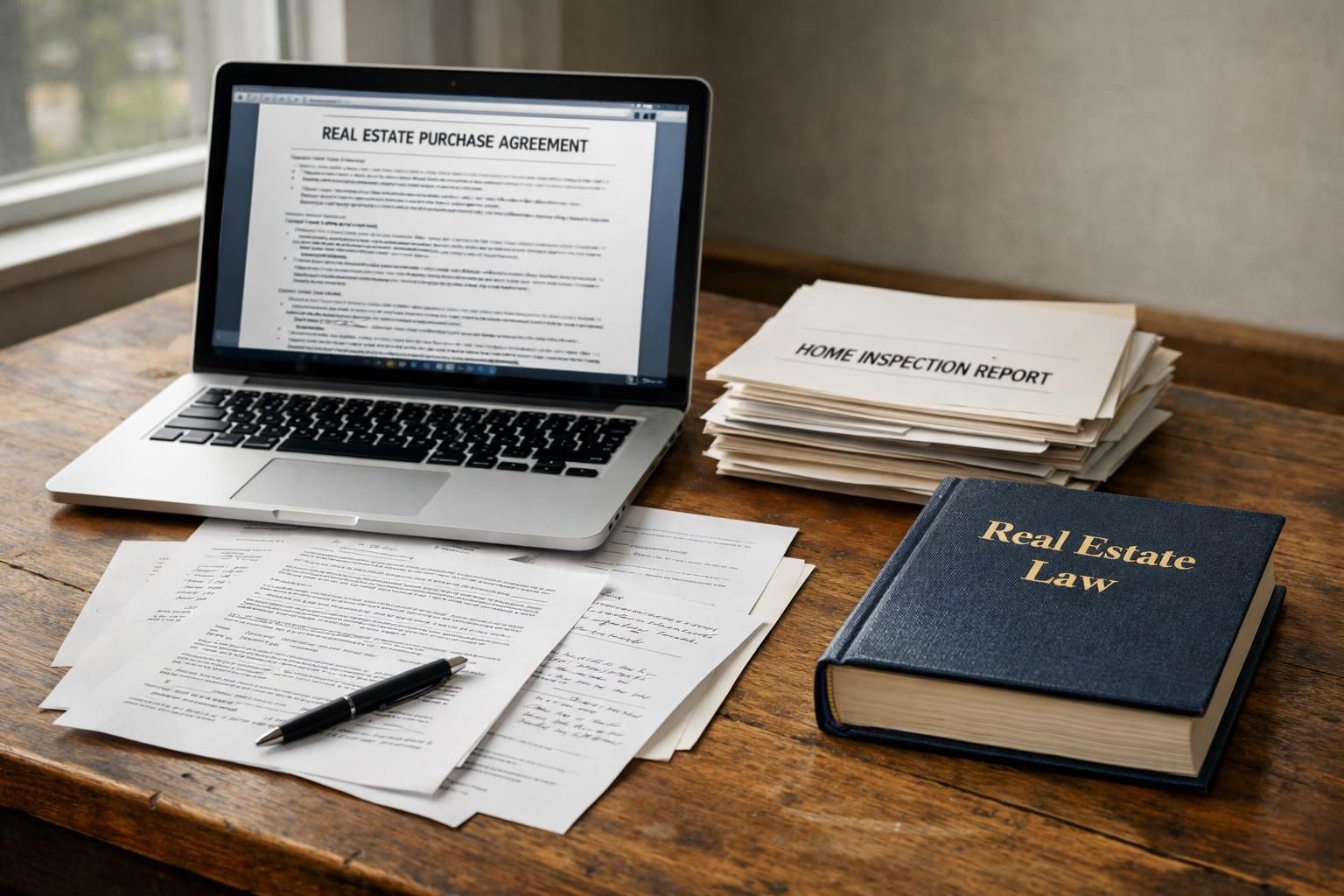
The period between signing the purchase agreement and closing involves important steps like the appraisal and home inspection. In Washington, a title company — rather than an attorney — typically manages the closing process, though you may choose to involve a real estate attorney for complex situations.
Inspection period and negotiating repairs
- Home inspections in Washington typically occur 7–10 days after mutual acceptance of the purchase agreement and cost $300–$500.
- Inspectors check roof, HVAC, plumbing, electrical, foundation, water intrusion, and pest issues — moisture and mold are common concerns in Western Washington's wetter climate.
- Buyers submit repair requests or ask for credits based on inspection findings.
- You can fix issues before closing, offer a monetary credit at settlement, or decline requests if buyer demand is strong.
- Documentation of recent upgrades supports your position during repair negotiations.
- If both sides cannot agree, the sale may fall through — about 19% of transactions nationally ended this way in 2023.
- A real estate attorney can provide guidance if contract changes affect your title transfer obligations or tax liabilities under Washington law.
Appraisal process: Handling low appraisals
A home appraisal typically costs $400–$700 in Washington and takes one to two weeks. If your buyer uses a mortgage, the lender requires an accurate valuation before approving financing. Low appraisals are common in fast-moving markets like Seattle's Eastside, where prices can outpace comps.
If you face a low appraisal, gather proof of upgrades and recent comparable sales. Ask your agent to share these with the appraiser for reconsideration. Some buyers in competitive markets cover the appraisal gap with additional cash. Alternatively, negotiate credits at closing or adjust terms to keep the deal moving toward final walkthrough and ownership transfer.
Title search and clearing title issues
Washington title companies conduct a title search to identify unpaid property taxes, existing liens, HOA violations, or inaccurate legal descriptions. You must clear all title issues before transferring ownership.
Washington imposes a graduated Real Estate Excise Tax (REET) paid by the seller at closing:
- 1.1% on the portion of the sale price up to $525,000
- 1.28% on $525,000 to $1,525,000
- 2.75% on $1,525,000 to $3,025,000
- 3% on amounts over $3,025,000
Some counties, including those in the Seattle metro area, may also impose a local REET surcharge. Title insurance protects buyers from legal claims after closing. Provide all requested documents — including HOA compliance certificates and proof that any home equity lines are settled — so nothing blocks issuance of a clear title at settlement.
Final walkthrough, signing documents, and transferring ownership
- Schedule a final walkthrough shortly before closing day to confirm agreed repairs are complete and no damage has occurred since the offer was accepted.
- Provide all required paperwork: deed, mortgage payoff documentation, repair receipts, tax records, and HOA documents.
- Review the settlement statement in detail. Seller closing costs in Washington typically total 8–10% of the sale price, including agent commissions, REET, escrow fees, and title insurance.
- Attend closing at a Washington title company office. Sign all required documents: the deed, bill of sale, payoff letter, and Form 17 acknowledgment.
- Transfer legal ownership by signing over the deed. The title company records the transfer with the county.
- Notify your county assessor's office of the ownership change to avoid future property tax complications.
- Expect funds to be released on closing day or within one business day once paperwork clears via wire transfer or escrow release.
- Ensure all utilities are transferred or shut off on the date specified in your agreement.
Alternative Selling Methods
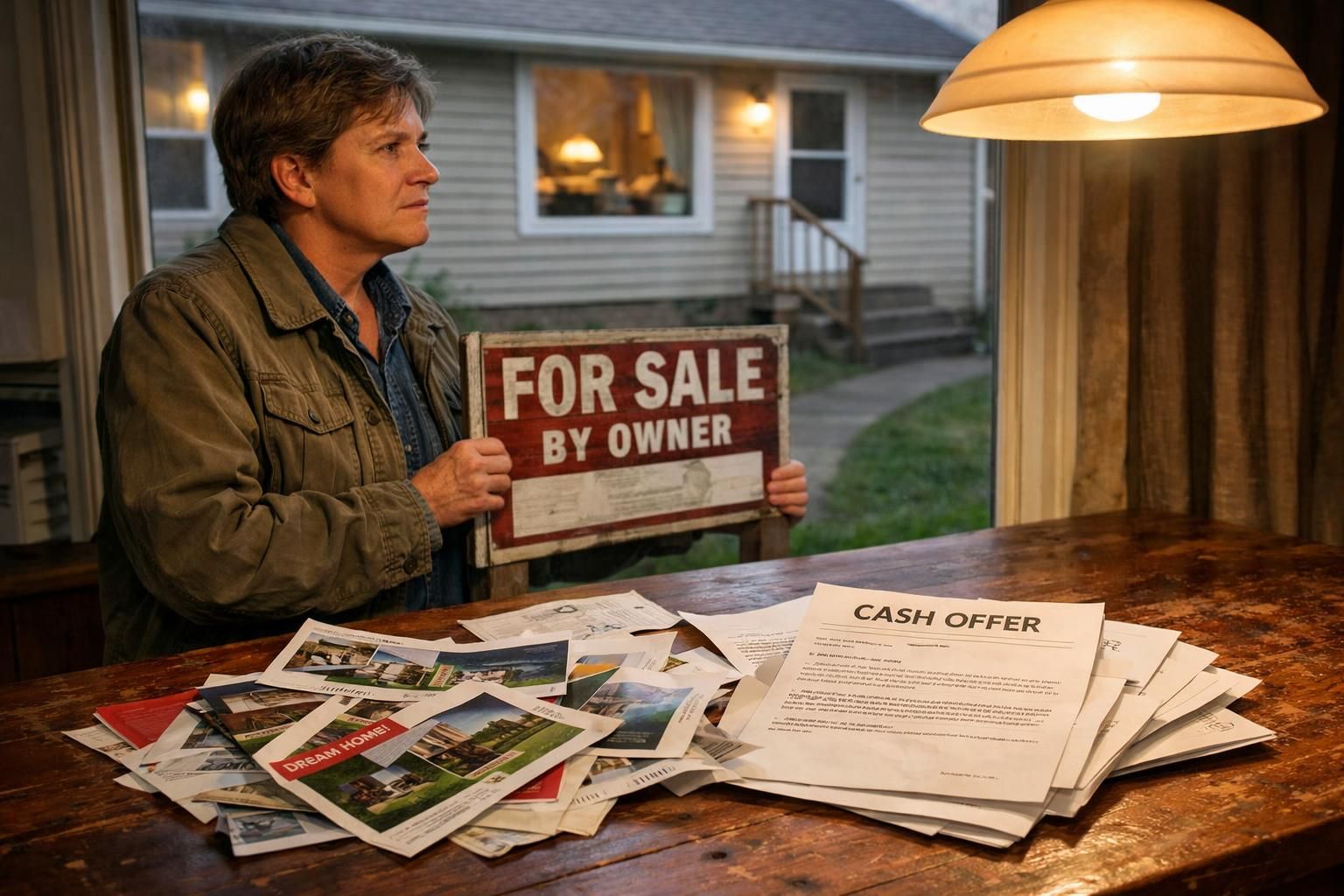
Selling to a cash buyer: Pros and cons
| PROS | CONS |
|---|---|
|
|
FSBO: Considerations, benefits, and risks
Choosing FSBO in Washington gives you full control and saves on agent commissions. However, you must handle all paperwork yourself, including Washington's mandatory Form 17 Seller Disclosure Statement and coordination with a title company for closing.
Marketing reach is smaller without an agent's network, and FSBO homes often sell for around 26% less than agent-listed properties. You will still owe REET, escrow fees, title insurance premiums, and any required inspection costs. If your property has liens, back taxes, or title complications, consult a Washington real estate attorney before proceeding.
iBuyers: What they are and when to consider them
iBuyer companies use automated valuation models to make fast cash offers, with closings possible in 10–14 days. 11 They tend to focus on newer, more uniform homes in larger markets — Seattle and its suburbs are among areas where iBuyers have been active. Unique, historic, or rural Washington properties may not qualify. 10
iBuyer fees are higher than traditional agent commissions, and final offers typically run about 11% below market value. 10 This method suits homeowners who prioritize speed and certainty over maximizing net proceeds.
Special Situations
Some situations — like selling after a divorce or dealing with back taxes — require extra care. Washington real estate attorneys, tax professionals, and a clear understanding of state law can help you protect your home value and avoid costly mistakes.
Selling inherited property in Washington
Selling inherited property involves several legal steps unique to Washington. You must first obtain an appraisal reflecting fair market value on the date of the previous owner's death to establish a stepped-up cost basis for capital gains purposes.
Probate in Washington is handled through the Superior Court in the county where the decedent lived. If ownership transferred through a trust, joint tenancy with right of survivorship, or a community property agreement, probate may not be required. Work with a Washington-licensed agent familiar with probate sales.
If you lived in the inherited home as your primary residence, up to $250,000 (single) or $500,000 (married filing jointly) in capital gains may be excluded under federal IRS rules. 13 Washington has no state income tax, but note that Washington's capital gains tax — currently 7% on long-term gains above $262,000 — applies to some investment asset sales; consult a tax professional to determine if it affects your specific situation. Distribute proceeds according to the will or probate court order after all closing costs and REET are paid.
Selling during divorce or with liens/back taxes
Washington is a community property state, meaning both spouses typically have equal ownership rights to marital property. Court-ordered sales during divorce require cooperation from both parties, and a Washington Superior Court judge may compel a sale if spouses cannot agree.
Unpaid liens and back taxes will surface during the title search and must be cleared before ownership can legally transfer. Your Washington real estate attorney can help resolve unpaid amounts from sale proceeds before the REET and other transfer obligations apply. Multiple owners — such as heirs or divorcing spouses — must all agree on each step, which can extend the closing timeline.
Selling rental property with tenants
Washington's Residential Landlord-Tenant Act governs notice requirements and tenant rights. You must provide legally required notice before entering for showings, and existing leases generally must be honored until their end date. Month-to-month tenants in Washington typically require 20 days' written notice to vacate, though local jurisdictions like Seattle have stricter requirements — Seattle's Just Cause Eviction Ordinance limits when and how you can end a tenancy.
Investors may prefer properties with tenants already in place for immediate rental income. Keep clear records of leases, payment history, and security deposits for prospective buyers. Consider offering moving cost incentives for early vacating if you need to expedite your selling timeline and maintain good landlord-tenant relations.
Conclusion
Selling your Washington home does not have to feel overwhelming. A skilled, locally experienced real estate agent will guide you through every step — from setting the right listing price using a CMA to navigating Washington's REET, Form 17 disclosure requirements, and title company closing process. Gather your documents early, prepare your home for showings, and review every offer with your full financial picture in mind. With a clear selling timeline and expert support, you can move forward in today's market feeling prepared and in control.
If you need to sell quickly or want to skip the traditional listing process entirely, KDS Homebuyers buys houses directly from Washington homeowners for cash — no repairs, no agent commissions, and no waiting. Visit kdshomebuyers.net to request your free, no-obligation cash offer today.
FAQs
1. What is the first step to sell your home in Washington?
Start by understanding your home's value through a Comparative Market Analysis (CMA) and review Washington's Form 17 Seller Disclosure requirements. This helps set a fair listing price and prepares you for legal obligations.
2. What is Washington's Real Estate Excise Tax (REET)?
REET is a graduated seller-paid tax on home sales in Washington. Rates range from 1.1% on amounts up to $525,000 to 3% on amounts over $3 million. It is paid at closing and is separate from agent commissions and other fees.
3. Should I hire a real estate agent or try FSBO in Washington?
A Washington-licensed agent offers expertise in pricing, marketing, Form 17 compliance, and coordination with title companies. FSBO saves on some commissions but requires you to manage all disclosures, marketing, negotiations, and closing paperwork yourself.
4. Why are pre-sale home inspections important in Washington?
A pre-listing inspection reveals repair needs — including moisture and mold issues common in Western Washington — that could affect negotiations. Addressing these early can boost your return on investment and reduce surprises during the buyer's inspection.
5. What closing costs should Washington sellers expect?
Expect REET, real estate agent commissions, title insurance premiums, escrow fees, and any repair credits negotiated with the buyer. Total seller costs typically reach 8–10% of the sale price.
6. How does selling an inherited property work in Washington?
Inherited property may require probate through Washington Superior Court unless ownership passed via trust or joint tenancy. Obtain a date-of-death appraisal for stepped-up basis purposes, complete Form 17, and consult a tax professional regarding federal capital gains exclusions and Washington's capital gains tax.
