

What Is Earnest Money? A Seller's Guide in Washington
You may worry about losing money if a home purchase falls through. Earnest money explained: this is a good faith deposit that buyers put down to show they are serious, usually 1-3% of the purchase price and held in an escrow account. 1 This guide walks you through how earnest money protects you as a Washington seller, what happens if deals go wrong, and how it affects your real estate transaction. 2 Learn when you can keep the deposit—and when you must return it—in just minutes. 3
Key Takeaways
- Earnest money is a good-faith deposit from buyers, usually 1–3% of the home's purchase price (e.g., $2,500 to $7,500 on a $250,000 home), and shows serious intent. In Washington, escrow agents or title companies hold these funds until closing.
- Sellers are protected if buyers back out without using valid contingencies like inspection, financing, or appraisal. If all contract terms are met and the buyer walks away, Washington sellers may keep the earnest money as compensation.
- In competitive markets like Seattle and Bellevue, earnest money deposits often run 1–3% or higher. Luxury homes can require 5% or more.
- Buyers typically deposit earnest money within two to three days after signing an accepted offer. Certified funds such as cashier's checks or wire transfers are strongly preferred by Washington escrow companies.
- Special situations like probate sales and foreclosures have unique rules under Washington law. Courts may supervise the release of earnest money in probate deals. Always consult a Washington real estate attorney for complex transactions.
What Is Earnest Money?

Earnest money acts as a good-faith payment that shows real commitment in a home purchase. This deposit sits in an escrow account managed by a Washington-licensed title company or escrow agent while the sale moves forward.
Definition: A good-faith deposit held in escrow, typically 1-3% of the purchase price
A good-faith deposit shows the buyer's commitment to your home purchase. This earnest money deposit is usually 1% to 3% of the agreed purchase price—often $2,500 to $7,500 on a $250,000 property.
In Washington, these funds are paid into an escrow account held by a neutral third party such as a licensed escrow agent or title company. Washington is an escrow state, meaning escrow companies play a central role in nearly every residential transaction. The funds stay secure until both you and the buyer reach closing.
You do not receive these funds right away. Instead, they work as protection if a deal falls through without following the terms of your purchase and sale agreement. Although not legally required, Washington real estate agents expect buyers to include a good-faith payment as standard practice in today's market.
The earnest money is not an extra fee—it gets credited toward the final down payment or closing costs at settlement once all parties complete their obligations under the contract.
Example: On a $250,000 home, earnest money might range from $2,500 to $7,500
On a $250,000 home in Washington, you can expect earnest money deposits to fall between $2,500 and $7,500. 1 This good-faith payment usually covers 1% to 3% of the purchase price.
For example, if a buyer offers a $6,000 earnest money deposit and plans a $25,000 down payment, only $19,000 will remain due at closing. The escrow agent or title company holds this earnest money as soon as both parties sign the purchase and sale agreement—the standard contract form used across Washington.
Many Washington sellers see higher earnest money amounts as proof of strong financial capability and genuine commitment. At closing, this deposit applies directly toward the total down payment or closing costs.
Why Earnest Money Matters to Sellers
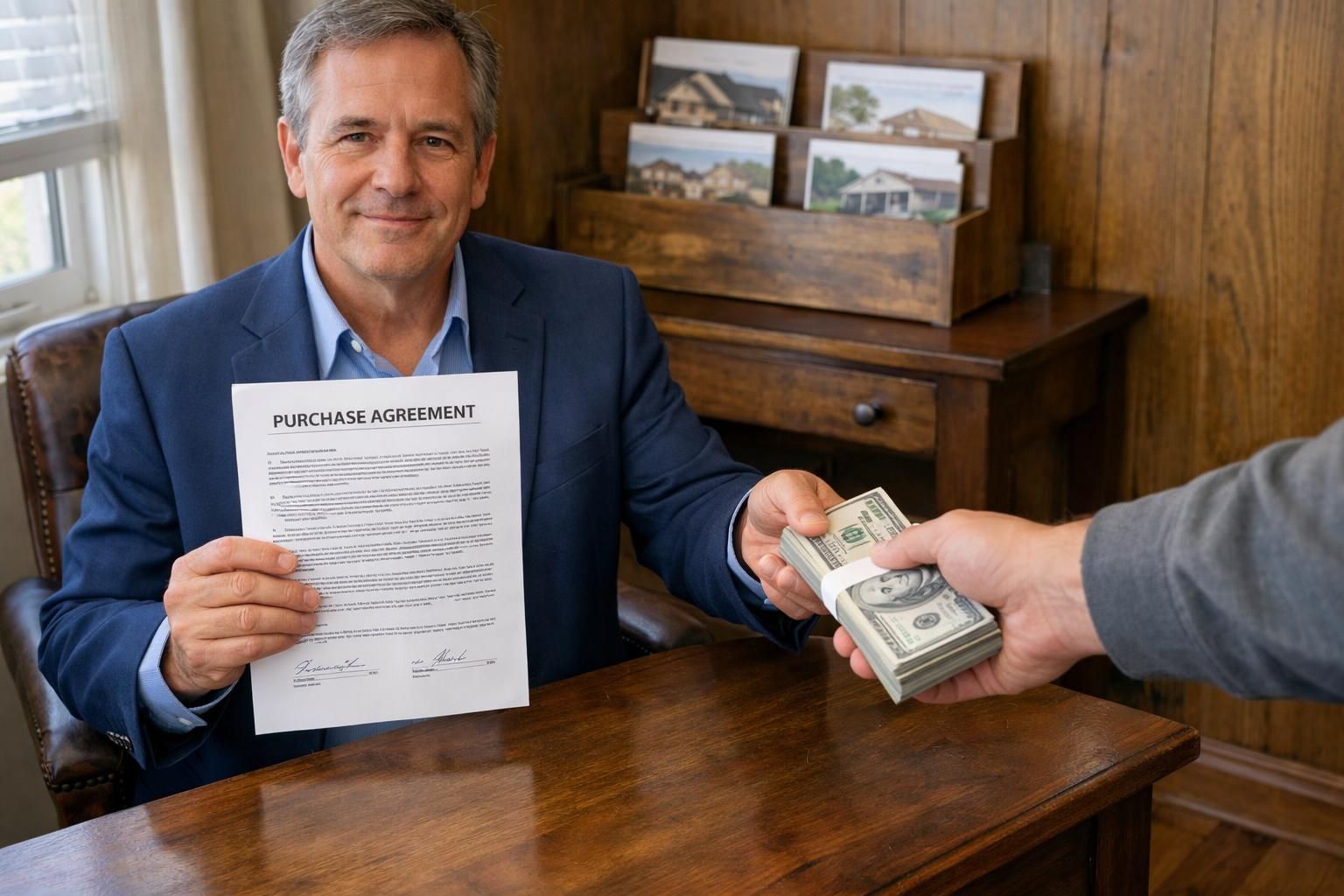
Earnest money gives you real protection if a buyer walks away without cause. A good-faith deposit shows that the buyer has sufficient funds and is serious about following through with the purchase and sale agreement.
Protects sellers if buyers back out without valid reasons
If a buyer backs out of the purchase without a valid reason listed in the purchase and sale agreement, you may keep their earnest money as compensation. On a $250,000 home, that deposit might be $2,500 to $7,500 held in escrow with a Washington-licensed title company.
This safety net shields you from financial losses after taking your property off the market and passing up other offers. In Washington, if a dispute arises over the earnest money, the escrow agent must hold the funds until both parties agree in writing or a court order directs the release. Sellers facing contested deposits may need to pursue resolution through Washington Superior Court.
Demonstrates the buyer's financial capability and commitment
A strong earnest money deposit shows the buyer has funds ready and is prepared to move forward. Offering 1% to 3% of the purchase price—like $2,500 to $7,500 on a $250,000 home—signals good faith and serious intent. 2 This deposit typically arrives as a certified check or wire transfer into a Washington escrow account.
You gain more confidence knowing the buyer has banking support for their home loan. A larger deposit may also signal mortgage pre-approval or competitive credit from their lender. The good-faith payment helps prevent impulsive withdrawals, ensuring your time isn't wasted during the closing process.
How Much Earnest Money Is Typical in Washington?

Earnest money in Washington falls within a range based on what local market conditions demand. Your real estate agent or escrow company can help you determine a fair deposit for your home sale.
Standard percentages based on market conditions (1-5%)
You can expect a typical good-faith deposit to range from 1% to 5% of the home's purchase price. In the highly competitive Seattle and Bellevue markets, buyers often offer 1% to 3% or more to stand out. In slower-demand areas like parts of eastern Washington or Spokane, deposits may fall closer to 1%.
Washington's strong real estate market—particularly in the Puget Sound region—often means sellers receive higher offers paired with larger deposits. Buyers using FHA or VA loans may offer on the lower end since those programs allow smaller out-of-pocket payments at this stage. Talk with your real estate agent about local norms before accepting any offer.
Variations for luxury homes or cash offers
Luxury homes in Washington—especially in areas like Bellevue, Mercer Island, or the greater Seattle metro—often require deposits of 5% or more. On a $1 million home, an earnest money deposit could range from $50,000 to $100,000 to demonstrate serious intent in a competitive market.
All-cash offers can bring different expectations. Some cash buyers offer lower deposits because their deals close faster with fewer contingencies. Others increase the deposit to compete against financed offers. In distressed property sales or unique scenarios, always review all deposit terms with your Washington real estate agent or attorney before deciding which offer best meets your needs.
When Washington Sellers Keep Earnest Money (and When They Don't)

Washington escrow agents follow specific rules to decide if the seller can keep the good-faith deposit. Review your purchase and sale agreement and consult a Washington real estate attorney before taking further steps.
Contingencies: Inspection, financing, appraisal
Inspection, financing, and appraisal contingencies protect both buyers and sellers in Washington real estate transactions. If a home inspection uncovers major repairs or safety issues, the buyer can renegotiate or cancel the deal without losing their earnest money. Washington contracts typically allow 5 to 10 business days for the inspection period, though this is negotiable.
An appraisal contingency helps if the property value comes in below the purchase price. Buyers can request a price reduction or back out and receive their deposit back. A financing contingency ensures that if a buyer's mortgage application fails despite pre-approval, they can withdraw and have their earnest money refunded. Most Washington lenders require up to 30 to 45 days to process full loan approval.
Talk with a Washington real estate agent or attorney before waiving any protective clauses, as these help guard against unexpected setbacks.
Scenarios: When sellers can keep the deposit vs. when they must return it
- Sellers can keep the earnest money if a buyer backs out after all contingency periods expire—such as inspection or financing deadlines.
- Missing a home inspection deadline allows sellers to retain the deposit because buyers failed to meet contract terms.
- Buyers who waive contingencies, fail to secure a mortgage, and back out forfeit their deposit to sellers as compensation.
- If buyers breach the purchase and sale agreement without using a listed contingency—such as simply changing their mind—sellers often keep the deposit.
- Earnest money must be returned if buyers cancel based on valid contingencies such as a failed home inspection or low appraisal.
- In Washington, written disbursement authorization from both parties or a Superior Court order is required before anyone can release disputed funds from an escrow account.
- If disputes over earnest money arise, Washington's escrow laws require the escrow agent to hold the funds frozen until resolution is reached by mutual written agreement or court order.
The Escrow Process in Washington

Washington is an escrow state, meaning a licensed escrow agent or title company manages your transaction. Your earnest money stays safe in a secure escrow account, with a neutral third party protecting both you and the buyer throughout the home purchase process.
Where the money goes: Escrow agent or title company
After both parties sign the purchase and sale agreement, the buyer deposits earnest money into a secure escrow account. A neutral third party—a Washington-licensed escrow agent or title company—manages these funds. 3 Washington law requires all escrow accounts to be kept separate from personal or business banking accounts.
The seller cannot access this good-faith deposit before closing. The Washington Department of Financial Institutions (DFI) licenses and regulates escrow agents in the state, ensuring funds are handled properly. Escrow agents confirm that funds are valid; most buyers use certified checks or wire transfers. On a $250,000 home, that equals $2,500 to $7,500 held securely until closing. 4
Timeline: Deposited within 2–3 days of accepted offer
Your buyer must deposit earnest money into a Washington escrow account within two to three days after both parties sign the purchase and sale agreement. Most Washington agreements set this timeline in writing to protect both sides.
Missing this earnest money deadline gives you, as the seller, grounds to cancel the contract. If disputes arise over who receives these funds, the escrow agent or title company will hold them frozen until resolution by mutual written agreement or Washington Superior Court order. Cashier's checks or wire transfers help prevent payment delays and keep your transaction moving securely.
Red Flags in Earnest Money Offers
Watch for signs that a buyer may not have strong financial backing or may not intend to close. Ask your Washington real estate agent or escrow company about best practices if you notice concerns with the deposit terms.
Low or no earnest money deposits and what they might indicate
Low or no earnest money deposits may signal a red flag. Buyers who offer little or nothing as a good-faith deposit might lack strong commitment to your home purchase. In Washington's competitive markets, most sellers expect a deposit between 1% and 3% of the purchase price—$2,500 to $7,500 on a $250,000 property—held with a licensed escrow agent or title company.
Investor companies sometimes submit lower deposits paired with fewer contingencies and faster closing dates. If you see low offers from buyers without mortgage pre-approval, watch closely. Low deposits also appear more often in probate sales or distressed property deals. Sellers can request certified funds instead of personal checks to secure the transaction before moving forward into the closing process.
Certified funds vs. personal checks
Certified funds—such as cashier's checks or wire transfers—give Washington sellers peace of mind. Washington escrow agents and title companies often require certified payments since they can immediately verify authenticity and fund availability. Personal checks carry risk; a bounced check can create delays and potential contract complications for everyone involved.
Using certified funds protects you by speeding up escrow verification and reducing fraud threats. Most Washington purchase and sale agreements require buyers to submit deposits within two to three days; a certified check or wire transfer helps meet this deadline without complications.
Special Situations to Consider in Washington
You may face unique rules for earnest money in cases like probate sales or foreclosures. Work with a Washington real estate attorney to protect your interests in these situations.
How earnest money works in probate sales, foreclosures, and other unique scenarios
- In Washington probate sales, the Superior Court typically supervises the real estate transaction. The earnest money deposit may require court approval before release. 5
- Probate transactions in Washington can take longer to close. The escrow agent or title company may hold your buyer's good-faith payment for weeks or months until legal issues clear through the court.
- Sellers in Washington probate deals should work closely with a real estate attorney familiar with Washington's probate statutes to navigate local rules and keep funds protected in escrow.
- Buyers who back out of Washington probate deals over delays may be entitled to a refund if required by court order or valid contract contingencies.
- In foreclosure sales, lenders and banks selling Washington properties typically require certified funds for the earnest money deposit to confirm buyers are serious and ready to close on tight deadlines.
- As-is foreclosure deals often waive contingencies such as home inspection or financing, putting your deposit at higher risk if issues arise during escrow.
- Short sales and investor-company transactions in Washington may involve alternative agreements with lower deposits but limited seller protections—always have an experienced Washington broker or attorney review any purchase and sale agreement before signing.
Understanding Probate in Washington Real Estate Transactions
Washington probate real estate transactions often move slower because the Superior Court must oversee each step. You may need to wait for a judge's approval before anyone can release earnest money or close the deal.
Your good-faith deposit typically sits in an escrow account managed by a Washington-licensed attorney or a court-approved escrow agent rather than a standard title company. 4 Legal reviews and title checks are critical contingencies since heirs, debts, and ownership claims must be verified before moving forward.
Lower earnest money is sometimes accepted in Washington probate sales to balance risks linked to court involvement. Disputes over earnest money may be resolved through Washington probate court rather than between buyer and seller alone. Work closely with both your real estate attorney and agent from start to finish so you understand all contract terms, contingency periods, and how property taxes or inspection issues could affect final closing costs and timing. 5
Conclusion
Washington's escrow laws, local market conditions, and your real estate agent all shape how earnest money works in any sale. Consult a Washington real estate attorney or licensed escrow company for help with complex transactions such as probate sales or contested deposits.
Earnest money protects both sellers and buyers
A good-faith deposit acts as security for both parties in a Washington real estate transaction. As a seller, you gain peace of mind knowing the buyer is serious and financially prepared to move forward. If you invest time preparing for closing or taking your home off the market, earnest money reduces risk by compensating you if the buyer backs out without using agreed-upon contingencies.
Buyers benefit too because clear terms in the purchase and sale agreement protect their investment. Refundable earnest money gives buyers confidence they won't lose thousands if an appraisal falls short or serious issues arise during a home inspection. Washington-licensed escrow agents and title companies handle this money carefully until all contract conditions are met. 1
Advice: Review offers carefully, understand contingencies, and consult your agent
Review each Washington purchase and sale agreement with care. Look for details about earnest money, closing costs, and contingencies such as inspection, appraisal, and financing. Make sure all deadlines are clearly defined so you know when refundable earnest money could become nonrefundable.
Ask your Washington real estate agent or attorney to explain every part of the offer. Your professional can spot red flags in financing terms, escrow account instructions, and down payment details. Use written documentation for any changes to protect yourself. Cash offers often simplify things by removing some contingencies—but weigh those options against standard protections before deciding what suits your needs best.
If you want to skip the uncertainty of earnest money disputes, contingencies, and lengthy closings entirely, KDS Homebuyers purchases homes directly from Washington homeowners for cash. Visit kdshomebuyers.net to request your free, no-obligation cash offer today.
FAQs
1. What is earnest money in a Washington real estate transaction?
Earnest money, also called a good-faith deposit, is a sum the buyer puts down to show commitment to buying a home. In Washington, a licensed escrow agent or title company holds this payment until closing.
2. How does earnest money differ from the down payment?
Earnest money serves as proof of intent at the start of the purchase and sale agreement. The down payment is paid later and goes toward the home purchase price at closing.
3. Can Washington sellers keep earnest money if buyers back out?
If buyers break contract terms without valid contingencies like appraisal or home inspection, Washington sellers may keep the earnest money as compensation for lost time and opportunity in the market.
4. What role do contingencies play with earnest money in Washington?
Financing, appraisal, and home inspection contingencies protect buyers' deposits during mortgage processing or property inspections. If these conditions are not met, buyers can reclaim their good-faith deposit.
5. Who manages and returns earnest money during a Washington sale?
A Washington-licensed escrow company or title company manages funds in a secure escrow account until all conditions for closing are met. They release funds per contract terms or by mutual written agreement—or, in disputes, by Washington Superior Court order.
6. Why should Washington sellers work with real estate professionals when handling earnest money?
Washington real estate agents and attorneys help explain lending rules, manage paperwork with escrow agents, and ensure compliance with state regulations during every step of the closing process.
References
- ^ https://www.rocketmortgage.com/learn/earnest-money
- ^ https://www.eriehomefinder.com/blog/379/Why+Your+Earnest+Money+Deposit+Matters+When+Buying+A+Home
- ^ https://barneswalker.com/legal-glossary/e/earnest-money-escrow/
- ^ https://www.investopedia.com/terms/e/earnest-money.asp
- ^ https://www.nar.realtor/magazine/real-estate-news/sales-marketing/earnest-money-in-real-estate-refunds-returns-and-regulations (2024-11-13)
